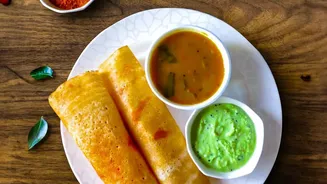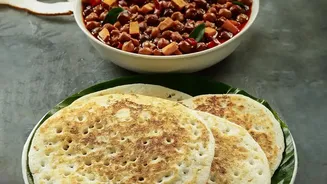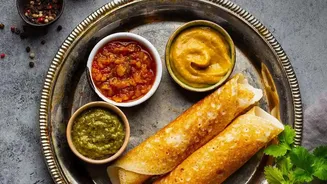

It’s a familiar scene in many Indian kitchens: the sizzle of dosa batter hitting a hot tawa. But when it comes to adding vegetables, a simple choice—diced versus chunked—makes all the difference. Here’s the science behind why that tiny prep work pays
off.
The Golden Rule: Surface Area
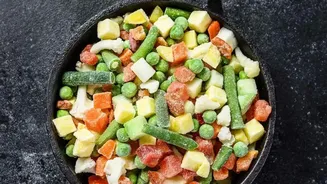
The single biggest reason finely diced vegetables cook faster is a simple principle from science: the surface-area-to-volume ratio. Imagine a large chunk of carrot. It has a certain amount of surface area exposed to heat, but a lot of its mass is tucked away on the inside. Now, imagine dicing that same carrot into tiny pieces. The total volume is the same, but you have dramatically increased the amount of surface area. More surface area means more of the vegetable is in direct contact with the heat source—in this case, the hot dosa batter and the tawa itself. This allows heat to penetrate the vegetable from all sides far more quickly and evenly, speeding up the cooking time significantly.
How Heat Actually Travels
On a dosa, vegetables are cooked by a combination of heat transfer methods. First, there's conduction. This is heat transferred through direct contact. The hot metal of the tawa heats the thin layer of batter, and that heat is conducted directly into the vegetable pieces touching it. Smaller pieces have more contact relative to their size. Second, there's convection. As the vegetables and batter heat up, they release steam. This hot vapour circulates around the tiny vegetable pieces, cooking them with gentle, moist heat. For a large chunk, this process is much less efficient; the steam cooks the outside, but the inside remains raw.
The Critical Role of Moisture
Vegetables contain a lot of water. When you cook them, this water needs to heat up and, in many cases, evaporate. Finely dicing your vegetables helps this process along. Smaller pieces release their internal moisture more readily. While this might sound like a bad thing, on a quick-cooking dosa, it’s an advantage. The released steam helps to quickly tenderise the vegetables. With thick chunks, the moisture is trapped inside. The outside of the chunk might start to char, but the inside remains crunchy and raw. Even worse, if too many large, wet chunks are placed on the dosa, they can release so much water that they end up steaming the batter, preventing it from becoming crisp and golden.
Keeping Pace With the Dosa
A dosa cooks incredibly fast, often in just a couple of minutes. The goal is to have a perfectly crisp, golden-brown crepe at the exact moment the toppings are cooked through. Thick vegetable chunks simply cannot cook in that short a timeframe. By the time a piece of carrot or capsicum chunk is even partially tender, the dosa underneath would be burnt. Finely dicing the vegetables ensures their cooking time is synchronised with the dosa’s. This harmony is the key to a successful vegetable dosa, where every component is perfectly cooked and ready at the same time.
Beyond Speed: Flavour and Texture
The benefits of dicing aren't just about speed. It also creates a better eating experience. Smaller pieces of onion, tomato, and capsicum distribute their flavour more evenly across the entire dosa. Instead of getting one large, overpowering bite of a vegetable, you get a balanced blend in every mouthful. Texturally, fine dice integrates seamlessly into the delicate crispness of the dosa. Large, hard chunks can create an awkward, lumpy texture that detracts from the main event. They can even tear the delicate dosa when you fold or roll it. The fine dice becomes part of the dosa, rather than just a clunky topping.