







The Constant Hunt for a Charger
We've all been there: a low-battery warning flashes on our smartwatch just as we're heading out for a run. The proliferation of wearable electronics, from fitness bands to continuous health monitors, has brought with it the constant need to recharge.
But what if our clothes could trickle-charge our devices throughout the day? That is the core idea behind thermoelectric textiles, an emerging technology that aims to solve the battery life problem by turning us into personal power stations.
How to Weave a Power Plant
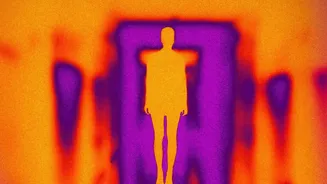
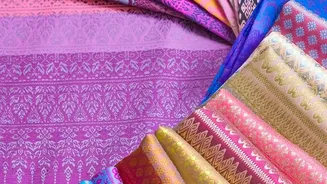
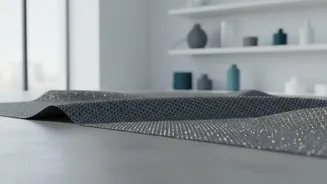
The science at play is the Seebeck effect, a phenomenon where a temperature difference between two different electrical conductors or semiconductors produces a voltage. Researchers are embedding these principles directly into fabrics. By creating thermoelectric generators (TEGs) from flexible, lightweight materials, they can be woven into or printed onto clothing. The temperature difference between your warm skin and the cooler ambient air is what generates the power. The challenge has been to make these materials efficient, durable, comfortable, and, crucially, washable. Recent innovations involve using conductive polymers and even coating silk threads with these materials to create flexible, non-toxic, and effective energy-harvesting fabrics.
Powering Your Fitness Goals
The most immediate and obvious application is for personal fitness electronics. A simple heart rate monitor or step counter requires very little power, making them ideal first candidates for this technology. Researchers have already developed prototypes, including armbands and T-shirts, that can generate a few microwatts of power. While this isn't enough to power a smartphone, it's a significant step towards self-sufficient wearables. A device integrated into a running shirt, for example, could continuously power its own sensors, recording your performance without you ever having to plug it in. The more you move and the greater the temperature difference, the more power you could potentially generate.
Beyond the Running Track
While fitness is a major driver, the potential applications extend much further. In medicine, these textiles could power continuous glucose monitors for diabetics or vital-sign sensors for remote patient monitoring, ensuring uninterrupted data collection. This could be especially crucial for elderly care or for patients with chronic conditions. In industrial settings, workers in extreme temperatures, like at a blast furnace, could wear clothing that not only powers safety sensors but also uses the same principle in reverse (known as the Peltier effect) to provide active cooling, enhancing safety and comfort.
The Road to Your Wardrobe
Despite exciting breakthroughs from research institutions like the University of Washington and Germany's Leibniz IPHT, you won't find these garments in stores just yet. Several hurdles remain. Scientists are working to increase the power output to support more complex devices like full-featured smartwatches. Durability is another key issue; these textiles must withstand thousands of stretching and bending cycles, not to mention regular washing, without losing their function. Finally, the cost of manufacturing and the use of sometimes rare materials need to be addressed to make these products commercially viable for the mass market. Research into using recycled materials is one promising path toward sustainability and cost reduction.