







The Engine of Engagement
At its core, a social media algorithm is a complex system designed to keep you scrolling. Its primary job is to sort through a sea of content and serve you what it predicts you’ll find most engaging. It tracks every like, share, comment, and even how
long you pause on a video. The goal is simple: maximize the time you spend on the platform, because more engagement means more opportunities to show you ads. In the early days of social media, feeds were mostly chronological, showing the newest posts first. But as platforms grew, they switched to algorithmic curation to manage the overwhelming volume of content and keep users hooked by personalizing their experience.
Trapped in the Repetitive Loop
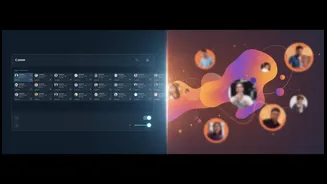
The downside of this hyper-personalization is the creation of recommendation loops. When the algorithm sees you like a few travel videos, it shows you more. Interact with those, and it will double down, pushing similar content until your feed becomes a monotonous stream of travel diaries. This phenomenon is often called a "filter bubble" or an "echo chamber." A filter bubble is your own unique, algorithmically-created universe of information, which can intellectually isolate you by filtering out diverse viewpoints. An echo chamber is where your existing beliefs are amplified because you primarily interact with like-minded people and content. Over time, this not only gets boring but can also narrow your perspective and reinforce biases.
The Psychology of the Scroll
These loops are powerful because they tap into basic human psychology. Each time you see a post that aligns with your interests, your brain gets a small hit of dopamine, a feel-good chemical. This creates a reward loop, similar to a slot machine, where you keep scrolling in anticipation of the next satisfying piece of content. The system is designed to be a frictionless, endless stream. This cycle can become habitual, shifting from a conscious choice to an automatic, almost impulsive action. Research shows that frequent users can even become desensitized to the social rewards, continuing to post and scroll out of sheer habit rather than for positive feedback.
Algorithm-Free Feeds as an Antidote
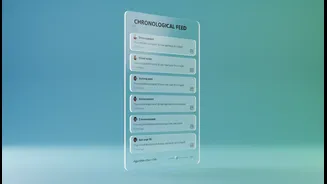
An "algorithm-free" or chronological feed is the most straightforward way to break this cycle. It returns control to you by simply showing posts from the accounts you follow in the order they were published. Most major platforms, including Instagram and Facebook, now offer this as an option, though it's often not the default setting. Choosing a chronological feed reintroduces an element of serendipity and variety. You see content from all the accounts you chose to follow, not just the ones the algorithm thinks you want to see most. This can help burst the filter bubble and expose you to a wider range of ideas and updates from your network, preventing your information diet from becoming stale.
The Benefits of Breaking Free
Switching to a chronological feed is about reclaiming your agency. It helps you become a more conscious consumer of content, rather than a passive recipient of whatever the algorithm serves up. While algorithms can be useful for discovering new things, their primary goal is platform engagement, not necessarily your well-being or intellectual growth. By breaking the repetitive loop, you can reduce content fatigue and the feeling that your feed is predictable. It encourages you to see updates from friends you might have missed and gives you a clearer, more transparent view of your social network. It's a small change that can make a significant difference in how you experience social media, making it feel less like a system designed to hold your attention captive and more like a tool you control.