




Understanding the Cat-Cow Flow
Cat-Cow is not a single static pose but a dynamic, flowing movement between two positions. It's often used as a warm-up in yoga classes because it gently awakens the spine and prepares the body for more activity. The sequence involves moving the spine through
flexion (rounding like a cat) and extension (arching like a cow). This simple, rhythmic motion is synchronized with your breath, which helps to calm the mind and build a stronger mind-body connection. It's considered a foundational practice that helps improve body awareness and balance, making it an essential tool for anyone starting their yoga journey.
A Step-by-Step Guide to the Pose
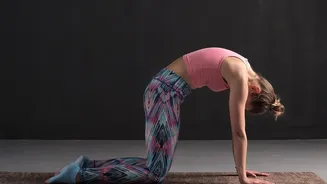
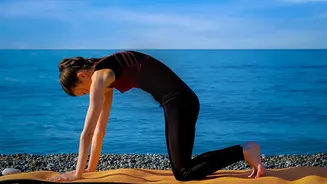
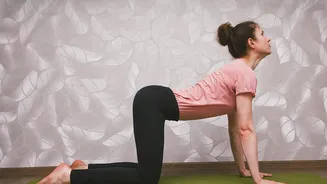
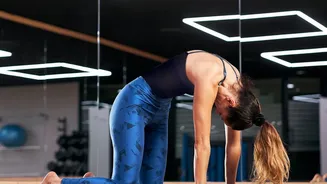
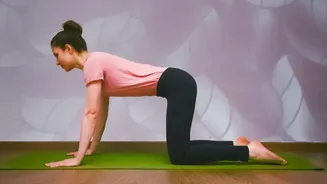
To practice Cat-Cow, all you need is a comfortable surface, like a yoga mat. Start on all fours in what is called a 'tabletop' position. Your wrists should be aligned directly under your shoulders and your knees directly under your hips, about hip-width apart. Keep your head in a neutral position, with your gaze soft and directed at the floor. From here, coordinate your breath with the movement: 1. Cow Pose (Bitilasana): As you inhale, gently drop your belly toward the mat. Lift your chest and tailbone toward the ceiling, creating a gentle arch in your back. Broaden your shoulder blades and look forward or slightly upward without straining your neck. 2. Cat Pose (Marjaryasana): As you exhale, reverse the movement. Press firmly into your hands, round your spine toward the ceiling, and pull your belly button in toward your spine. Release your head toward the floor, letting your chin tuck toward your chest. Continue flowing between Cow on the inhales and Cat on the exhales. Move slowly and mindfully, allowing your breath to guide the pace. Aim for 10 to 20 repetitions to fully warm up the spine.
The Key Health Benefits
Though simple, the Cat-Cow sequence offers significant benefits. Its primary advantage is improved spinal flexibility and mobility. The gentle movement helps to create space between the vertebrae, reducing stiffness from prolonged sitting and promoting better posture. This makes it an excellent tool for relieving mild back, neck, and shoulder pain. The motion also strengthens the core muscles that support the spine and organs. Furthermore, the rhythmic nature of the pose, when linked with breath, can help relieve stress, calm the mind, and improve focus. It also gently stimulates the abdominal organs, which can aid digestion, and boosts circulation to the muscles and spine.
Common Mistakes and How to Avoid Them
To get the most out of Cat-Cow, pay attention to your alignment. A common mistake is improper placement of hands and knees. Ensure your wrists are directly under your shoulders and knees are under your hips to create a stable foundation. Another frequent error is rushing the movement. The goal is a slow, controlled flow synchronized with your breath, not speed. Avoid collapsing your lower back too much in Cow pose or craning your neck; instead, focus on creating length through the entire spine. Also, be mindful not to lock your elbows. Keep a slight bend in them to maintain engagement and support.
Modifications for Every Body
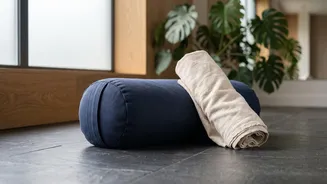
One of the best things about Cat-Cow is its adaptability. If you have sensitive knees, place a folded blanket or towel underneath them for extra cushioning. For those with wrist pain, you can modify the pose by coming down onto your forearms and elbows instead of your hands. Another option is to make fists with your hands and rest on your knuckles to keep the wrists straight. For a completely different approach, you can perform a seated version of Cat-Cow in a chair. While sitting with your feet flat on the floor and hands on your knees, simply inhale to arch your chest forward and exhale to round your spine back.