






A new facility in Hyderabad is putting India on the map for one of the most advanced frontiers in medicine: personalised cancer vaccines. Biotech firm PopVax has launched its 'RNA Foundry', but what exactly does this mean for the future of cancer care?
A New Hub of Hope in Hyderabad
Hyderabad has strengthened its position as India's life sciences capital with the launch of the RNA Foundry, an advanced facility by biotechnology startup PopVax. This is not just another research lab; it's an integrated site for research, development, and manufacturing of next-generation RNA-based medicines. Opened in collaboration with Stochastic Sciences, the facility is designed to meet global Good Manufacturing Practices (GMP), enabling it to produce clinical-grade treatments. The primary goal is to pioneer personalised cancer vaccines, a revolutionary approach to oncology. This development signals a shift for the Indian biopharma industry, moving beyond generic drug manufacturing and into the highly complex and innovative space of bespoke biologics.
How Personalised RNA Vaccines Work
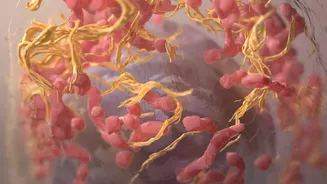
The science behind these treatments sounds like something from the future, but it builds on technology that has become widely known: messenger RNA, or mRNA. Unlike traditional vaccines that prevent disease, therapeutic cancer vaccines are designed to treat an existing cancer. The process is highly individualised. First, a patient's tumour is genetically sequenced to identify its unique mutations. These mutations create abnormal proteins called 'neoantigens', which are like flags that are unique to the cancer cells. PopVax uses artificial intelligence and machine learning to select the most promising neoantigens that could trigger an immune response. An mRNA vaccine is then created that carries instructions for the patient's own body to produce these specific neoantigens. When the vaccine is administered, it essentially shows the immune system a 'wanted poster', training it to recognise and attack only the cancer cells, leaving healthy cells unharmed.
The Promise of PopVax
Founded in late 2021 by Soham Sankaran, PopVax aims to use cutting-edge technology to tackle some of the world's toughest diseases. The mission is deeply personal for Sankaran, who was inspired by his family's experience with pancreatic cancer. The company has attracted significant backing from prominent investors, including the Gates Foundation, Facebook co-founder Dustin Moskovitz, and Ethereum co-founder Vitalik Buterin. While its cancer programme is new, PopVax has already advanced another mRNA vaccine candidate for COVID-19 into Phase I clinical trials in Australia, demonstrating the capability of its underlying technology platform. The company states its proprietary delivery system allows for its vaccines to be fridge-stable, which could simplify logistics and distribution compared to other mRNA technologies that require deep freezing.
The Long Road From Lab to Clinic
Despite the excitement, it is crucial to understand that these personalised cancer vaccines are still experimental and not yet approved for general use. The opening of the RNA Foundry is a critical manufacturing and research milestone, but the journey to proving safety and effectiveness is long. PopVax's cancer vaccine candidates have not yet been administered to patients. The company plans to initially work with a small number of patients outside India through 'compassionate use' pathways, subject to regulatory approvals. This early data will be vital for designing larger, more formal clinical trials needed to gain widespread approval. This process underscores the reality of drug development: even with a state-of-the art facility, clinical validation is a multiyear process that cannot be rushed. The headlinemaking results from other international trials in melanoma and pancreatic cancer have been encouraging, but each new platform must prove its own worth.