


The Undisputed King: Gulab Jamun
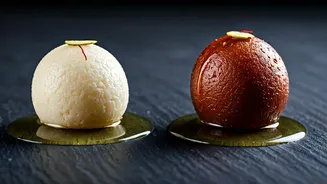
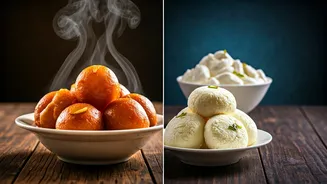
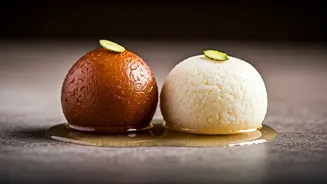
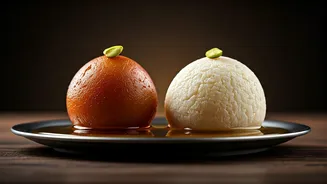
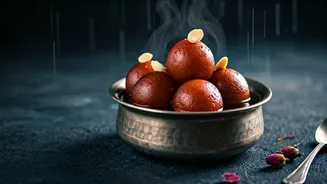
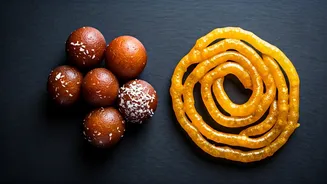
Arguably the most recognised Indian sweet globally, Gulab Jamun is the comfort food of desserts. [4] These deep-fried, dense milk-solid balls are soaked in a fragrant, sugary syrup, creating a bite that is simultaneously rich, soft, and unbelievably sweet.
[2, 6] The name itself is a nod to its Persian origins, with 'gul' (flower) and 'ab' (water) pointing to the traditional rose water-scented syrup. [2, 11] 'Jamun' refers to the similarly shaped and coloured Indian black plum. [2, 6] While its history may trace back to medieval Iran and a dessert known as luqmat al-qadi, India perfected it by using khoya (milk solids), giving it that signature melt-in-your-mouth texture. [2, 4, 11] It’s a staple at weddings, festivals, and nearly every celebration, making it a powerful contender for the top spot. [2, 4, 10]
The Spiraled Sensation: Jalebi
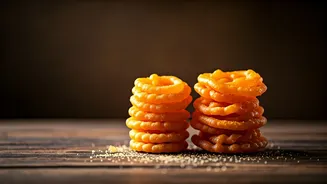
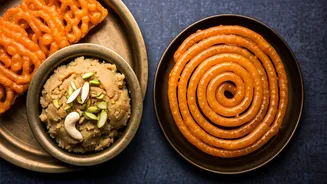
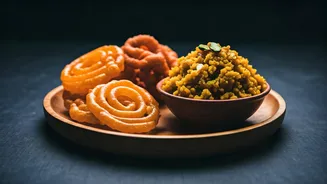
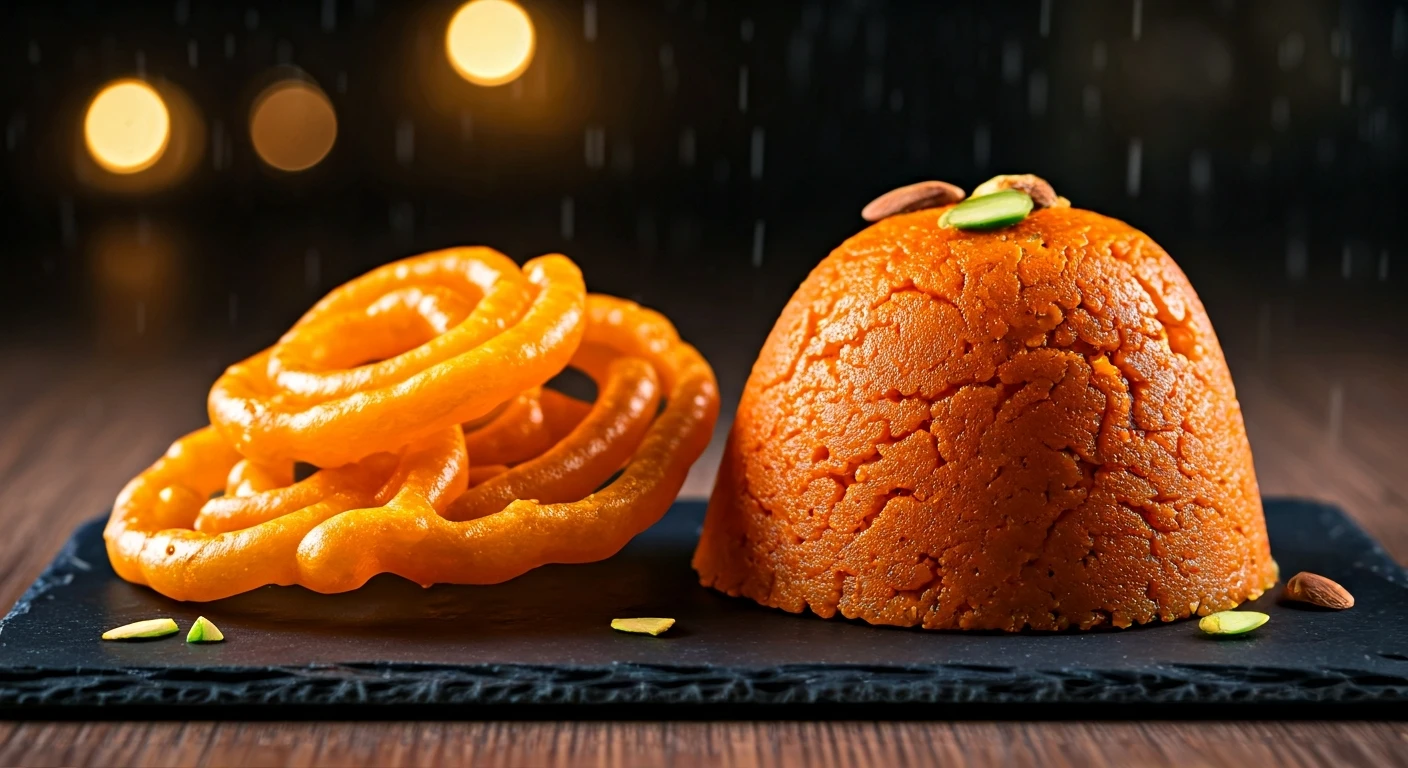
If Gulab Jamun is the comforting king, Jalebi is the wild, artistic cousin. These bright orange, spiral-shaped wonders offer a complex textural experience that’s hard to beat. [21] Made from a fermented flour batter that's deep-fried into crispy coils and then soaked in saffron-infused sugar syrup, Jalebi is both crunchy and chewy, sweet and slightly tangy. [9, 14, 18] Its origins are also traced to West Asia, where a similar dessert called 'Zolbia' was known. [9, 18] It was introduced to India by Persian traders and quickly became a cultural mainstay. [9, 18] Often eaten warm, sometimes paired with milk or yogurt, Jalebi is a fixture at festivals like Diwali and Eid, a street food icon, and a breakfast favourite in many parts of North India. [9, 21]
The Spongy Marvel: Rasgulla
Lighter and more subtle than the first two, Rasgulla has a fan following that is just as fierce. These soft, spongy balls are made from chhena (Indian cottage cheese) and cooked in a light sugar syrup until the sweetness permeates the entire sphere. [3, 5] The dessert’s origin is a famously contentious topic, with both West Bengal and Odisha laying claim to its invention. [1, 3] Odisha's tradition links it to the Jagannath Temple in Puri, where it has been an offering for centuries, known as 'Kheer Mohana'. [1, 5, 12] West Bengal credits Kolkata-based confectioner Nobin Chandra Das with creating the modern, spongy version in the 19th century. [1, 16] Regardless of its birthplace, this delicate, syrup-filled sweet is a symbol of joy across Eastern India and beyond. [1, 3, 5]
The Cool Contender: Kulfi
Often described as traditional Indian ice cream, Kulfi is in a league of its own. [17, 20] Unlike churned ice cream, kulfi is made by slowly simmering and reducing milk for hours, which caramelises the sugars and gives it a distinctively dense, creamy, and rich flavour. [17, 19] This process means it freezes into a solid, custard-like treat that melts much slower than regular ice cream. [17, 20] Its roots are in the Mughal Empire of the 16th century, where the mixture was flavoured with pistachios and saffron and frozen in metal cones using ice brought from the Himalayas. [15, 17, 20] Served on a stick or in a small pot (matka), kulfi comes in traditional flavours like pistachio, cardamom, and mango and is the perfect, refreshing end to a spicy meal. [8, 17]