





Why ‘Desk Shoulders’ Happen
Before we dive into the stretches, it helps to understand the problem. When you sit at a computer for long periods, your body tends to fall into a specific pattern. Your head drifts forward, your shoulders round inwards, and your upper back hunches. This
position, often called 'tech neck' or postural kyphosis, puts constant strain on your neck and shoulder muscles. The muscles at the front of your body, like your pectorals (chest), become short and tight. Meanwhile, the muscles in your upper back, like your rhomboids and trapezius, become overstretched and weak. This imbalance is the primary cause of that stiff, aching feeling. The goal of these restorative stretches is to counteract this pattern: to open the chest, release tension in the neck, and gently awaken the muscles of the upper back.
1. The Seated Cat-Cow
This classic yoga pose is perfect for the office chair. It mobilises the entire spine, releasing tension from your lower back all the way up to your shoulders.
**How to do it:**
Sit at the edge of your chair with your feet flat on the floor and your hands resting on your knees.
1. **Cow Pose:** Inhale deeply. As you do, arch your back, push your chest forward, and look up towards the ceiling. Allow your shoulders to roll back and down, away from your ears. Feel the stretch across your chest.
2. **Cat Pose:** Exhale slowly. As you do, round your spine, tucking your chin to your chest and pulling your navel in towards your spine. Feel the stretch between your shoulder blades.
Alternate between these two positions for 5-10 full breaths, moving slowly and intentionally with your breath. This is an excellent warm-up to do before other stretches.
2. Thread the Needle
This is a fantastic stretch for releasing the upper back and the outer shoulder. It provides a gentle twist that can alleviate deep-seated tension.
**How to do it:**
Start on your hands and knees (if you have space and a clean floor) or adapt it for your chair by leaning forward onto your desk.
1. From all fours, inhale and lift your right arm towards the ceiling.
2. As you exhale, 'thread' your right arm under your left arm, bringing your right shoulder and the side of your head to rest on the floor. Your left hand can stay where it is or walk forward for a deeper stretch.
3. Hold here for 30 seconds, breathing into the space between your shoulder blades.
4. Gently press into your left hand to unwind and return to the starting position. Repeat on the other side.
3. The Doorway Pectoral Stretch
This is one of the most effective ways to open up a tight chest—the main culprit of rounded shoulders. You just need a doorway.
**How to do it:**
1. Stand in an open doorway. Place your forearms on the doorframe on either side, with your elbows bent at a 90-degree angle (like a cactus or a goalpost).
2. Step forward with one foot into the doorway until you feel a gentle stretch across the front of your chest and shoulders.
3. Keep your core engaged to avoid arching your lower back. Your head should stay in line with your spine, not jutting forward.
4. Hold for 20-30 seconds, breathing deeply. Don't push into pain; the stretch should feel relieving, not straining. Repeat 2-3 times.
4. Neck & Upper Trap Release
The upper trapezius muscles run from your neck to the top of your shoulders and are notorious for holding tension. This gentle stretch provides immediate relief.
**How to do it:**
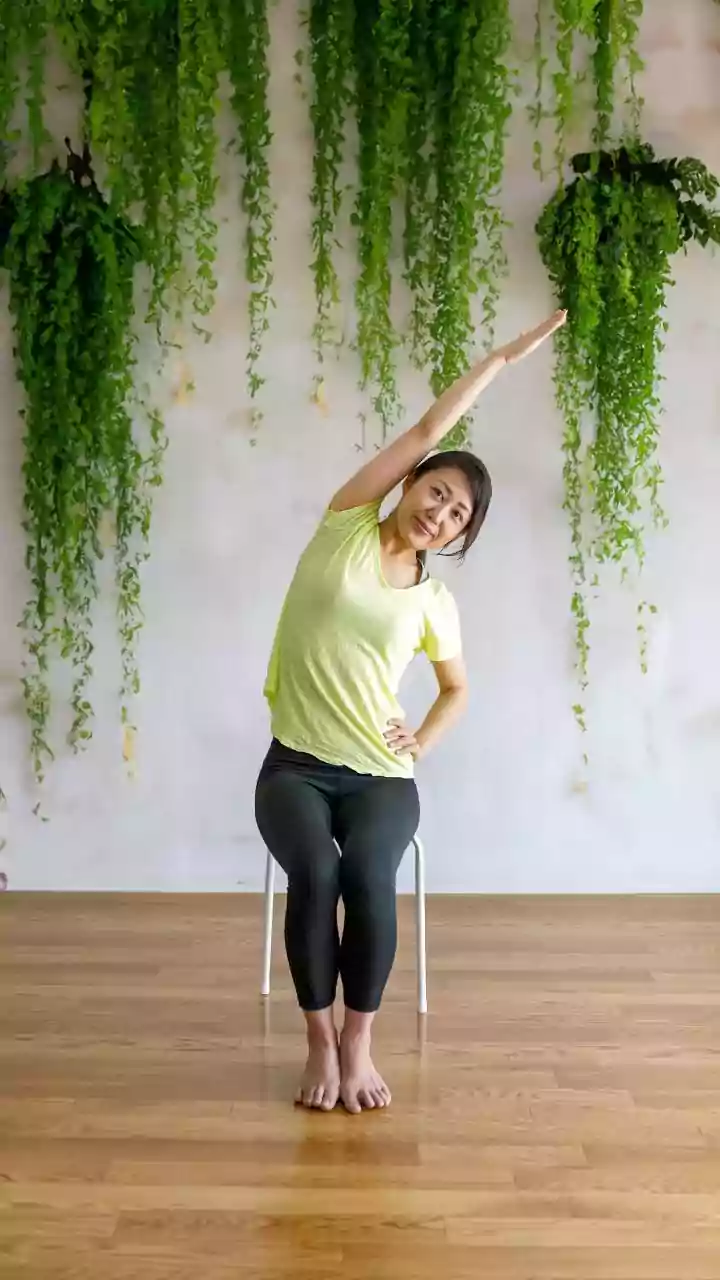
1. Sit tall in your chair with a straight spine.
2. Gently drop your right ear towards your right shoulder. Do not force it down; just let gravity do the work. You should feel a stretch along the left side of your neck.
3. To deepen the stretch, you can place your right hand on the side of your head and apply very light pressure. At the same time, extend your left arm down towards the floor.
4. Hold for 20-30 seconds. Slowly bring your head back to the centre and repeat on the other side.