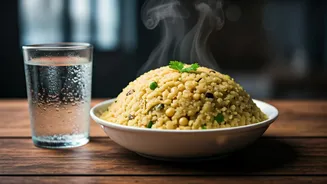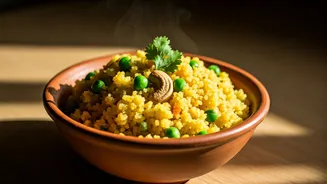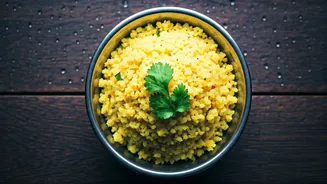




The Ultimate Culinary Chameleon
Call it upma, uppittu, or kharabath, its role in an Indian household is uniquely versatile. For many, it’s the default breakfast – quick, filling, and nutritious. It’s the star of the tiffin box, surviving the journey to school or office and still tasting
like home. It’s the saviour on a busy weeknight when you have twenty minutes to put a meal on the table. And perhaps most importantly, it’s the gentle, warm food we turn to when we’re feeling under the weather. Its soft texture and mild flavours are a balm for the soul. No other dish transitions so seamlessly from a hurried breakfast to a comforting sick-day meal. This adaptability is the foundation of its enduring appeal; it is always what you need it to be.
The Alchemy of Simplicity
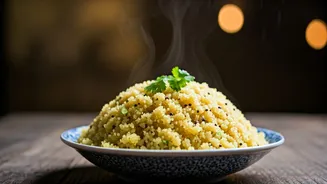
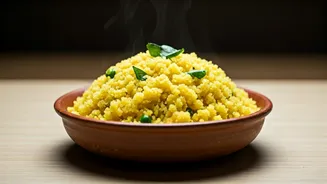
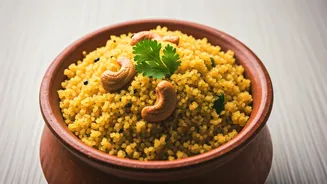
The magic of upma lies in its profound simplicity. The core ingredients are pantry staples: sooji (rava or semolina), onions, and a handful of spices. Yet, the transformation is nothing short of alchemy. It begins with the tempering, or tadka – the splutter of mustard seeds in hot oil, the sizzle of urad and chana dal turning golden, and the unmistakable aroma of curry leaves and green chillies hitting the pan. This fragrant foundation is what elevates a simple grain into something special. The process of roasting the sooji is another crucial step, a meditative moment that determines the final texture. A proper roast prevents lumps and imparts a nutty fragrance that is the signature of a well-made upma. It’s a testament to how, with the right technique, the most basic ingredients can create a dish that is deeply satisfying.
A Dish of a Thousand Faces
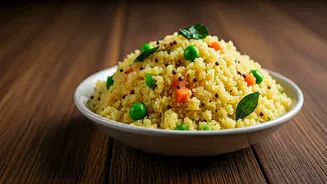
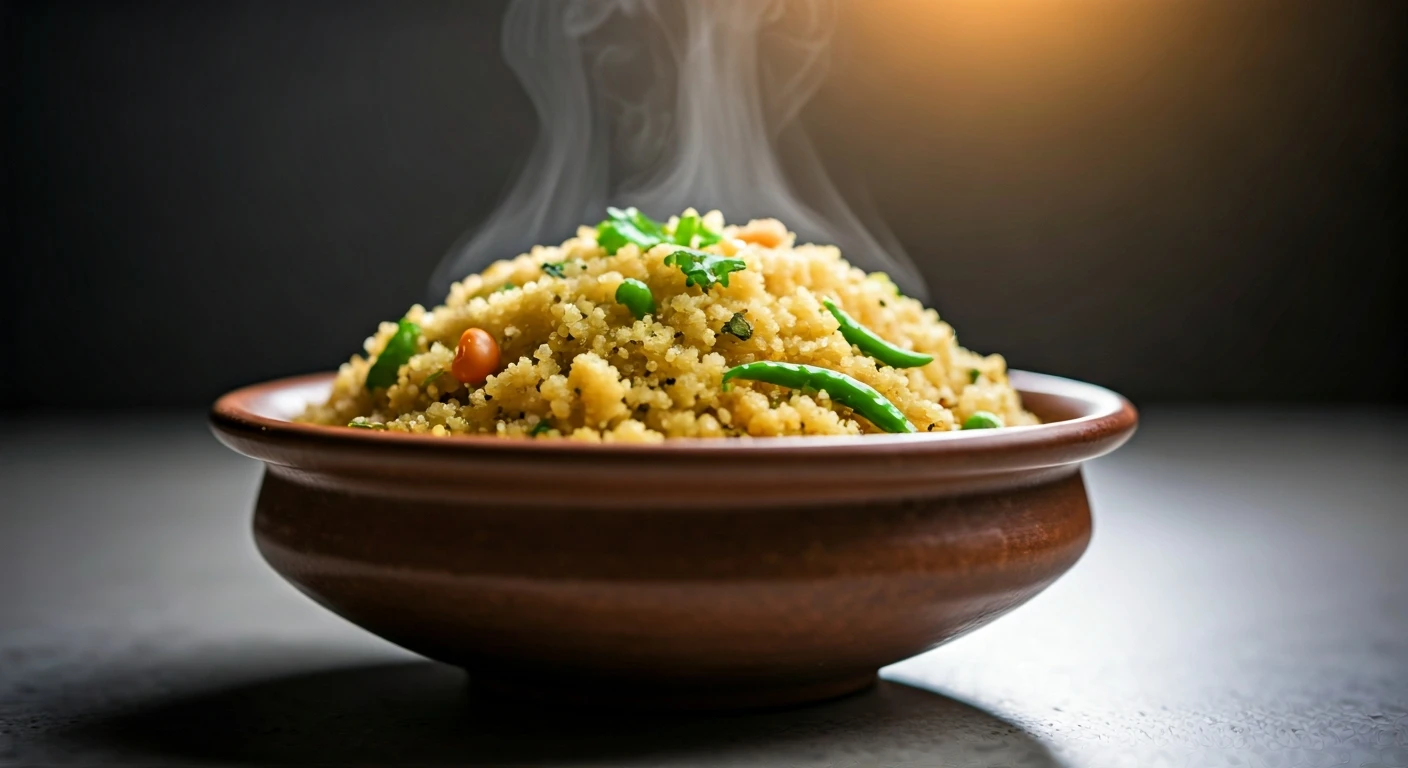
While its soul is simple, upma wears many regional hats. In Karnataka, it transforms into the spicier, more vibrant ‘kharabath’, often served alongside its sweet counterpart, ‘kesari bath’, in a combination known as ‘chow chow bath’. In Tamil Nadu, you might find it studded with finely chopped carrots, beans, and peas, turning it into a complete meal. Maharashtrian households often add a pinch of sugar, balancing the savoury notes with a hint of sweetness. Then there are the inventive variations: tomato upma with its tangy kick, bread upma that rescues stale bread, and even semiya (vermicelli) upma, which offers a different textural experience. This diversity is proof of its genius. It’s not a rigid recipe but a flexible template, inviting cooks to add their personal touch and adapt it to local tastes.
The Great Upma Debate
For a dish so universally loved, upma is also the subject of surprisingly passionate debate. It’s a quiet battle fought in kitchens and on dining tables across the country. The biggest divide? Texture. Should it be fluffy and dry, with each grain separate, or soft, moist, and almost porridge-like? There is no right answer, only fierce personal preference, often rooted in how your mother or grandmother made it. Another point of contention is the addition of sugar. For some, a teaspoon of sugar is non-negotiable, adding a complex sweet-salty flavour. For others, it’s an absolute culinary crime. These friendly arguments are part of its charm. They show how deeply personal this dish is to us; we don’t just eat it, we have opinions about it, we defend our version of it, and we carry its legacy in our family traditions.