


India's Next Interplanetary Frontier
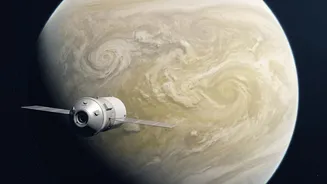
Following the historic successes of the Chandrayaan lunar missions and the Mangalyaan Mars orbiter, the Indian Space Research Organisation (ISRO) is embarking on its next great adventure: Shukrayaan-1. This marks India's first dedicated mission to Venus
and its second interplanetary voyage, solidifying the nation's position as a major player in space exploration. Formally approved by the Union Cabinet in September 2024, the mission, whose name translates to "Venus Craft," is slated for a March 2028 launch. It represents a significant leap in both scientific ambition and technological capability, aiming to gather unprecedented data from one of the most mysterious planets in our solar system.
Why Venus? Earth's Cautionary Tale
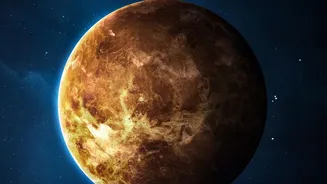
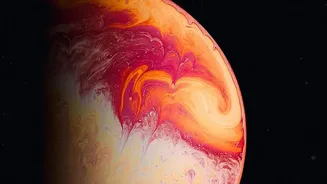
Venus is often called Earth's twin due to its similar size, mass, and composition. Yet, it is a world of extremes. Its surface temperature is a scorching 467°C, hot enough to melt lead, and the atmospheric pressure is over 90 times that of Earth's. The planet is shrouded in a thick, toxic atmosphere composed mostly of carbon dioxide, with dense clouds of sulfuric acid that race around the globe. Scientists believe Venus may have once been more like Earth, possibly with liquid water oceans. Understanding what caused its runaway greenhouse effect is not just a matter of planetary curiosity; it serves as a natural laboratory for studying climate change. By learning why our twin became so inhospitable, we can gain crucial insights into the delicate balance that makes Earth habitable.
The Crucial Chemistry of the Clouds
A primary focus of the Shukrayaan mission is to conduct a detailed investigation of the Venusian atmosphere, particularly its dense cloud layers. While the surface is hellish, the upper atmosphere, between 50 and 60 kilometers high, has more Earth-like temperatures and pressures. This has led to tantalizing speculation about whether this zone could harbor microbial life. This interest was heightened by the controversial detection of phosphine gas a few years ago—a chemical that, on Earth, is associated with biological activity. Shukrayaan will carry instruments specifically designed to analyze the chemical makeup of these clouds, searching for trace gases and understanding the complex chemical cycles that dominate this alien sky. The mission aims to provide definitive data on the atmospheric composition to help settle these scientific debates.
A High-Tech Toolkit for a Hostile World
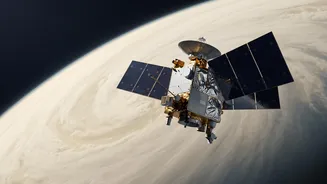
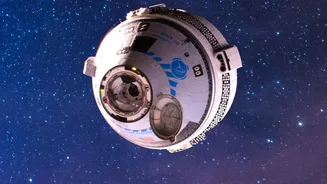
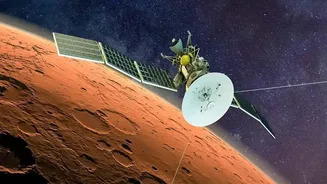
To achieve its ambitious goals, Shukrayaan will carry a suite of approximately 19 advanced scientific instruments, a mix of Indian-made and international payloads. A flagship instrument is the high-resolution Synthetic Aperture Radar (SAR), which will pierce through the dense clouds to map the planet's surface and subsurface—a world-first for Venus exploration. For the headline task of cloud chemistry, payloads like the Venus Infrared Atmospheric Gases Linker (VIRAL), a collaboration with France and Russia, are crucial. This instrument will use spectroscopy to identify the chemical composition of the atmosphere. Sweden is contributing the Venusian Neutrals Analyzer (VNA) to study how the atmosphere interacts with the solar wind. These tools will work together to provide a holistic view of the planet, from its hidden geology to the top of its turbulent atmosphere.
Mission Goals and the Path Ahead
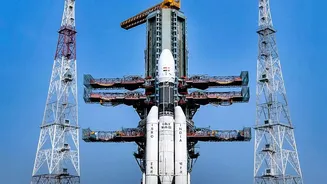
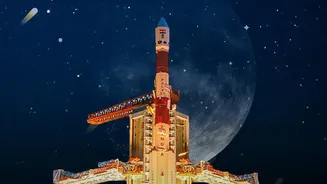
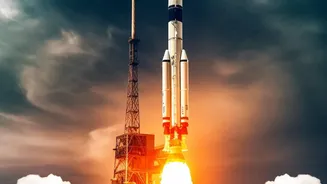
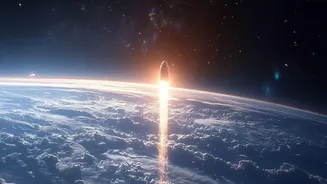
Shukrayaan's objectives are multifaceted. The primary goals include investigating Venus's surface and subsurface geology, analyzing the composition and dynamics of its super-rotating atmosphere, and studying the interaction between the planet and the solar wind. The spacecraft is scheduled to launch aboard India's powerful LVM-3 rocket on March 29, 2028, and is expected to reach Venus on July 19, 2028. Upon arrival, it will enter a large elliptical orbit. Over the following year, ISRO will perform a technique called aerobraking for the first time, using the planet's upper atmosphere to gradually slow the spacecraft and settle it into a more circular orbit ideal for scientific observations. The mission is designed to operate for over four years, promising a wealth of data for scientists in India and around the world.