








What Is an 'Unsafe' Order?
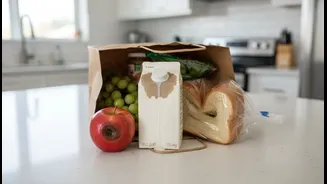
The convenience of 10-minute grocery delivery is a game-changer, but speed can sometimes come at the cost of quality. An unsafe order isn't just an inconvenience; it can be a health risk. This includes receiving items that are expired, spoiled, or rotten.
Other serious issues include products with broken or tampered seals, visible signs of mould or contamination, and packaging that shows evidence of pests. You should also be concerned if you receive an incorrect item that could trigger a food allergy. Any of these situations warrant immediate action, not just for a refund, but to ensure food safety standards are met.
Step 1: Document Everything Immediately
Before you even think about contacting customer service, your first job is to become a meticulous evidence collector. Do not throw anything away. Use your smartphone to take clear, well-lit photos and videos of the problem from multiple angles. Capture the unsafe product, the packaging it came in, and the delivery bag. Be sure to photograph the expiry date, batch number, and MRP on the packaging. Take a screenshot of your order details within the app, which shows the order number, time of delivery, and the items purchased. The Supreme Court of India has emphasised the importance of documentary evidence in consumer cases; the more detailed your proof, the stronger your case.
Step 2: Use In-App Customer Support
Your first point of contact should always be the quick-commerce platform's own customer support channel. These apps (like Blinkit, Zepto, or Swiggy Instamart) have a built-in 'Help' or 'Support' section for reporting order issues. When you file the complaint, be clear and concise. State the problem, mention the specific item, and attach the photos and videos you just took. Request a clear resolution—whether it's a refund, a replacement, or both. Keep your communication polite but firm. Save screenshots of this entire conversation, including the ticket or complaint number provided.
Step 3: Escalate to the Grievance Officer
What if customer support offers a token apology or a small, unsatisfactory credit? Don't give up. Under India's IT Rules, every e-commerce company must appoint a Grievance Officer and display their contact details on their website. If you don't receive a satisfactory response from the initial support team within 48 hours, send a formal email to the Grievance Officer. In your email, reference your original complaint number, briefly explain the issue again, attach all your evidence, and state that the initial resolution was inadequate. This official escalation often gets a more serious review.
Step 4: Report to Government Helplines
If the company remains unresponsive, it's time to take your complaint to a higher authority. The National Consumer Helpline (NCH) is a government-run body designed for exactly these situations. You can file a complaint by calling the toll-free number 1915 or by registering on their website (consumerhelpline.gov.in) or mobile app. The NCH acts as a mediator and forwards your complaint directly to the company through an official channel, increasing the pressure for a resolution. Because this is a food-related issue, you should also file a complaint with the Food Safety and Standards Authority of India (FSSAI) through their 'Food Safety Connect' portal or app. Recent actions by FSSAI show they are taking consumer complaints against quick-commerce platforms very seriously.
Step 5: When to Consider Consumer Court
As a final resort, for serious violations or if all other channels fail, you can approach a consumer court. India has a three-tier system of consumer commissions at the district, state, and national levels to handle such disputes. You can file a complaint online through the E-Daakhil portal. The Consumer Protection Act, 2019, protects you against unfair trade practices and deficiency of service. While this step is more formal, it is designed to be consumer-friendly, and you do not necessarily need a lawyer to file a case, especially for smaller claims.