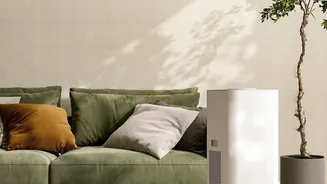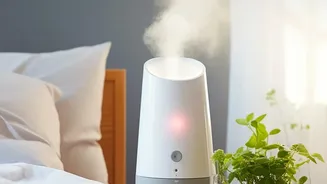





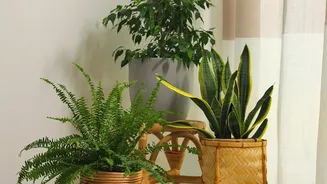

With outdoor air quality becoming a growing concern, creating a clean indoor sanctuary is a top priority. Many of us turn to houseplants, but can a few green friends truly compete with a machine? Let's settle the debate on what works best.
The Green Hope: Can Plants Clear the Air?
The idea that
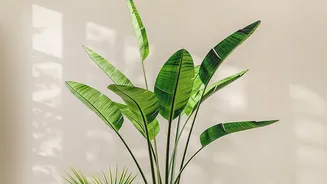
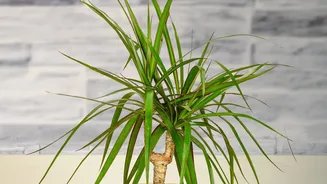
houseplants are natural air purifiers is incredibly popular, largely thanks to a 1989 NASA study. Researchers found that in a sealed, small chamber, certain plants could remove chemical vapours like benzene and formaldehyde from the air. This finding blossomed into a widespread belief that filling our homes with greenery is an effective way to combat indoor pollution. However, the context of that study is crucial. The experiments were conducted in small, sealed environments, which are nothing like a typical home or office with constant air exchange from doors, windows, and ventilation. While plants can absorb small amounts of certain chemicals, their effect on the pollutants that matter most in many Indian cities—fine particulate matter (PM2.5)—is almost negligible. Studies have shown some plants can capture dust on their leaves, especially those with rough or hairy textures, but the rate is incredibly slow.
The Sobering Science of Scale
To understand the difference between a plant and a purifier, it's all about scale and speed. A 2019 review of decades of research delivered a reality check: to match the air-cleaning effect that a building gets from just normal ventilation (let alone an actual purifier), you would need an astonishing number of plants. The estimates range from 10 to 1,000 plants per square metre of floor space. For a small 150-square-foot room, that could mean cramming in hundreds, if not thousands, of plants. In terms of speed, the comparison is even more stark. An average air purifier's Clean Air Delivery Rate (CADR) can be over 100 cubic metres per hour, while a typical houseplant's CADR is less than one. This means a single air purifier can clean the air thousands of times faster than a single plant.
The Mechanical Workhorse: How Purifiers Tackle PM2.5
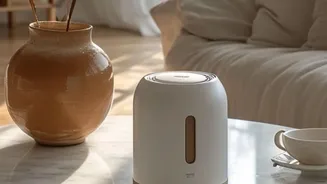
When the enemy is PM2.5—tiny particles from traffic, industry, and smoke that can penetrate deep into our lungs and bloodstream—you need a specialized tool. This is where High-Efficiency Particulate Air (HEPA) filters shine. An air purifier works by pulling large volumes of room air through a series of filters. A true HEPA filter is designed to capture at least 99.97% of particles that are 0.3 microns in size, making it extremely effective against PM2.5. Studies consistently show that using a portable HEPA air purifier significantly reduces indoor PM2.5 concentrations, often cutting levels by half or more. While a purifier can't eliminate every single particle, especially as new ones enter from outside, it continuously and actively removes a substantial amount from the air you breathe.
When Outdoor Pollution Comes Inside
Much of the PM2.5 we face indoors doesn't even originate there; it infiltrates from the outside. These fine particles easily slip through cracks in windows and doors, meaning that on high-pollution days, your indoor air can quickly become as hazardous as the air outside. This is why relying on a passive solution like houseplants is insufficient. They simply cannot remove particles at the rate they enter and accumulate. An air purifier, however, is designed for this exact scenario. By continuously cycling and filtering the air in a room, it creates a pocket of cleaner air, providing a crucial defence against outdoor pollution that has made its way into your home. This is particularly vital in modern, sealed buildings where pollutants can get trapped and build up.
The Verdict: Use Both, but for the Right Reasons
When it comes to removing harmful PM2.5 from your indoor air, the winner is clear: the air purifier. It is a scientifically proven, effective tool designed specifically for the job. Houseplants, for all their charm, are not a substitute. This doesn't mean you should get rid of your green companions. The benefits of houseplants are real and significant—they improve mood, reduce stress, add humidity, and connect us to nature, which has a positive impact on psychological well-being. The best approach is to embrace both. Use a high--quality HEPA air purifier as your primary line of defence for your respiratory health, especially during pollution season. Then,, fill your home with houseplants for the aesthetic and mental health benefits they provide.. Think of purifiers as the lungs of your home,, and plants as its soul.