
The Cosmic Data Deluge
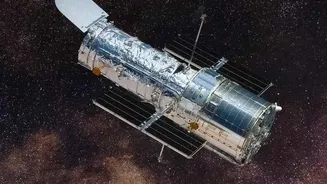
Telescopes like the Hubble Space Telescope and the James Webb Space Telescope capture the universe in breathtaking detail, producing an enormous volume of images. Since its launch in 1990, Hubble alone has taken over 1.7 million pictures. This creates
a monumental challenge: there is simply too much data for astronomers to manually inspect. Sifting through millions of images to find specific objects like merging galaxies, or to spot something entirely new, is an impractical task for human eyes alone. This data overload is why the astronomy community has turned to artificial intelligence, specifically machine learning, to automate the process of discovery.
Creating a Cosmic Textbook
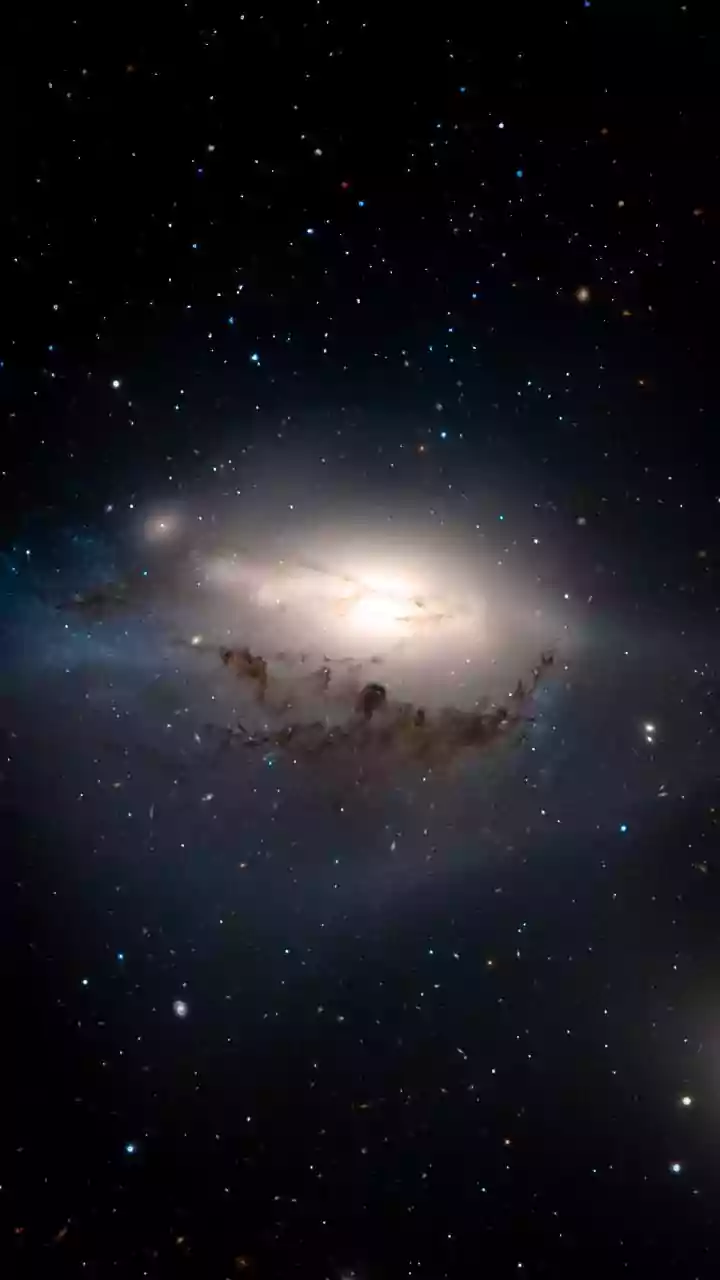
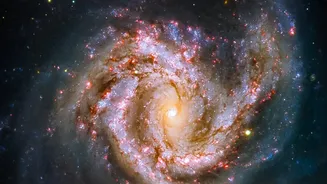
The most common method for training AI to recognize objects is called supervised learning. Think of it like teaching a child to identify animals. You show them pictures, labeling each one: "This is a cat," "This is a dog." Over time, the child learns the patterns. AI training works similarly but on a massive scale. Scientists begin by creating a 'training dataset'. This involves expert astronomers manually identifying and labeling objects in thousands of images. For example, the Galaxy Zoo project enlisted citizen scientists to help classify the shapes of millions of galaxies. This human-labeled data—classifying galaxies as spiral, elliptical, or merging, for instance—serves as the 'ground truth' or the textbook from which the AI will learn.
Training the Neural Network
The 'brain' of this operation is often a Convolutional Neural Network (CNN), a type of AI architecture specifically designed for processing images. A CNN works by breaking an image down into pixels and scanning for features. In early layers, it might learn to detect simple edges and shapes. Deeper layers combine these to recognize more complex features, like the spiral arms of a galaxy or the dust lanes in a nebula. During training, the AI is fed the labeled images. It makes a guess about what it sees, compares its answer to the human-provided label, and adjusts its internal parameters to correct its mistakes. This process is repeated millions of times, with the AI gradually becoming more accurate at identifying the features that define a specific type of celestial object.
From Classification to Anomaly Detection
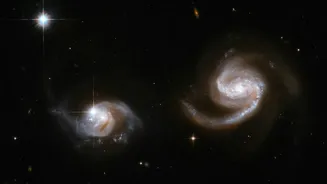
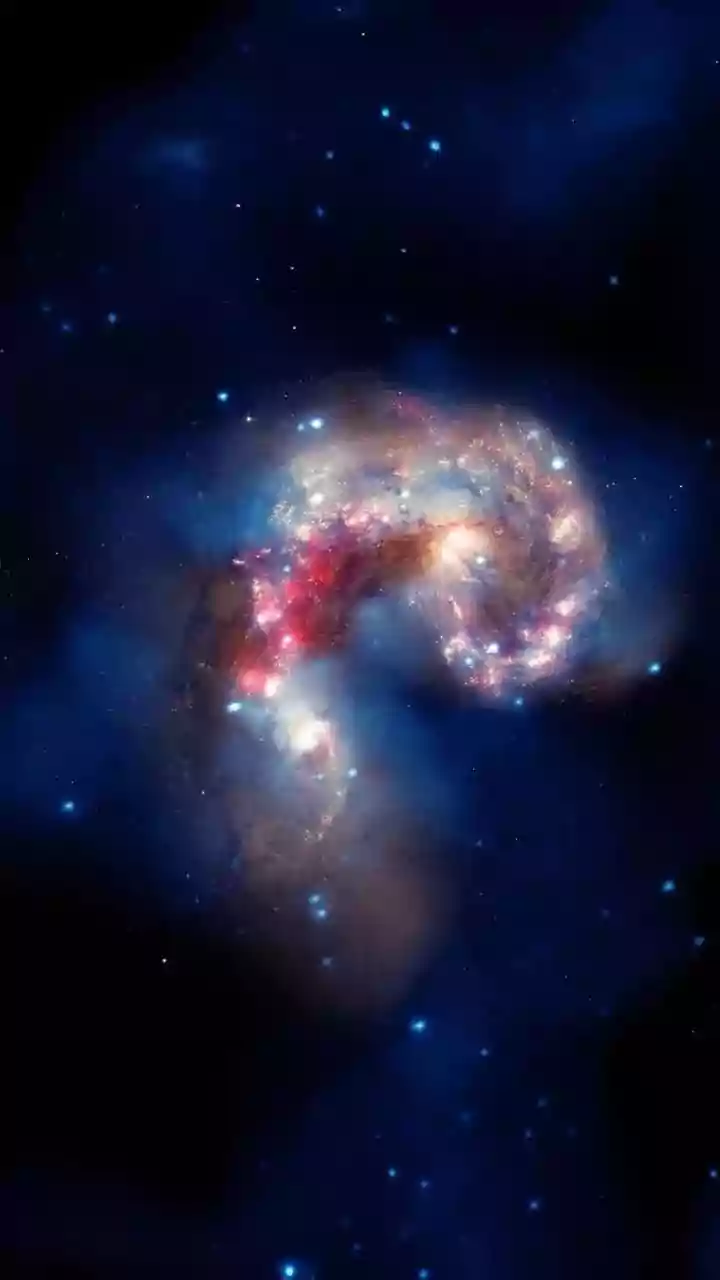
Beyond simply classifying known objects, a key goal is to find the unexpected. For this, scientists use AI for anomaly detection. After being trained on what is 'normal'—countless images of typical stars and galaxies—the AI can then be tasked with flagging anything that doesn't fit the patterns it has learned. This is how AI can spot rare phenomena that might otherwise be missed. In one recent project, an AI model called AnomalyMatch sifted through nearly 100 million image cutouts from the Hubble archives in under three days. It identified over 1,300 anomalies, including interacting galaxies, gravitational lenses, and objects that defied existing classifications.
Overcoming the Challenges
Training AI for space is not without its hurdles. Space images can be 'noisy' due to factors like atmospheric disturbances, sensor noise, or cosmic radiation. Objects can appear at vastly different scales and orientations. Furthermore, the AI can be vulnerable to 'data poisoning', where maliciously corrupted training data leads to flawed decision-making. To combat these issues, scientists use sophisticated techniques to clean up images and may even use simulated data to train models when real-world examples are scarce. Some advanced models are even designed to mimic human cognition, breaking down a search into steps like assessing global context before zooming in on specific attributes.