

The Challenge of Flying Low
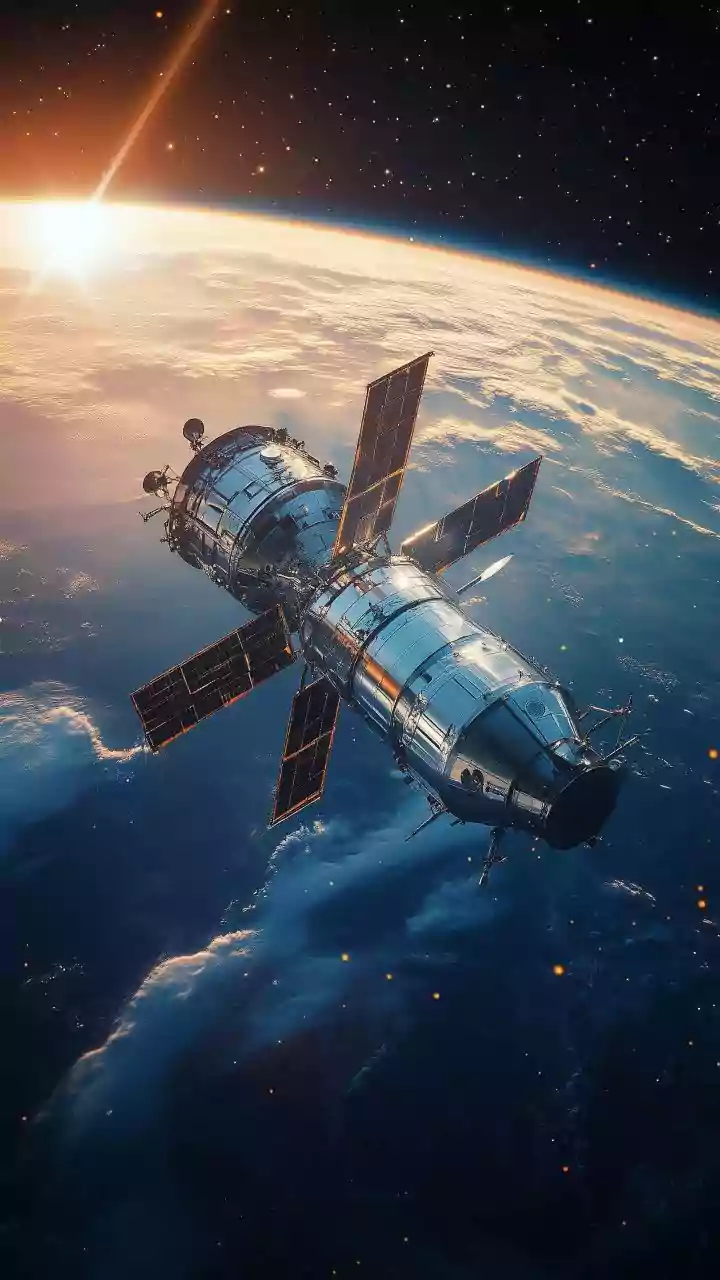
Satellites in Very Low Earth Orbit (VLEO), typically below 400 kilometres, offer huge advantages. Being closer to the planet means they can capture higher-resolution images, provide faster communications with lower latency, and gather more detailed scientific
data. But there's a significant catch: atmospheric drag. Even at these high altitudes, the atmosphere isn't a perfect vacuum. Scarce air molecules constantly bombard the satellite, slowing it down and causing its orbit to decay. To stay aloft, satellites must fire their thrusters to counteract this drag. This requires carrying propellant, which is heavy, expensive to launch, and, most importantly, finite. Once the fuel runs out, the mission is over, as demonstrated by the European Space Agency's GOCE satellite, which fell from orbit after exhausting its xenon propellant.
The Problem with Onboard Fuel
For decades, the solution to orbital decay was to pack as much fuel as possible. Satellites traditionally use either chemical rockets for powerful boosts or more efficient electric propulsion systems, like Hall thrusters, which use electricity to accelerate a propellant like xenon. While electric propulsion is far more efficient, it still relies on a limited onboard supply. The constant need to fight drag in VLEO means this fuel gets used up relatively quickly, limiting the operational lifespan of these valuable assets to just a few years. This limitation has historically made long-term missions in these advantageous low orbits impractical, creating a major hurdle for the next generation of Earth observation and communication satellite constellations.
A Revolutionary Idea: Inhaling the Atmosphere
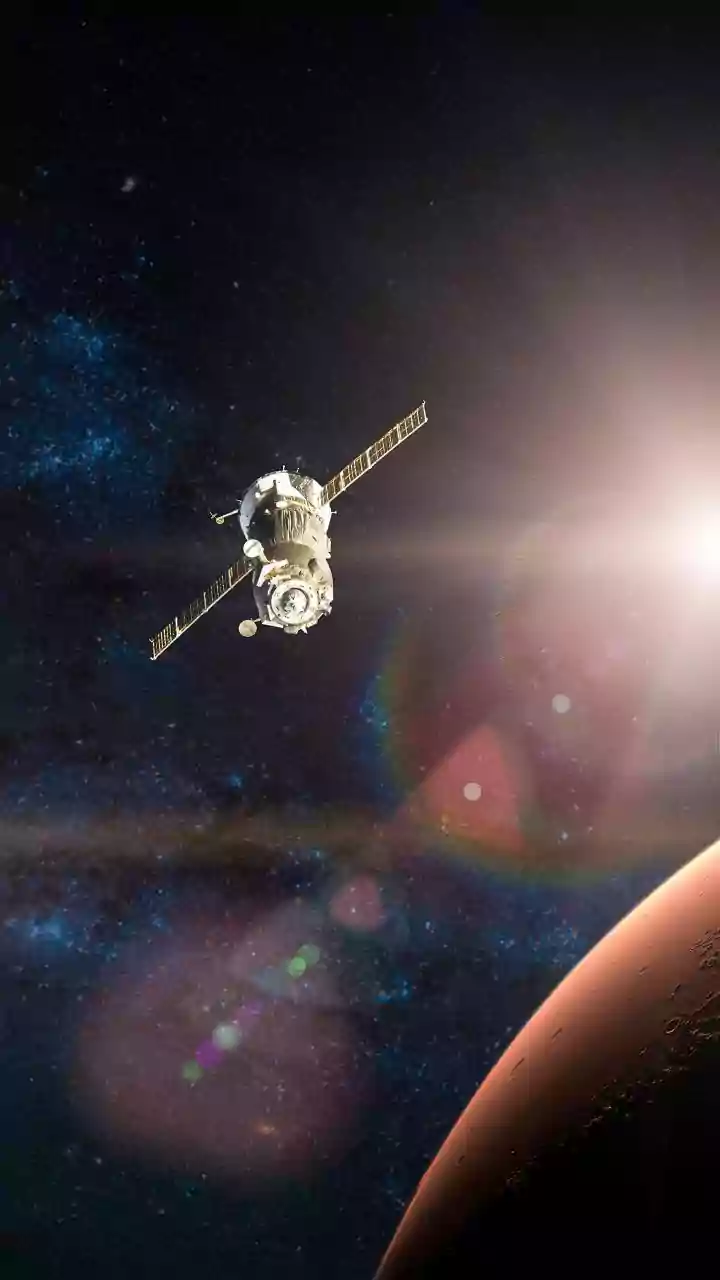
What if, instead of fighting the atmosphere, a satellite could use it? That’s the core concept behind Air-Breathing Electric Propulsion (ABEP), sometimes called air-scooping propulsion. This technology is designed to turn the problem—atmospheric drag—into the solution. Instead of carrying its own propellant, an ABEP-equipped satellite uses a specialized intake to collect the sparse air molecules it encounters at orbital speeds of nearly 8 kilometres per second. These collected particles, primarily nitrogen and oxygen, are then used as the propellant for an electric thruster. This effectively gives the satellite a virtually limitless fuel source, allowing it to compensate for drag and remain in orbit for many years, far beyond the capabilities of traditional systems.
How Air-Breathing Propulsion Works
The process is elegant yet complex. First, a specially designed passive collector scoops up atmospheric molecules. This was a major design challenge, as molecules at orbital speeds tend to bounce off surfaces rather than being captured. Once collected, the molecules are channeled into a chamber where they are compressed and ionized, stripping electrons from the atoms to create a plasma—a high-energy state of matter. This plasma is then accelerated by powerful electric and magnetic fields and expelled at extremely high velocity, generating thrust. This thrust is precisely calibrated to counteract the atmospheric drag, allowing the satellite to maintain a stable, very low orbit without ever needing to dip into a reserve tank of propellant.
From Theory to Reality
This groundbreaking technology is no longer just a theory. The European Space Agency (ESA) has been a key player, successfully building and test-firing a prototype in a vacuum chamber that simulated the conditions at a 200 km altitude. This was a world-first demonstration that proved the combined intake and thruster system could work. Other space agencies, like Japan's JAXA, are also developing their own Air-Breathing Ion Engine (ABIE) to enable long-term missions in VLEO. Furthermore, a number of commercial companies and university research groups, supported by organizations like DARPA and the UK Space Agency, are actively developing their own prototypes, pushing the technology from the research phase toward in-space demonstrations.
The Dawn of 'Infinite' LEO Missions
The implications of mastering air-breathing propulsion are enormous. It could enable a new class of long-duration satellites for persistent Earth observation, providing continuous monitoring of climate, agriculture, and disaster zones. For telecommunications, it could support VLEO constellations that offer even lower latency than current systems. These 'immortal' satellites would also help address the growing problem of space debris, as they operate in orbits where defunct objects naturally deorbit and burn up quickly. While challenges remain, such as material corrosion from atomic oxygen and optimizing power systems, the path is being paved for a future where satellites can fly lower and longer than ever before.