



The New Space Race: Beyond Government
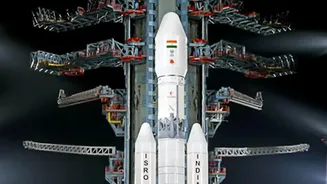
India's space industry is undergoing a massive transformation. For a long time, the Indian Space Research Organisation (ISRO) was the primary driver of the nation's space ambitions. Today, the sector has been opened up to private companies, sparking a revolution
often called "NewSpace." This shift is supported by government policy and new agencies like the Indian National Space Promotion and Authorisation Centre (IN-SPACe), which acts as a single-window agency to authorise and oversee all private space activities. This has led to the rise of over 400 space startups in India, attracting significant funding and creating thousands of new jobs. These companies are involved in everything from building rockets and satellites to analysing space data.
The Satellite Builders and Launchers
The most visible part of the NewSpace revolution is the rise of private launch vehicle and satellite manufacturing companies. Startups like Skyroot Aerospace, which built India's first private rocket, and Agnikul Cosmos, known for its 3D-printed engines, are now serious players. Companies such as Dhruva Space and Bellatrix Aerospace are focused on building satellites and the propulsion systems that power them in orbit. These firms are hiring aerospace, mechanical, and avionics engineers to design, build, and test the hardware that is central to the space economy. Unlike traditional government roles, jobs at these startups often offer the chance to work on a project from start to finish and see it fly in a much shorter timeframe.
The Downstream Data Gold Rush
Perhaps the largest area of job growth is not in building rockets, but in using the data they help generate. Satellites collect vast amounts of information about the Earth, and companies are in desperate need of people who can turn this raw data into valuable insights. These roles, often called remote sensing or geospatial data analysis, are crucial for industries like agriculture (for crop monitoring), insurance (for disaster assessment), urban planning, and defence. Companies like Pixxel are building constellations of hyperspectral imaging satellites to provide unique data sets. This field requires skills in Python, GIS software, and machine learning to analyse satellite imagery and provide actionable intelligence.
The Rule Makers: Space Law and Policy
As space becomes more commercial, it also becomes more crowded and complex, creating a demand for a new kind of professional: the space lawyer. With private companies launching satellites, concerns about space debris, signal interference, and liability are growing. Space lawyers and policy experts are needed to navigate international treaties, advise startups on regulatory compliance, draft launch contracts, and handle space-related insurance issues. They work for government agencies, private firms, and international bodies to create the legal frameworks that ensure space remains safe and accessible for everyone.
The Non-Obvious Roles: Beyond Engineering
The space sector's expansion means it needs more than just engineers and scientists. As private space companies grow, they need professionals in finance, marketing, human resources, and business development who understand the unique aspects of the space industry. There is also a growing need for educators and communicators who can inspire the next generation to pursue careers in space technology and STEM fields. Even roles like visual designers and bid managers are becoming common as companies compete for contracts and build their brand. Essentially, any role you would find in a typical tech company is now emerging in the space sector.
Skills to Launch Your Career
To enter this dynamic field, a strong foundation in STEM subjects like physics, mathematics, and computer science is essential. For technical roles, a degree in aerospace, mechanical, or electronics engineering is a common starting point. However, what truly sets a candidate apart are practical skills and hands-on experience. Proficiency in programming languages like Python and C++, familiarity with software like MATLAB, and experience with data analysis tools are highly valued. Participating in student projects like building a small satellite (CubeSat) or model rocketry can provide invaluable real-world experience that startups, in particular, look for. Soft skills like problem-solving, analytical thinking, and teamwork are just as critical in this highly collaborative industry.