



Become a Better Forecaster
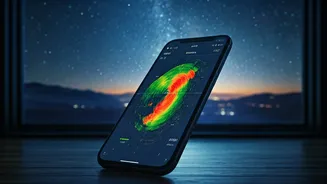
Standard weather reports are not designed for astronomers. A forecast for "partly cloudy" might be fine for a picnic, but it tells you little about your chances of seeing distant galaxies. Instead, turn to specialised astronomy weather apps and websites.
Tools like Astrospheric, Meteoblue, and Clear Outside provide the details that matter: hour-by-hour predictions for total cloud cover, transparency (how clear the air is), and 'seeing' (atmospheric stability). In India, winter months from November to February generally offer the clearest, driest skies, especially in northern regions and high-altitude areas like Ladakh. Pay attention not just to the percentage of cloud cover, but the type of clouds. High, thin cirrus clouds might dim the stars but still allow for some viewing, whereas low, thick stratus clouds will block everything.
Master Your Planning and Patience
The key to dealing with unpredictable weather is flexibility. Don't just plan for one specific night; have a few potential dates in mind during a week. Monitor the astronomy forecasts leading up to your desired nights. Conditions can change rapidly, and a sky that looks hopeless at 8 PM might be crystal clear by midnight. Mobility is also a great advantage. Sometimes, driving just an hour away from your original location can be the difference between a clouded-out session and a clear view. If you're serious about the hobby, planning trips to designated dark-sky sites during seasons known for stable weather can guarantee incredible views. Winter is often ideal for many parts of India, offering crisp air and minimal atmospheric disturbance.
What to Do When the Clouds Win
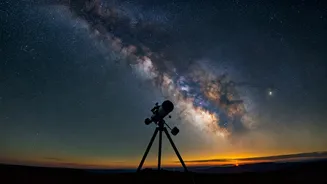
Even with the best planning, some nights are simply a washout. But a cloudy night doesn't have to be a wasted night. This is the perfect opportunity to focus on other aspects of the hobby. If you are an astrophotographer, you can use the time to process images from previous sessions, experimenting with software to bring out more detail. It's also an excellent time for equipment maintenance. Clean your telescope's lenses or mirror, collimate your optics, or resolve any nagging technical issues you've been putting off. You can also expand your astronomical knowledge. Use planetarium software like Stellarium to explore the sky virtually, planning future targets and learning new constellations. Engaging with online astronomy communities like Cloudy Nights can also be a great way to learn from others and share experiences.
Embrace the Cloudy Night Itself
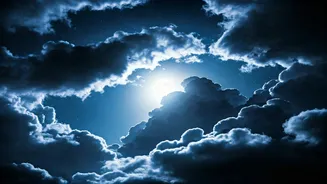
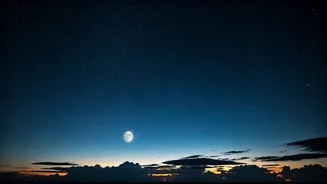
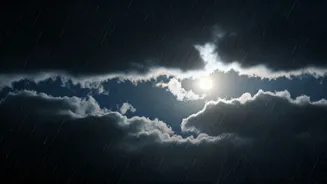
Sometimes, you can even do astronomy through the clouds. On a night with broken or moving cloud cover, identifying constellations as they peek through the gaps can become a fun and challenging game. Certain clouds can even create beautiful atmospheric phenomena. Thin, high-altitude cirrus clouds, made of ice crystals, can create stunning halos around the Moon. If you're into astrophotography, long exposures on a partly cloudy, moonlit night can produce artistic images with streaky, illuminated clouds against a starry backdrop, turning two potential nuisances into a creative positive. For the more technically inclined, it's even possible to 'listen' to meteor showers on a completely overcast night using a simple FM radio to detect the ionized trails left by meteors.