



The Foundation: Start with Your Guest List
Before you even think about the menu, get a firm headcount. This is the single most important variable in your calculations. For planning purposes, consider children between 5 and 12 years old as half an adult portion. Toddlers will likely eat very little,
so don't over-plan for them. Having a clear number prevents both the anxiety of running out of food and the burden of excessive leftovers. Remember that for a buffet-style meal, guests tend to serve themselves slightly more than they would for a plated dinner, so it's always wise to have a small buffer.
Rice: The Heart of the Meal
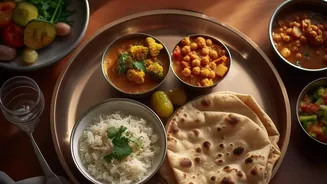
Rice is a staple, but the quantity depends on its role. If plain rice is a side dish among many curries and breads, plan for 60-75 grams of uncooked rice per adult. However, if a biryani or pulao is the star of the show, you should increase the amount to 125-150 grams per person. A simple rule of thumb is that 1 kg of uncooked rice will yield a main-course biryani for about 7-8 adults, or serve as a side for 10-12 guests. Remember that rice roughly triples in weight and volume when cooked, so measure carefully.
Curries and Dals: The Main Affair
Variety is key to a great Indian feast. Rather than one massive pot of a single curry, it's better to offer a selection. This is where the 'sampling effect' comes in: guests take smaller portions of each dish to try everything. When planning, a good rule is to have one main curry for every 4-5 guests. For portioning, a boneless meat or chicken dish requires about 150g of raw protein per person, while bone-in requires a bit more, around 200-225g. For vegetarian mains like paneer, budget 100-125g per person. For dals, about 30g of dry lentils per person is a good measure when it's one of several sides.
Breads: Roti, Naan, and Puri
Indian breads are essential for scooping up delicious gravies and disappear faster than you think. If you are serving rice as the main carbohydrate, plan for 1.5 to 2 pieces of naan or roti per person. If bread is the primary starch and you're serving less rice, you should increase this to 3-4 pieces per guest. It’s always a good idea to have a little extra, as some guests may prefer bread over rice.
Appetizers and Snacks
Starters set the tone for the meal. If they are served before a full, heavy meal, plan for 2-3 pieces per person. This could be three samosas, a few pakoras, or some tikka bites. However, if you're hosting a more informal cocktail-style event where appetizers are the main event, you'll need significantly more—plan for about 10-12 pieces per person for the first hour. Keep the starters light enough that your guests still have an appetite for the main course.
Accompaniments and Sweets
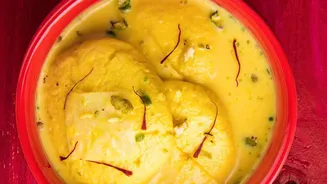
Don't forget the supporting cast. Raita, salads, and pickles are crucial for balancing rich, spicy flavours. For raita, about 1 litre should be sufficient for 8-10 people. For dessert, portions can be modest after such a large meal. One or two pieces of gulab jamun or a small bowl (about 100-120g) of kheer or halwa per person is usually a perfect ending. Having a fruit platter is also a refreshing and popular option.