


A Landmark Discovery in Deep Space
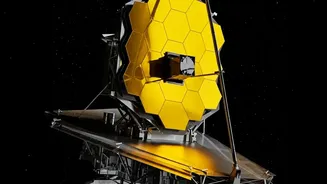
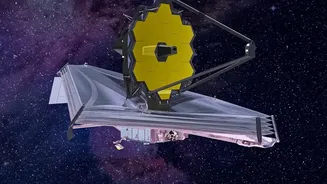
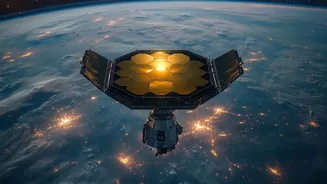
Astronomers using the revolutionary James Webb Space Telescope have announced the detection of water vapour in the atmosphere of a distant exoplanet. While water has been found on gas giants before, detecting it on a smaller, rocky world marks a pivotal
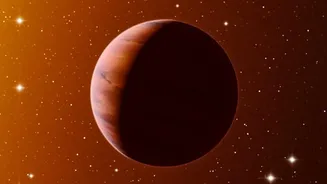
moment in our search for habitable planets beyond our solar system. The planet in question, a 'super-Earth' several times more massive than our own world, orbits a star many light-years away. This discovery, made possible by the JWST's incredible sensitivity, doesn't confirm the presence of alien life, but it does identify a world with one of the most crucial ingredients for life as we know it. It's a major step forward, establishing this planet as a prime candidate for future observation and study.
What Exactly Is a Super-Earth?
The term 'super-Earth' might conjure images of a bigger, better version of our home, but it simply refers to a planet's size and mass. A super-Earth is an exoplanet with a mass higher than Earth's but significantly lower than that of our solar system's ice giants, like Neptune and Uranus. They are a common type of planet in our galaxy, making up a significant fraction of known exoplanets, yet curiously, our own solar system doesn't have one. These worlds can be rocky, gaseous, or a mix of both. Scientists are particularly interested in rocky super-Earths that orbit within their star's 'habitable zone'—the region where conditions might be just right for liquid water to exist on the surface.
The Power of Infrared: How Webb Sees the Unseen
Detecting the chemical makeup of an atmosphere hundreds of light-years away is a monumental technical challenge. The JWST accomplishes this using a technique called transit spectroscopy. As an exoplanet passes in front of its host star from our perspective, a tiny fraction of the starlight filters through the planet's atmosphere. Different molecules in that atmosphere absorb specific wavelengths, or colours, of light. The JWST's powerful infrared instruments can analyse the starlight and identify the 'fingerprints' of the molecules that are present, essentially reading a chemical barcode from across the galaxy. Water vapour leaves a very distinct signature, which is what the telescope has successfully identified, although scientists remain cautious, working to confirm the signal is not from the star itself.
Water Vapour: A Key Signpost for Life?
The presence of water is inextricably linked to life on Earth, making its discovery elsewhere a tantalising prospect. Finding water vapour is the first step; the ultimate goal is to find liquid water on a planet's surface, which is thought to be essential for life to emerge. The detection of a water-rich atmosphere is a critical piece of the puzzle. It suggests that the building blocks for a habitable world could be in place. However, it's not a guarantee of life. This particular super-Earth is estimated to have surface temperatures far too hot for liquid water, potentially reaching over 400 degrees Celsius. Even so, the discovery is incredibly exciting because it proves that worlds with substantial, water-rich atmospheres exist, guiding astronomers where to look next.
What This Means for the Future of Astronomy
This finding ushers in what many are calling a new era of exoplanet research. For years, studying the atmospheres of smaller, rocky planets was beyond our technological reach. The JWST has changed the game, providing a level of detail that was previously only a dream for astronomers. Each discovery like this one allows scientists to refine their models of how planets form and evolve. It helps them understand the diversity of worlds in our galaxy—from scorching hot Jupiters to potential water worlds. While this super-Earth is unlikely to host life, it serves as a crucial proof of concept. It demonstrates that we have the tools to detect the signs of habitability on distant worlds, bringing us one giant leap closer to answering the profound question of whether we are alone in the universe.