


What is This Celestial 'Triangle'?
In the vast expanse of our solar system, planets are constantly in motion, orbiting the Sun at different speeds and distances. From our vantage point on Earth, these orbits sometimes cause the planets to appear close to one another in our night sky. This
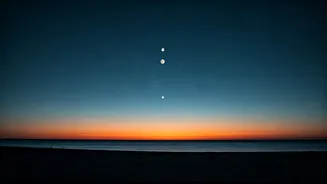
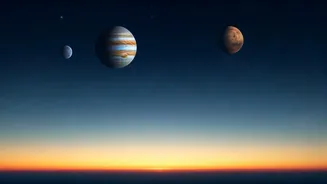
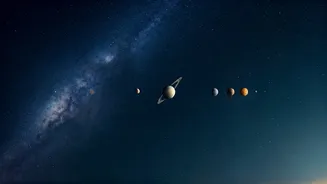
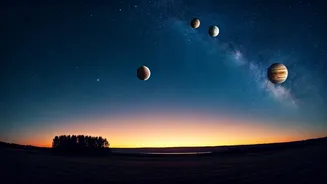
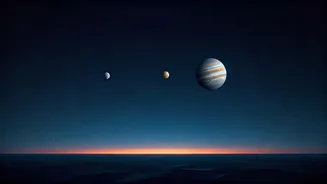
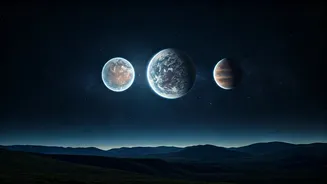
is called a planetary conjunction. What makes certain alignments special is when three or more bright objects form a distinct shape. In this case, Mercury, Venus, and Jupiter appear to create a 'visual triangle'. It's important to remember this is a line-of-sight illusion. The planets aren't actually close to each other in space—in reality, they remain hundreds of millions of kilometres apart. But from here, they put on a show, clustering together in a small patch of the sky, offering a rare and beautiful spectacle that has captivated humans for millennia.
When and Where to Look From India
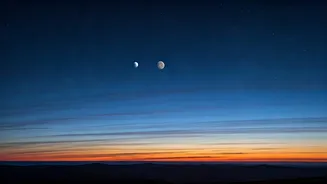
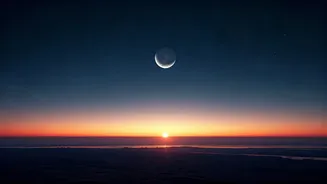
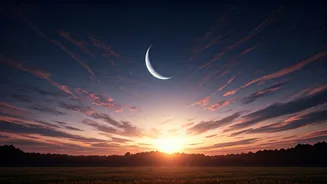
This is an evening event, so your best chance to see it is shortly after sunset. Find a viewing spot with a clear, unobstructed view of the western horizon—the direction where the Sun goes down. The prime viewing window begins about 30 to 45 minutes after sunset, during twilight. This is when the sky is dark enough for the planets to shine brightly, but before they dip below the horizon. Venus will be the easiest to spot; it's the most brilliant object in the evening sky, often called the 'Evening Star'. Just above or near it, you'll find the steady, bright light of Jupiter, the second-brightest of the trio. The real prize is Mercury. As the planet closest to the Sun, it never strays far from it in our sky, making it notoriously difficult to see. It will appear as a fainter point of light, closer to the horizon than the other two. Be patient, as it may only be visible for a short period before setting.
Why This Planetary Dance is Special
While conjunctions of two planets are relatively common, having three of the brightest naked-eye planets gather in such a tight, photogenic formation is a much rarer treat. The involvement of Mercury is what elevates this from a common sight to a must-see event for sky-watchers. Because of its proximity to the Sun's glare, many people have never knowingly seen Mercury. This alignment provides a fantastic opportunity to spot the elusive planet by using the brilliant beacons of Venus and Jupiter as guides. You don't need any special equipment to enjoy this show; it’s a celestial event for everyone. It’s a perfect reminder of the dynamic, ever-changing nature of our solar system, a cosmic dance happening right above our heads.
Simple Tips for the Best View
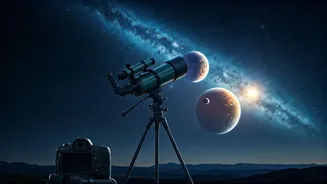
To maximise your experience, follow these simple tips. First, escape city lights if you can. The darker your surroundings, the more vivid the planets will appear, especially the fainter Mercury. Even moving to a local park or a rooftop away from direct streetlights can make a huge difference. Second, give your eyes time to adjust to the darkness. It takes about 15-20 minutes for your eyes to become fully dark-adapted. Avoid looking at your bright phone screen during this time. Third, while a telescope isn't necessary, a pair of binoculars can enhance the view. With binoculars, you might even be able to spot Jupiter's four largest moons—Io, Europa, Ganymede, and Callisto—appearing as tiny pinpricks of light flanking the giant planet. Finally, consider using a stargazing app on your phone. Apps like Stellarium or SkyView can help you identify the planets and other constellations with precision by simply pointing your phone at the sky.