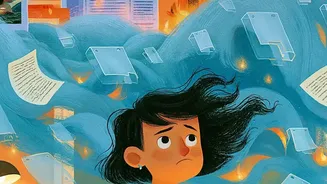






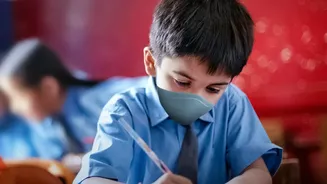

The familiar grey haze has once again descended upon Delhi, but its impact stretches far beyond the skyline. For countless children, toxic air means a forced retreat indoors, swapping playgrounds for pixels and raising urgent questions about their mental
well-being.
A Cycle of Confinement
As November progresses, Delhi’s air quality has repeatedly entered the 'severe' category, with AQI levels crossing the 400-mark, a level considered hazardous. In response, the Commission for Air Quality Management (CAQM) has enacted Stage III of the Graded Response Action Plan (GRAP), prompting the Delhi government to advise schools to shift to hybrid or online classes, particularly for younger students. This move, intended to protect children's vulnerable lungs, has inadvertently plunged them back into a familiar state of isolation. After enduring years of pandemic-related lockdowns, this 'pollution lockdown' feels like a recurring nightmare for families, trapping children in a cycle of confinement that experts warn is taking a hidden toll.
The Unseen Scars of Isolation
While the physical symptoms of pollution exposure—coughing, eye irritation, and respiratory distress—are well-known, the psychological fallout is now becoming alarmingly clear. Child psychologists and health experts are sounding the alarm about a rise in anxiety, irritability, and stress among children. The core of childhood development hinges on social interaction, outdoor play, and physical activity. When these are abruptly taken away, the consequences can be severe. Experts explain that being kept indoors for prolonged periods disrupts routines, limits peer interaction, and fosters a sense of helplessness, all of which are significant contributors to anxiety. Studies have shown a direct link between exposure to air pollution and worsening mental health disorders in children, with some research indicating it can be as harmful as other well-known risk factors.
From Playgrounds to Screens
The default solution to keep children engaged indoors is often screen time. With classes moving online, the digital world becomes their classroom, playground, and social hub. However, this increased dependence on screens comes with its own set of problems. A UNICEF health specialist highlighted that when children cannot go outside, they often turn to digital devices, creating a cycle of dependence. This excessive screen time is linked to sleep disruption, lack of physical activity, and can even exacerbate feelings of anxiety and depression. Parents find themselves in a difficult position, forced to rely on the very technology they were trying to limit, just to get through the day.
A Developmental Crisis
The impact of being confined by pollution is more than just a temporary mood dip; it's a developmental crisis. Children are physiologically more vulnerable to air pollutants because their brains and bodies are still growing. Research has shown that pollutants can interfere with brain development, affecting learning, memory, and emotional regulation. One public health expert noted that because children's blood-brain barriers are still developing, pollution can interfere with the protective coating around nerve fibres, impacting how messages travel in the brain. When this biological vulnerability is combined with the psychological stress of isolation and a lack of physical stimulation, it creates a perfect storm that can have long-lasting effects on a child's future.