


What Is a Lunar Eclipse?
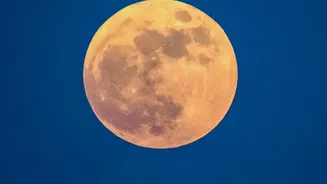
A lunar eclipse is a beautiful alignment of cosmic bodies. It happens when the Earth positions itself directly between the Sun and the full Moon. By doing so, our planet casts a large shadow that falls upon the lunar surface, dimming the Moon and sometimes
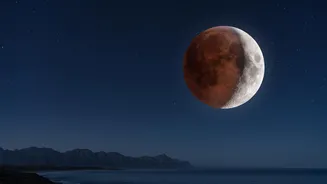
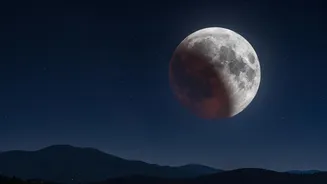
giving it a dramatic new colour. Unlike solar eclipses, which require special eye protection, lunar eclipses are completely safe to view with the naked eye. There are three types: total, partial, and penumbral. A total eclipse is when the Moon passes fully into Earth's darkest shadow, the umbra. A partial eclipse, like the one coming up, is when only a part of the Moon enters this dark shadow. A penumbral eclipse is very subtle, with the Moon only passing through Earth’s faint outer shadow.
The Big Event: A Major Miss for India
Here's the crucial detail for sky-gazers in India: the partial lunar eclipse on August 28, 2026, will not be visible from the country. The entire event occurs during daytime hours for India, when the Moon will be below the horizon. According to Indian Standard Time (IST), the faint penumbral stage begins around 6:53 AM, with the more dramatic partial phase starting at 8:04 AM. The eclipse will reach its maximum point at 9:43 AM, before the partial phase ends at 11:21 AM. Because these are morning hours across the subcontinent, the Moon will not be in the sky for us to see. The best views will be in North and South America, as well as parts of Europe and Africa.
Why This Eclipse Is Special
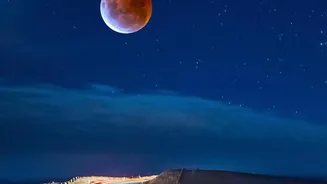
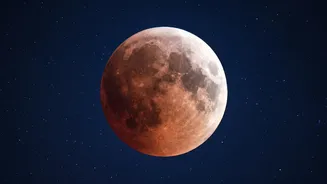
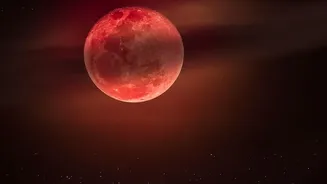
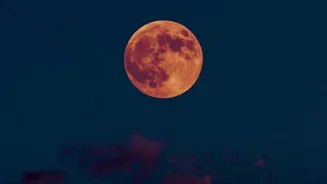
Even though we can't see it live from India, this is a particularly noteworthy event. It's a very deep partial eclipse, with about 96% of the Moon’s surface passing through the Earth’s dark umbral shadow at its peak. This means it will be just shy of a total lunar eclipse. For viewers in the right locations, this will cause the eclipsed part of the Moon to take on a reddish or coppery glow, an effect often called a 'Blood Moon'. This happens because sunlight filters through Earth's atmosphere, and our atmosphere scatters the blue light, letting the red light pass through to the Moon. It’s like projecting all the world's sunrises and sunsets onto the lunar surface.
How You Can Still Watch From India
Just because it's not in our sky doesn't mean you have to miss out entirely. Several astronomy organisations and media outlets will host free live streams of the eclipse. This is a fantastic way to experience the event in real-time with expert commentary. Websites like TimeandDate.com and observatories such as the Griffith Observatory in Los Angeles often provide high-quality feeds. These streams typically start just before the partial eclipse begins, so you can tune in from around 7:30 AM IST to follow the action as it unfolds across the Americas. It’s a great opportunity to see the eclipse up close, regardless of your location or local weather.
Tips for Future Eclipse Viewing
For the next lunar eclipse that is visible from India, you won’t need any special equipment to enjoy it. The best way to watch is to find a location with a clear view of the sky, away from the glare of city lights. Allow your eyes about 15-20 minutes to adjust to the darkness; this will help you see the subtle colour changes on the Moon's surface. While your eyes are all you need, a pair of binoculars or a small telescope can offer a stunning, magnified view of the craters and seas as Earth's shadow creeps across them. And if you want to try photography, a tripod is your best friend. It will keep your phone or camera steady for the longer exposures needed in low light, preventing blurry images and helping you capture a memorable souvenir of the cosmic show.