






Gaganyaan: India's Human Spaceflight Mission
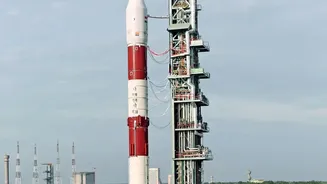
The Gaganyaan mission is arguably the most anticipated project in ISRO's pipeline. Its goal is to demonstrate the capability of launching a crew of three astronauts into a 400 km orbit for a three-day mission and bringing them back safely to Earth. This
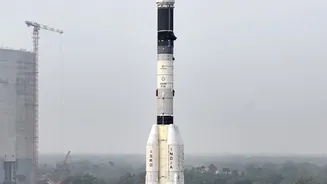
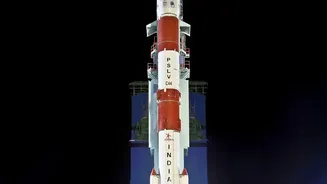
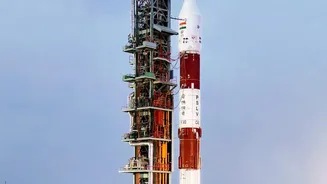
would make India the fourth country in the world—after the United States, Russia, and China—to have an independent human spaceflight program. The path to this historic launch involves a series of rigorous tests. The first uncrewed test flight, Gaganyaan G1, is slated for the latter half of 2026. This mission will test the crew module, life support systems, and recovery operations. Following G1, a second uncrewed mission, G2, will launch with a humanoid robot named Vyommitra aboard to simulate human functions before the first crewed flight, which is planned for 2027. The well-proven LVM3 rocket has been human-rated for this mission, featuring a Crew Escape System to ensure astronaut safety during launch.
Bharatiya Antariksh Station: India's Outpost in Space
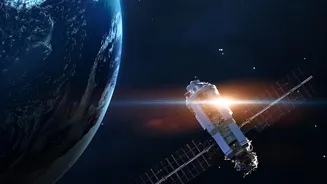
Looking beyond short-duration missions, ISRO is planning to build its own space station, the Bharatiya Antariksh Station (BAS). This modular station is planned to be completed by 2035, with the first module scheduled for launch in 2028. Initially, the station will support robotic operations before becoming capable of hosting astronauts for longer durations of three to six months. The station is expected to weigh around 52 tonnes and will orbit the Earth at an altitude of approximately 400 kilometres. The development marks a significant step towards a sustained human presence in space, enabling long-term research in microgravity on life sciences, materials science, and more. The design work for the first module is complete, and the project is awaiting final government approval, representing a crucial part of India's 25-year space roadmap.
NISAR: A Joint Watchtower in the Sky
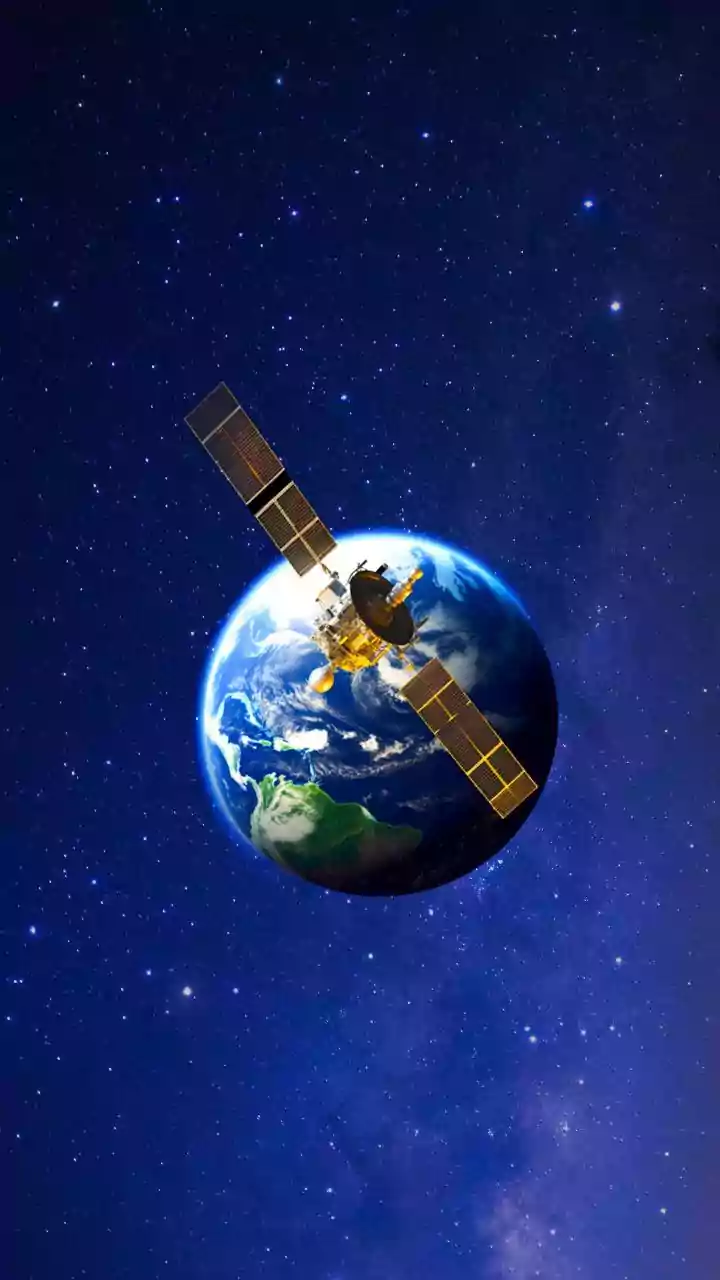
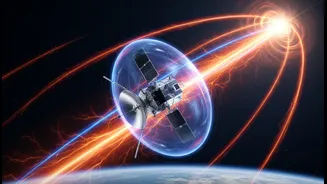
In a remarkable collaboration, ISRO and NASA have developed the NISAR (NASA-ISRO Synthetic Aperture Radar) satellite. With a launch targeted for July 30, 2026, this mission is set to be one of the most advanced Earth-observation satellites ever built. NISAR will be the first radar imaging satellite to use dual frequencies, allowing it to scan nearly every land and ice surface on Earth twice every 12 days, regardless of weather or daylight. Its primary purpose is intensely practical: to monitor Earth’s changing ecosystems, track movements in the planet's surface down to a centimetre, and provide early warnings for natural disasters like landslides and earthquakes. For India, a nation managing vast agricultural lands and coastlines, NISAR will be a vital tool for disaster preparedness, water resource management, and food security.
Shukrayaan-1: A Mission to Venus
After its success with Mars, ISRO has set its sights on Venus with the Shukrayaan-1 orbiter mission. The mission, which was formally approved by the cabinet in September 2024, is scheduled to launch on March 29, 2028. Venus is often called Earth's 'twin sister' due to its similar size and density, but it has a scorching, toxic atmosphere. Shukrayaan-1 aims to study the planet's surface and atmosphere, investigate its volcanic activity, and understand why it evolved so differently from Earth. The mission will carry a suite of scientific instruments, including some developed in collaboration with international partners, to unravel the mysteries of the cloud-covered planet.
Mangalyaan-2: A Bold Return to Mars
Building on the phenomenal success of the Mars Orbiter Mission (Mangalyaan), ISRO is planning a far more ambitious sequel, Mangalyaan-2. Unlike its predecessor, which was an orbiter, this mission aims to land on the Martian surface. The proposed mission plan includes a lander, a rover, and even a helicopter to explore the Red Planet's surface, atmosphere, and environmental conditions. This represents a major technological leap for ISRO, moving from orbital missions to complex planetary landings. The scientific goals include studying Mars' surface composition and its potential habitability. While a firm launch date has not been set, it is tentatively scheduled for 2026 or later, marking India's first attempt to land on another planet.