




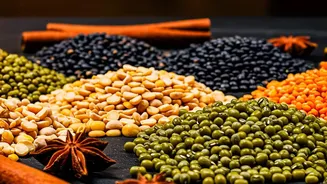

Why We Soak Pulses in the First Place
Soaking pulses before cooking is a time-honoured practice with several clear benefits. The primary reason is to rehydrate them, which softens the pulses and significantly reduces cooking time. This process also helps to cook them more evenly. Beyond simply
saving time and fuel, soaking can also improve digestibility. Pulses contain complex sugars called oligosaccharides, which can be difficult for the human body to break down, leading to gas and bloating. Soaking helps dissolve a portion of these sugars into the water, which is then discarded. Furthermore, soaking can help reduce levels of phytic acid, a compound that can inhibit the body's ability to absorb essential minerals like iron, zinc, and calcium.
The Key Difference: Split vs. Whole
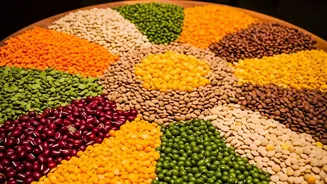
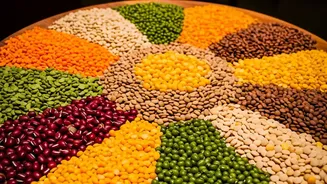
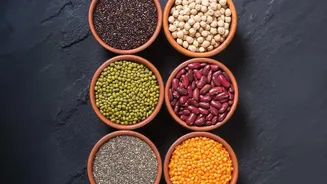
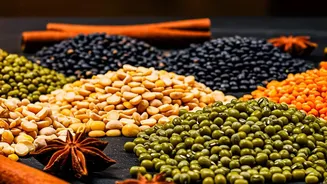
The core of the issue lies in simple physics and biology. Whole pulses, such as whole moong, black chickpeas (kala chana), or kidney beans (rajma), are entire seeds. They are protected by a tough outer skin or seed coat. This coat is naturally designed to protect the seed and is not very permeable to water. As a result, water takes a long time to penetrate and rehydrate the dense, starchy interior. This is why these larger, whole pulses typically require a long soak of anywhere from 4 to 12 hours, or even overnight. Split pulses, on the other hand, are whole pulses that have been hulled and split in half. Common examples include toor dal (split pigeon peas), moong dal (split mung beans), and masoor dal (red lentils). By removing the protective skin and splitting the pulse, its surface area is dramatically increased. This allows water to be absorbed much more quickly and efficiently, drastically cutting down on the required soaking time.
A Practical Guide to Common Pulses
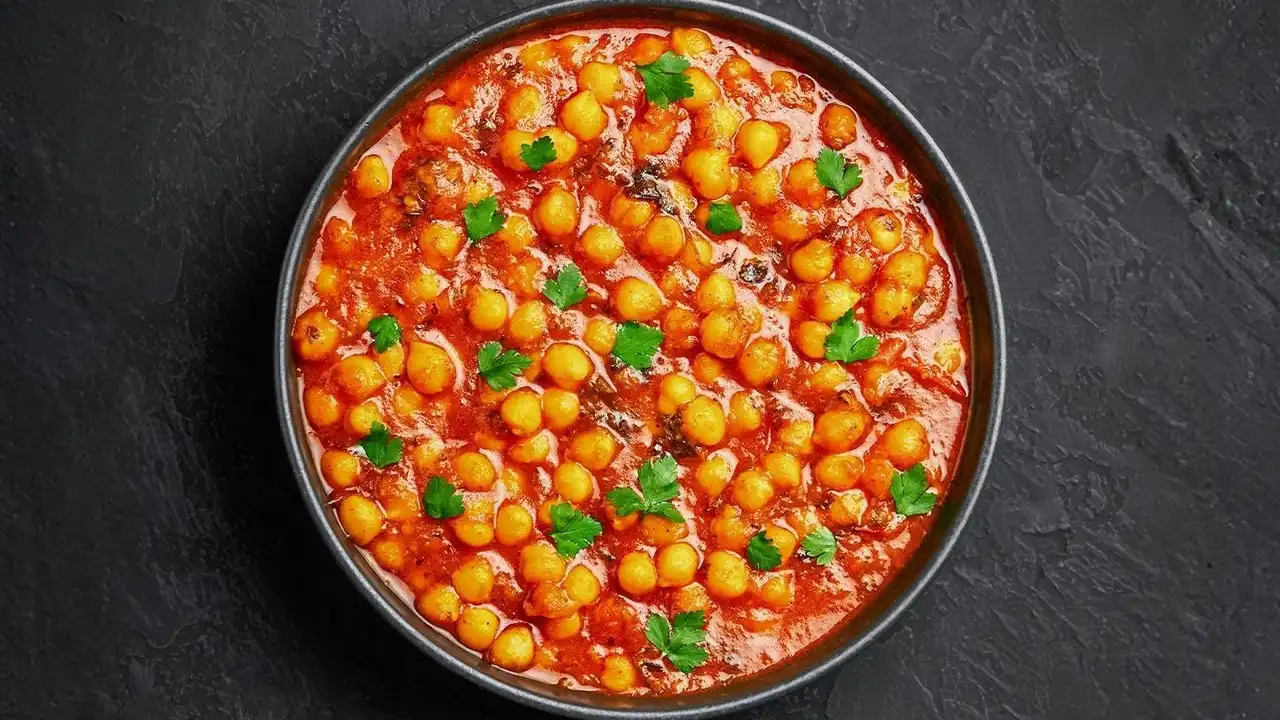
Knowing which pulses need a long soak and which don't can make meal planning much more spontaneous. Generally, small, split pulses require little to no soaking. Split red lentils (masoor dal) and split mung beans (moong dal) often need no more than a thorough rinse before cooking and can be ready in 15-20 minutes. Yellow split peas (toor/arhar dal) can benefit from a short 30-minute soak but can often be cooked without one. In contrast, their whole counterparts require more planning. Whole mung beans and whole black gram (urad) benefit from a few hours of soaking. Larger, denser beans are the ones that absolutely need a long soak. Chickpeas (chana), kidney beans (rajma), and black beans require a minimum of 6 to 8 hours to soften properly before cooking. Without this step, they can take an extremely long time to cook and may result in an uneven texture.
Embracing a More Flexible Approach
While soaking is a fantastic tool, it's not always a rigid requirement, even for some whole pulses. If you're in a hurry, a 'quick soak' method can be used for many beans. This involves covering the pulses with water, bringing them to a boil for a few minutes, and then letting them stand, covered, for about an hour before draining and cooking. This can be a useful compromise when you've forgotten to soak your beans overnight. Another game-changer for reducing cooking time is the pressure cooker. A pressure cooker can cook even unsoaked beans in a fraction of the time it would take on the stovetop, making it an essential tool for any pulse lover. For example, chickpeas that might take over an hour on the stove can be tender in about 20-30 minutes under pressure. However, it's worth noting that for beans like rajma, soaking is still highly recommended to ensure they cook evenly and to help break down compounds that can cause digestive issues.