






In the world of fitness, we often pit exercises against each other. But when it comes to jogging versus stretching, it's not about which is 'better' overall, but which is right for your specific goal. The answer is surprisingly clear-cut.
The Right Tool for the Job
Every fitness
plan is a toolkit. You wouldn't use a hammer to turn a screw, and the same logic applies to exercise. Jogging is a phenomenal tool for cardiovascular health, endurance, and strengthening bones. Its purpose is to challenge your heart and lungs, burn calories, and build stamina through repetitive motion. Flexibility, however, is a different beast entirely. It’s the range of motion available at a joint, and achieving it requires a completely different approach. If your primary aim is to touch your toes, improve your posture, or simply feel less stiff, turning to jogging is like bringing the wrong tool to the worksite. For flexibility, stretching is the specialised instrument designed for that exact purpose.
What Jogging Actually Does to Your Muscles
Running is an act of repetitive contraction. With every stride, your hamstrings, quadriceps, glutes, and calves contract to propel you forward. While this builds strength, it can also lead to muscle tightness and fatigue. Over time, if not counteracted, this repetitive motion within a limited range can lead to what’s known as adaptive shortening—your muscles essentially get used to being shorter and tighter. Think of it like a spring that's constantly being compressed but never fully released. This is precisely the opposite of what you want when aiming for greater flexibility. In fact, some research suggests that elite runners are often less flexible, as slightly stiffer tendons can improve running economy by providing more elastic energy return. So, while jogging makes you a better runner, it actively works against the goal of becoming more pliable.
How Stretching Creates Real Flexibility
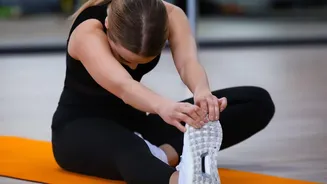
Stretching works on a fundamentally different principle. Instead of contracting muscles, it elongates them. When you hold a stretch, you are gently lengthening the muscle fibres and the surrounding connective tissue, known as fascia. This process does two critical things. First, on a physiological level, consistent stretching can signal your body to add more 'sarcomeres'—the basic contractile units of a muscle—in series, literally making the muscle longer. Second, it works on your nervous system. Stretching helps your nerves become more accustomed to a greater range of motion, reducing the reflexive tightening that often limits how far you can move. This combination of physical lengthening and neurological adaptation is what truly increases your flexibility, allowing joints to move more freely and reducing overall tension.
The Difference Between Dynamic and Static Stretching
Not all stretching is created equal, and knowing the difference is key. Dynamic stretching involves active movements that take your muscles through their full range of motion, like leg swings or arm circles. This type is ideal for a warm-up before a run, as it increases blood flow and prepares muscles for activity without decreasing power. Static stretching, on the other hand, is the classic 'hold a pose' style of stretch, typically for 15–60 seconds. This is the type most effective for increasing long–term flexibility and aiding recovery. The best time for static stretching is after a workout when your muscles are warm and pliable. Using static stretches on cold muscles before a run can actually hinder performance and increase injury risk.
Better Together : A Balanced Approach
The final verdict isn't to abandon jogging in favour of stretching ,but to understand their complementary roles . Jogging is your engine for cardio fitness ,but it creates tightness as a byproduct . Stretching is your maintenance crew ,specifically designed to counteract that tightness ,prevent injury ,and improve your functional range of motion . A smart fitness routine doesn't choose one over the other ;it integrates both . Use dynamic stretching to prepare for your runs and dedicated static stretching sessions on your off days or after your cooldown . This holistic approach ensures you get the heart–pumping benefits of jogging while also developing the supple ,resilient muscles that define true flexibility and long–term athletic health .