






How Your Digital Co-Pilot Thinks
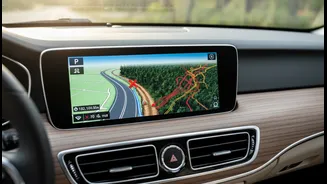
When you ask a navigation app for a route, you're tapping into a complex AI system. These apps, like Google Maps or Waze, don't just have a static map; they analyze immense datasets to find the best path. The process combines historical traffic patterns—knowing
that a certain highway clogs up at 5 p.m. on weekdays—with real-time, anonymized location data from millions of users on the road. This allows the AI to see how fast traffic is moving right now. The algorithms then process all this information, predicting future conditions and calculating the route that is not just the shortest, but theoretically the fastest and most practical. The system even uses machine learning to get smarter over time, learning from whether its suggested detours actually saved users time.
The Distance Delusion
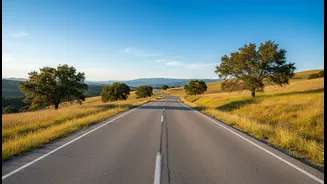
One of the most common GPS frustrations is being guided onto a route that is technically shorter but practically absurd. Users report being sent down private farm lanes, unpaved gravel tracks, or roads completely unsuitable for their vehicle, all to shave a minute off the ETA. This happens because the AI's primary goal is often efficiency, without a full understanding of road quality or context. A line on a map is just a line; the AI may not distinguish a smooth highway from a bumpy dirt path or a private driveway that was once a public road. This has led to safety concerns, with emergency vehicles getting lost and delivery drivers trespassing on private property because their software directs them there. While some apps are getting better, many still lack a simple, reliable “avoid unpaved roads” feature, leaving the final judgment to the driver.
The Traffic Black Hole
AI is surprisingly good at predicting traffic, with Google claiming over 97% accuracy on most trips. It achieves this by blending historical data with live information from other drivers. However, the system has its limits. It struggles with sudden, unpredictable events that haven't been reported yet, like a fresh accident or a pop-up local event causing a road closure. There can be a lag before enough users report an issue or before official data from transport authorities is integrated. Sometimes, the system itself can cause problems. In both Germany and Canada, Google Maps has incorrectly shown major highways as closed, creating chaos as thousands of drivers were rerouted onto smaller roads that couldn't handle the volume. Conversely, the system can fail to register a real closure, leaving drivers stuck when it reports clear sailing.
The 'Sorry, We're Closed' Problem
Perhaps the most mundane but frustrating failure is when your navigation app confidently directs you to a destination, only for you to arrive and find it closed. Keeping a global database of opening hours for every shop, park, and seasonal road is a monumental task. Data can be outdated, or a business may have suddenly changed its hours. While companies like Google use AI to try and predict inaccuracies—for instance, by noticing if many people are visiting a business when it's listed as closed—it's not foolproof. This is especially true for things like seasonal mountain passes or gates to national parks that don't operate on a typical commercial schedule. Official websites and local authorities remain the most reliable source for this information, a step many users forget to take before starting their journey.
Your Human Reality Check
The biggest mistake a driver can make is to trust their navigation app blindly. These tools are incredibly powerful co-pilots, but they are not infallible commanders. The solution is to pair the AI's data with your own human intelligence. If a route looks suspicious, consult a different map source. Before heading to a time-sensitive location, double-check opening hours on the official website. Be aware of your vehicle's limitations and don't follow a route down a road that looks unsafe. Many apps allow you to report map errors, which helps the system learn and benefits other drivers. By reporting incorrect directions, private roads, or wrong business hours, you contribute to making the system smarter for everyone. Ultimately, a little common sense goes a long way in avoiding the classic GPS fail.