





The Fibre Factor
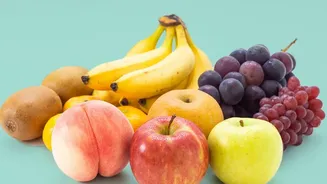
The most significant difference between whole fruit and fruit juice is fibre. Whole fruits are packed with dietary fibre, found in the pulp, skin, and cellular walls. This fibre does more than aid digestion; it plays a crucial role in how your body handles
sugar. When you eat an apple, for instance, the fibre slows down the absorption of the fruit's natural sugars (fructose) into your bloodstream. This leads to a more gradual rise in blood sugar and insulin levels. Juicing, however, removes nearly all of this beneficial fibre, leaving behind what nutrition experts call 'free sugars'.
A Tale of Two Sugars
Not all sugars are created equal. The sugars in whole fruit are called 'intrinsic sugars' because they are contained within the fruit's cellular structure. Your body has to work to break down this structure to get to them. In contrast, the sugars in juice are 'free sugars'. The juicing process breaks down the plant cells, releasing the sugars and making them immediately available for absorption. This causes a rapid spike in blood sugar, similar to what happens when you drink a sugary soft drink. Over time, frequent consumption of free sugars is linked to a higher risk of weight gain and type 2 diabetes, whereas eating whole fruits is associated with a lower risk.
The Serving Size Illusion
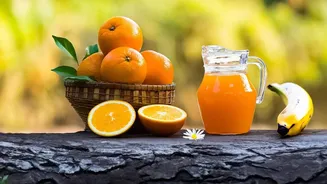
It’s easy to consume a lot of fruit in liquid form without realising it. A single 200ml glass of orange juice can contain the sugar of four or five oranges, but without the fibre that would make you feel full. You could easily drink that glass in a minute, but eating five whole oranges in one sitting would be a challenge. This is why serving size is so critical. Health authorities recommend limiting 100% fruit juice to a small glass—around 150ml (about half a cup)—per day, and it should only count as one of your five-a-day, regardless of how much you drink. For children, the recommended amounts are even smaller.
Nutrient Loss and Bioavailability
While juice does contain vitamins and minerals, the process of juicing can lead to nutrient loss. Heat-sensitive vitamins like Vitamin C and certain antioxidants can degrade, especially if the juice isn't consumed immediately after being made. Many beneficial plant compounds, called polyphenols, are bound to the fibre and are discarded with the pulp. Interestingly, some studies show that certain nutrients, like lycopene in tomatoes or carotenoids in orange juice, can become more bioavailable (easier for the body to absorb) after processing. However, this doesn't outweigh the significant loss of fibre.
When Juice Has a Place
Despite the advantages of whole fruit, juice isn't a complete villain. It can be a convenient way to get a quick dose of vitamins, especially for those who struggle to eat enough fruit, such as the elderly or picky eaters. For people with certain digestive issues who need a low-fibre diet, juice can provide nutrients without the roughage. In specific situations, like recovering from an episode of low blood sugar (hypoglycemia), the fast-acting sugar in juice can be beneficial. The key is context and moderation. If you do opt for juice, pairing it with a source of protein or fat, like nuts or eggs, can help slow down the sugar absorption.