


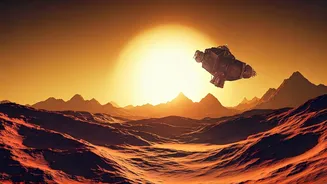


Meet Shukrayaan-1: India's Next Interplanetary Leap
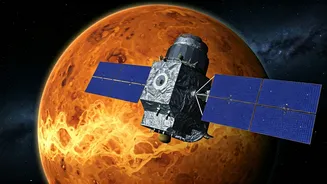
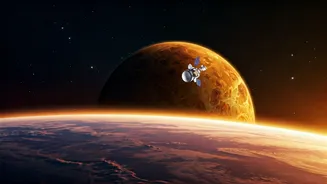
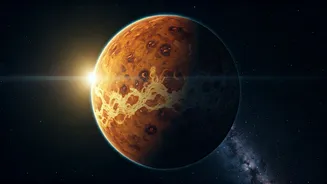
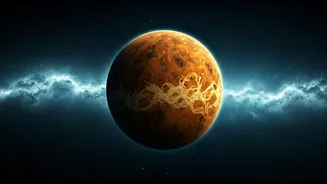
Following its celebrated missions to the Moon and Mars, the Indian Space Research Organisation (ISRO) is setting its sights on Venus. The mission, named Shukrayaan-1, which translates to 'Venus Craft' in Sanskrit, is India's first dedicated venture to the second
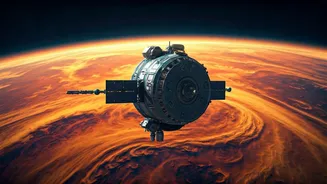
planet from the Sun. The Union Cabinet formally approved the mission in September 2024, signaling a firm commitment to expanding India's interplanetary footprint. According to recent announcements, ISRO is targeting a launch on March 29, 2028. The spacecraft will be launched aboard the powerful LVM-3 rocket and is expected to enter a highly elliptical orbit around Venus after a journey of about 112 days. From there, it will spend years studying this enigmatic world.
Why Venus? Earth's Cautionary Tale
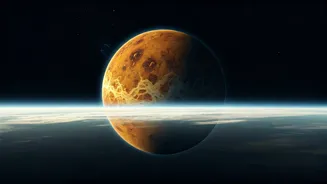
Venus and Earth started as twins, formed around the same time with similar mass and density. Yet today, they are worlds apart. Venus suffers from a runaway greenhouse effect, with a thick, toxic atmosphere of carbon dioxide that traps heat, creating surface temperatures of over 460°C. Its atmospheric pressure is over 90 times that of Earth's at sea level. Scientists believe Venus may have once hosted liquid water oceans, much like early Earth. Understanding what caused Venus to transform from a potentially habitable world into its current inhospitable state is a key scientific driver. By studying Venus, we can gain invaluable insights into planetary evolution, climate change, and the boundaries of habitability, serving as a cautionary tale for our own planet.
The Scientific Toolkit on Board
To peer beneath the planet's dense, opaque clouds, Shukrayaan-1 will be equipped with a suite of sophisticated instruments. The star of the show is a high-resolution Synthetic Aperture Radar (SAR), which can map the Venusian surface in detail, regardless of the cloud cover. This will help scientists identify geological features like volcanic hotspots, lava flows, and craters. Uniquely, the mission also plans to carry a ground-penetrating radar, which would be the first of its kind to study the shallow subsurface of Venus, offering clues about its geological layers. Other instruments will analyze the complex atmospheric chemistry, study the super-rotating winds, and investigate how the solar wind interacts directly with the Venusian ionosphere, as the planet lacks a protective global magnetic field.
India's Contribution to Global Venus Science
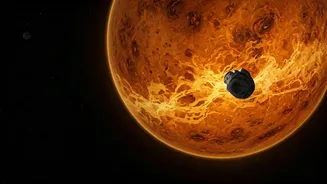
While the Soviet Union remains the only country to have successfully landed on Venus, and missions from the US, Europe, and Japan have studied it from orbit, Shukrayaan-1 is poised to make unique contributions. Its mission to map the subsurface is a world-first. The planned elliptical orbit, ranging from 500 km at its closest to 60,000 km at its farthest, will provide a comprehensive global perspective of the planet's processes. The mission also embraces international collaboration, with payloads from Sweden and other nations expected to be on board. This effort comes at a time of renewed global interest in Venus, with NASA planning its VERITAS and DAVINCI+ missions and the European Space Agency developing its EnVision orbiter. Shukrayaan-1 will add a vital, Indian-led piece to this global puzzle, enhancing our collective understanding of Earth's mysterious twin.