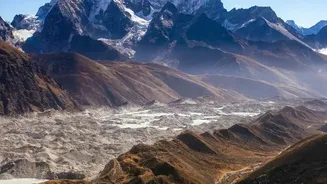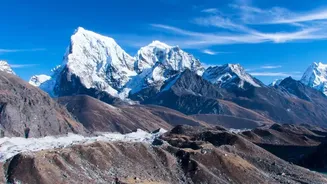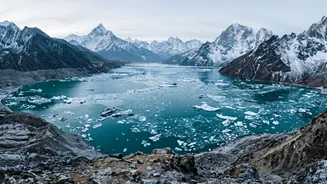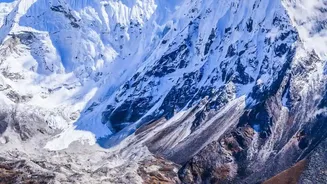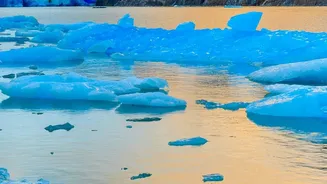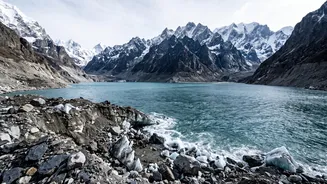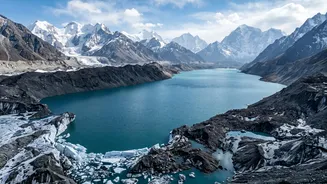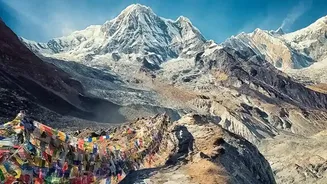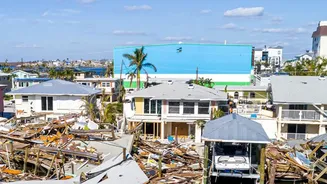







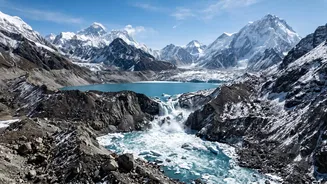
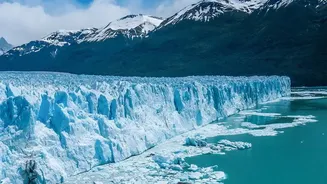
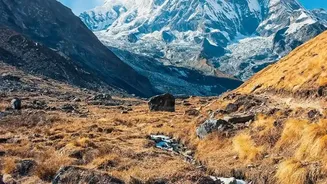
The majestic Himalayas, a source of life-sustaining rivers for India, are also becoming a source of immense danger. New reports from the United Nations warn that melting glaciers are creating unstable lakes, veritable water bombs waiting to explode.
The Anatomy of a Glacial Flood
A
Glacial Lake Outburst Flood, or GLOF, is one of the most destructive and sudden natural disasters. As global temperatures rise, Himalayan glaciers are melting at an accelerated pace. This meltwater pools behind natural dams made of rock, soil, and ice, known as moraines. These moraine dams are often unstable. A GLOF occurs when this natural barrier fails, releasing millions of cubic metres of water, mud, and boulders in a devastating torrent downstream. Triggers can include anything from avalanches crashing into the lake to extreme rainfall or even seismic activity. Unlike seasonal river floods, GLOFs happen with little warning and immense force, capable of wiping out everything in their path for hundreds of kilometres.
The UN's Alarming Assessment
Recent reports released by the United Nations Environment Programme (UNEP) and the International Cryosphere Climate Initiative (ICCI) paint a grim picture. Titled 'State of the Cryosphere 2026' and 'Overshoot and the Cryosphere', these documents confirm that Himalayan regions are warming faster than the global average. This accelerated warming is leading to the rapid formation and expansion of glacial lakes, increasing the frequency and intensity of GLOFs. One pre-publication UN-led study highlights that while India has fewer GLOF events than China, it has suffered the highest number of deaths in the Hindu Kush Himalaya region. The reports stress that even temporarily overshooting the 1.5°C global warming target could lead to irreversible ice loss, locking in catastrophic risks for mountain communities.
India's Vulnerable Frontline
For India, these warnings are not abstract. Millions of people are in the direct path of potential GLOFs. States like Sikkim, Himachal Pradesh, Uttarakhand, and Arunachal Pradesh, along with the union territories of Jammu & Kashmir and Ladakh, are particularly vulnerable. These regions are dotted with thousands of glacial lakes, many of which are expanding. The 2023 South Lhonak lake disaster in Sikkim, which claimed dozens of lives and caused widespread destruction, serves as a stark reminder of this threat. Just weeks ago, in late October 2026, a GLOF from Bhutan's Sintaphu Lake triggered emergency evacuations in West Bengal and Assam, demonstrating the transboundary nature of the danger. Critical infrastructure, including multi-crore hydropower projects, roads, and bridges, as well as entire towns and villages, lie in these high-risk zones.
A Race Against the Deluge
The escalating threat has spurred action, but experts warn that technology and policy are struggling to keep pace. A key focus is on developing and installing Early Warning Systems (EWS). In a significant move, India has begun installing its first GLOF warning systems at vulnerable lakes like Ghepan Ghat in Himachal Pradesh and Vasundhara Tal in Uttarakhand. These systems use sensors to monitor water levels, weather changes, and ground vibrations, transmitting real_time data to authorities. However, the challenge is immense. The remote, high_altitude locations make installation and maintenance difficult. Furthermore, an effective system requires not just detecting a potential outburst but also ensuring that the warning reaches the last mile—the vulnerable communities downstream—in time for them to evacuate. This requires robust communication networks and regular community preparedness drills.