

The Two-Pilot Standard: A Pillar of Safety
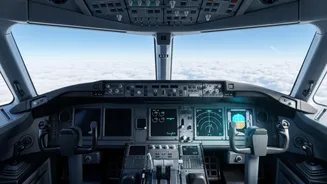
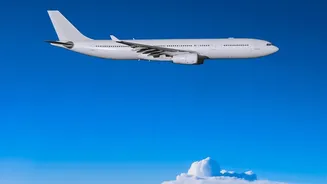
Commercial airliners are designed to be flown by two pilots for a very important reason: safety through redundancy. This isn't just about having a spare set of hands. It’s about a system of cross-checking, shared workload, and collaborative problem-solving.
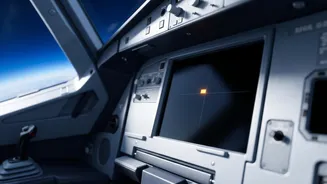
One pilot is designated the 'pilot flying,' handling the controls, while the other is the 'pilot monitoring,' managing communications, checklists, and watching for any deviations. They constantly monitor each other's actions and the aircraft's systems, providing a crucial safeguard against human error. This principle, known as Crew Resource Management (CRM), is a cornerstone of modern aviation safety. The idea is that two brains working together are exponentially safer than one working alone, especially when things don't go as planned.
Procedure for Pilot Incapacitation
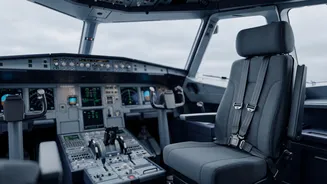
Airlines and pilots train rigorously for the scenario where one pilot becomes incapacitated. It’s a declared emergency, but a manageable one. The first priority for the remaining pilot is simple: aviate, navigate, communicate. They take firm control of the aircraft, engage the autopilot to reduce workload, and declare an emergency with Air Traffic Control (ATC). This immediately gives them priority handling, a clear path to the nearest suitable airport, and a team on the ground ready to assist. Cabin crew are also trained to help; they can be called to the flight deck to assist in securing the incapacitated pilot and removing them from the controls so they don't interfere with the operation of the aircraft. While the workload for the single pilot increases significantly, the procedures are designed to make the situation as manageable as possible.
Can Autoland Systems Handle It?
Many people wonder if the plane can just land itself. Modern aircraft are equipped with sophisticated 'autoland' systems, but they aren't a magic button for any emergency. Autoland is primarily designed for landings in very low visibility, like dense fog, where pilots can't see the runway. To work, it requires a specific set of conditions to be met: the airport must have the correct ground-based Instrument Landing System (ILS) equipment, the aircraft's systems must be configured correctly by the pilot, and the weather (particularly crosswinds) must be within strict limits. While an incredibly useful tool, it's not a fully autonomous system that can handle a complex emergency scenario from start to finish without pilot input. A pilot is still required to program the system and monitor the approach closely. Some smaller, newer private jets feature an 'emergency autoland' system that can be activated by a passenger, which then finds a suitable airport and lands the plane, but this technology is not standard on commercial airliners.
The Challenge of Workload and Unforeseen Events
The single biggest argument against one pilot managing an emergency is the immense workload. Even in a routine flight, two pilots are busy. In an emergency—like an engine fire or hydraulic failure—the number of tasks multiplies. The remaining pilot must fly the plane, diagnose the problem, work through emergency checklists, communicate with ATC and cabin crew, and re-plan the flight path for a diversion. This is an immense amount of pressure for one person. The second pilot's role in cross-checking actions and catching potential errors becomes even more critical when stress is high. Pilot associations worldwide argue that removing the second pilot would remove a vital layer of safety, especially when dealing with unexpected events that no amount of automation can fully anticipate.
The Future: Research into Reduced Crew Operations
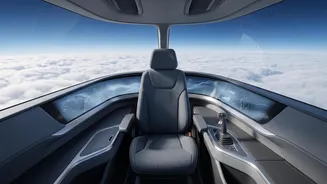
Despite the current reliance on two pilots, manufacturers and agencies like NASA are researching the possibility of 'Reduced Crew Operations' (RCO) or even 'Single-Pilot Operations' (SPO) for future aircraft. The concept isn't to put a single pilot on today's planes. Instead, it would involve redesigning cockpits with even more advanced AI and automation to act as a virtual co-pilot. One proposal is 'Extended Minimum Crew Operations' (eMCO), where one pilot could rest during the long cruise phase of a flight while the other monitors the aircraft. However, pilot groups have raised significant safety concerns, highlighting risks from sudden emergencies, pilot fatigue, and the current limitations of technology to replicate a human partner's intuition and problem-solving skills. For the foreseeable future, safety in commercial aviation will continue to start with two pilots in the cockpit.