




Know Your Booking Windows
Success begins with knowing when the battle starts. For Indian Railways, the general booking window, or Advance Reservation Period (ARP), opens 60 days before the date of travel, excluding the journey date itself. Bookings typically start at 8:00 AM sharp.
If you miss this, your next chance is the Tatkal quota, which opens just one day before the train's departure from its originating station. The key times to remember for Tatkal are 10:00 AM for all AC classes and 11:00 AM for non-AC classes like Sleeper. Bus operators have more varied timelines; some open bookings 30-45 days in advance, especially for popular festival routes like those for Diwali and Chhath Puja. It's crucial to check with your preferred bus service directly. For both trains and buses, the return journey is often harder to book as everyone travels back around the same one or two days, so plan to book it at the same time as your outbound ticket.
The Multi-Alarm Strategy
One alarm is not enough. To truly stay ahead, you need a sequence of reminders. Your first alarm should be for the ARP opening day, 60 days before your travel date. But don't just set an alarm for 8:00 AM on the day. Set one for the night before to prepare. Use this time to log into your IRCTC account and create a 'Master List' of passengers with names, ages, and ID details. This feature allows you to auto-fill details in seconds, a game-changer when every moment counts. On booking day, your alarm strategy should be: - 30 minutes before: Log in to the IRCTC or bus portal. Keep your master list ready. - 10 minutes before: Re-check your internet connection and have your payment details handy. UPI is often faster than entering card details. - 1 minute before: Have the 'Plan My Journey' page filled out and be ready to hit 'Submit' the second the clock strikes 8:00 AM. This disciplined approach also works perfectly for the Tatkal window, where tickets can vanish in under a minute.
Preparation Beyond the Alarm
An alarm is just a trigger; the action that follows is what secures the ticket. A fast, stable internet connection is non-negotiable. If your home Wi-Fi is unreliable, consider using your mobile data as a backup. Before booking, ensure your IRCTC account is linked with your Aadhaar, as authenticated users sometimes get priority. Have your payment method ready to go. Many users prefer the IRCTC eWallet because it deducts the fare instantly without requiring OTPs or navigating slow bank payment gateways. If travelling with a large family, be aware that a single Tatkal booking is often limited to four passengers, so you may need to make multiple rapid bookings.
Have a Plan B, C, and D
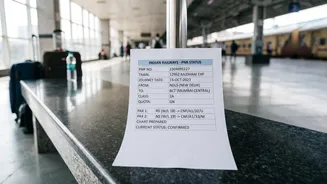
Sometimes, despite your best efforts, you might end up with a waitlisted ticket or none at all. This is where flexibility comes in. Don't just search for trains from the main city station; check for trains originating from or passing through other stations in the same city. For example, instead of just New Delhi (NDLS), check Anand Vihar (ANVT) or Hazrat Nizamuddin (NZM). You can also try booking a ticket to a station just before or after your actual destination, as this can sometimes open up availability. Breaking the journey is another viable strategy: book a confirmed seat to a major junction and then take another train or a bus from there. Also, keep an eye out for 'Festival Special' trains, which are announced closer to the dates to handle the extra rush.