






A Moon of Many Colors
One of the most immediate and surprising findings came not from advanced sensors, but from the astronauts' own eyes. The crew reported seeing a Moon with an unexpected palette of colours. During their flyby of the Aristarchus Plateau, a region known for
its volcanic history, the crew described seeing 'jaundiced yellow,' 'swampy green,' and brown hues. Mission Specialist Christina Koch likened one area to a 'yellow snow-capped mountain'. These visual observations, which differ starkly from the monochromatic grey we see from Earth, provide valuable geological clues. Scientists believe these colours correspond to different minerals, such as titanium-rich volcanic rocks (blue), iron-rich rocks (brown), and volcanic glass (green). This human element proved invaluable; the report concluded that trained observers who can interpret their surroundings in real-time are an exceptional scientific asset, capturing nuance that automated cameras might miss.
Confirming a Dangerous Environment
A primary goal of Artemis II was to test the Orion spacecraft and its ability to protect the crew in deep space, far beyond Earth's protective magnetic field. The data confirmed that this is a profoundly hazardous environment. The crew was exposed to significantly higher levels of radiation, confirming predictions and underscoring the necessity of Orion's storm shelter and advanced shielding for future, longer missions. The mission also offered a rare chance to witness meteoroid impacts on the lunar surface. The crew reported seeing at least five faint 'pinprick' flashes of light, which scientists confirmed were small objects hitting the Moon. Observing these events helps scientists calculate the frequency of such impacts, which is crucial for designing safe long-term habitats on the lunar surface.
The Human Factor
Beyond the Moon itself, the mission was a crucial test for its four human passengers. The astronauts were both explorers and research subjects, providing a stream of data on how the human body and mind respond to a deep-space mission for the first time in over 50 years. Using wearable sensors, the ARCHeR study monitored the crew's sleep patterns, stress levels, and cognitive performance. Unlike on the International Space Station, the Artemis II crew had to contend with communication delays and greater autonomy, creating unique psychological stressors. Researchers collected biological samples before, during, and after the flight to study changes to the immune system, cardiovascular health, and more. This data provides an essential baseline for ensuring astronauts can remain healthy and effective on much longer journeys, first to a permanent lunar base and eventually to Mars.
Paving the Way for a Lunar Return
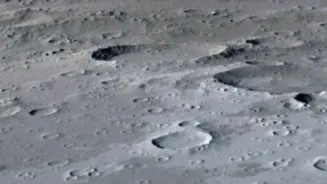
Ultimately, Artemis II was a reconnaissance mission for Artemis III, which aims to land humans on the lunar South Pole. The crew captured thousands of high-resolution images and hours of observational audio, all of which are now being used to refine plans for that landing. The flyby allowed for detailed mapping of the lunar terminator—the line between day and night—where long shadows reveal the terrain in sharp detail, similar to the lighting conditions at the pole. The crew's training allowed them to distinguish between tricks of the light and true geological features, helping mission planners better assess the safety and scientific potential of candidate landing sites. By successfully testing the hardware and gathering this critical data, the Artemis II crew has quite literally cleared the path for the next astronauts who will leave their footprints in the lunar dust.