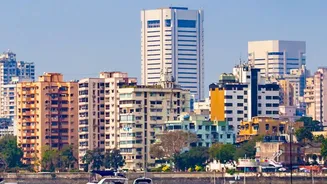



A Market Running Hot
The numbers paint a clear picture of a resilient real estate market. In August 2026, Mumbai recorded a projected 12,503 property registrations, an 11% increase compared to the same month last year. This isn't just a random spike; it's the highest count
for August in over a decade. Alongside this, the state government's stamp duty collections, a direct indicator of transaction value, are expected to have risen by 12% year-on-year to approximately ₹1,123 crore for the month. This sustained activity, even with a slight dip from July's figures, shows that demand for housing in the city remains robust. For the first eight months of 2026, total registrations saw a 6.8% increase over the same period in 2025.
Drivers Behind the Surge
Several factors are fuelling this momentum. Home loan interest rates, while not at their absolute lowest, have remained relatively stable, with some public sector banks offering rates as low as 7% to 7.25%. This financial stability gives buyers a clearer picture of their long-term commitments. Furthermore, the demand is largely driven by end-users—individuals and families buying homes to live in rather than for speculative investment. There is a growing preference for ready or near-completion properties and for practical layouts that accommodate modern needs like working from home. Industry experts note that discerning buyers are attracted to well-located developments with quality infrastructure, which has kept the market active across different segments.
The Squeeze on Affordability
While a thriving market is good news for the economy, it creates significant hurdles for buyers with limited funds. The sustained demand, particularly in the premium and mid-segments, has a knock-on effect, pushing average property prices upwards. One report noted a 4% year-on-year rise in average residential prices in the first half of 2026. Mumbai remains the country's least affordable housing market, with one analysis suggesting residents may need to spend around 69% of their income to cover home loan EMIs. The official definition of 'affordable housing'—capped at ₹45 lakh—is widely considered outdated for a city like Mumbai, where it's nearly impossible to find a functional home at that price point. This mismatch means many genuine middle-income buyers are locked out of beneficial schemes and lower tax rates, as developers find it more profitable to build for the luxury market.
Smart Moves for Budget Buyers
Navigating this challenging environment requires a strategic approach. The key is to look beyond the prime, saturated markets. Peripheral areas and emerging suburbs often offer more accessible entry points. Localities in the extended suburbs or well-connected areas in Thane and Navi Mumbai can provide more spacious options for a similar budget compared to the island city or core western suburbs. For instance, while premium areas like Worli or Bandra have prices soaring above ₹90,000 per sq ft, more affordable options can be found in localities like Charkop or Dahisar, or even further out in Karjat and Neral. Buyers should also be flexible, perhaps considering slightly smaller units in better-connected locations. Getting pre-approved for a home loan can also give you an edge, allowing you to act quickly when a suitable property within your budget becomes available. Finally, keep an eye on redevelopment projects, which are becoming a significant source of new housing supply in established suburbs.