





The Challenge of Staying Hydrated in Space
Water is fundamental for life, but in the vacuum of space, it’s a logistical nightmare. Every kilogram launched into orbit costs thousands of dollars, making it impractical to send endless supplies from Earth for long-duration missions to the Moon or Mars.
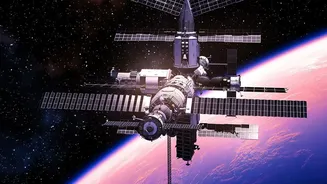
For astronauts to survive and thrive, they need a continuous supply for drinking, food preparation, and hygiene. A crew member on the International Space Station (ISS) needs about a gallon of water each day. Without an effective recycling system, the weight of that water would make missions prohibitively expensive and complex. This is why NASA has spent decades perfecting a closed-loop system that can reclaim almost every drop of water, a technology that is foundational to the ambitions of the Artemis program.
The Heart of the System: ECLSS
The technology at the center of this innovation is the Environmental Control and Life Support System, or ECLSS. It’s a marvel of engineering that functions as the space habitat’s lungs, kidneys, and liver, all in one. The ECLSS is responsible for maintaining the air pressure, generating oxygen, scrubbing carbon dioxide, and, crucially, managing water. The Water Recovery System (WRS) is a key component of ECLSS, designed to collect wastewater from every possible source: an astronaut's breath and sweat captured from cabin humidity, condensation, and even urine. The goal is to turn all of this wastewater back into potable water that is often cleaner than what most people drink on Earth.
From Wastewater to Pure Water
The process of turning wastewater back into drinking water is a multi-step purification journey. First, urine is treated by the Urine Processor Assembly (UPA), which uses a process called vacuum distillation to separate water from the urine brine. This assembly alone recovers about 75% of the water from urine. This recovered water, along with all other collected wastewater, is then sent to the Water Processor Assembly (WPA). The WPA acts like a sophisticated filter, using a series of multifiltration beds to remove particles and contaminants. Then, a high-temperature catalytic reactor breaks down any remaining organic compounds, and an ion exchange process removes dissolved salts. Finally, a touch of iodine is added to prevent microbial growth, ensuring the water is safe to drink.
Pushing for 'Endless' Reuse
The headline claim of “endless” water is, in scientific terms, about achieving the highest possible recovery rate. For years, the ECLSS on the ISS achieved a recovery rate between 93% and 94%. But for a trip to Mars, NASA estimates that a recovery rate of at least 98% is necessary to make the mission feasible. A recent breakthrough has made this target a reality. Engineers developed a new component called the Brine Processor Assembly (BPA). This system takes the leftover brine from the UPA—a waste product still containing a significant amount of water—and extracts even more of it through an advanced evaporation process. By adding the BPA to the system, NASA successfully demonstrated a 98% water recovery rate on the ISS, a crucial milestone for future exploration.
Artemis and Beyond: Earthly Applications
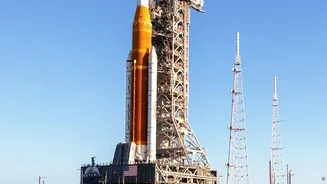
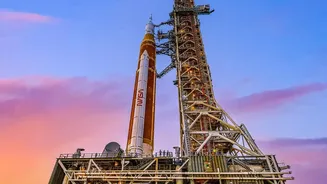
While short-duration Artemis missions like Artemis II could rely on stored water, establishing a sustained presence on the Moon and launching missions to Mars will depend entirely on these advanced closed-loop systems. NASA is already testing next-generation, mobile wastewater treatment facilities designed for lunar and Martian habitats, which can even turn waste into fertilizers for growing food. The innovation doesn't stop in space. NASA-developed water purification technologies have a long history of being adapted for use on Earth. From advanced filters in water bottles to systems that provide clean drinking water in remote villages and disaster areas, the technology designed to keep astronauts alive in space is helping to solve water scarcity problems around the globe. These space-age solutions are a powerful reminder that investing in exploration often yields profound benefits for everyone back home.