







A New Kind of Arms Race
The 21st-century arms race isn't just about building faster jets or bigger missiles; it's about creating smarter algorithms. Artificial intelligence is rapidly transforming the battlefield, shortening the time between identifying a target and launching
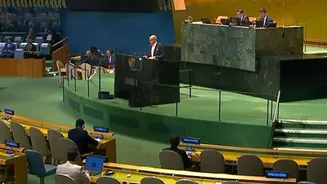
an attack. This shift has prompted urgent calls for global rules. In October 2026, the UN Institute for Disarmament Research (UNIDIR) launched a new international forum to tackle the issue, warning that the window for human judgment in warfare is shrinking dangerously. But establishing guardrails is proving difficult, primarily because the world's leading AI developers, the United States and China, view AI dominance as a critical strategic advantage. Their competition casts a long shadow over any attempt to forge a global consensus.
The UN's Regulatory Push
For years, the UN's Group of Governmental Experts on Lethal Autonomous Weapons Systems (GGE on LAWS) has been the primary venue for these discussions. The goal is to establish international norms and possibly a legally binding treaty to govern so-called 'killer robots'. Recent discussions in 2026 have focused on key elements like ensuring 'meaningful human control' and accountability that cannot be transferred to machines. Despite some progress in identifying areas of common ground, the GGE has been hampered by fundamental disagreements. While many smaller nations and civil society groups advocate for a comprehensive ban, the major military powers are hesitant to limit a technology they are spending billions to develop.
The U.S. Position: A Push for 'Responsible AI'
The United States has consistently opposed a legally binding ban on autonomous weapons. Instead, it promotes a framework of 'responsible AI' development and use. Washington's official policy emphasizes that all weapons systems must remain subject to appropriate levels of human judgment and control. U.S. diplomats argue that existing international humanitarian law is sufficient to govern the use of new military technologies. From a strategic perspective, the U.S. is unwilling to cede its technological edge to rivals by agreeing to prohibitions it believes others will not truly follow. However, it has shown some willingness for bilateral talks, proposing an AI 'notification mechanism' with China in September 2026 to prevent accidental escalation.
China's Stance: Strategic Ambiguity
China's position is more complex. Publicly, its diplomats have called for a ban on the use of fully autonomous lethal weapons. This stance gains favour with many nations concerned about a future of automated warfare. However, Beijing's proposal conspicuously avoids any mention of banning the development, production, or proliferation of such systems. This allows China to portray itself as a responsible actor on the world stage while aggressively pursuing AI-enabled military capabilities at home, from autonomous drones to AI-powered command systems. This strategic ambiguity allows Beijing to shape international norms in its favour while ensuring its own military modernisation programme continues unhindered.
A World Divided and the Stakes of Inaction
The U.S.-China dynamic creates a major obstacle, but they aren't the only players. A large bloc of countries, particularly from the Global South and parts of Europe, continue to push for a complete ban, fearing a world where life-and-death decisions are delegated to machines. This creates a three-way tension: the U.S. advocating for codes of conduct, China for a limited ban on use only, and a third group demanding total prohibition. The UNIDIR has acknowledged that this geopolitical competition is a 'serious obstacle'. The director, Robin Geiss, has stated that the combination of great power tensions, the spread of AI, and insufficient dialogue is 'not a good mix' for global security. Without agreement, the world risks stumbling into a future where autonomous weapons proliferate without clear rules, increasing the risk of miscalculation and unintended conflict.