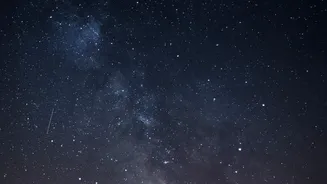





Tired of hazy city skies obscuring the cosmos? Beyond the urban glare lies a universe of breathtaking beauty. India has pristine locations where the Milky Way paints the night sky, offering a truly magical stargazing experience.
Hanle, Ladakh: India's Dark Sky Sanctuary
Topping nearly every astronomer's
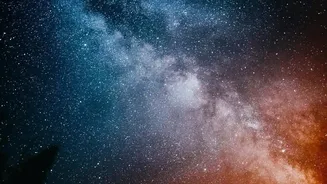
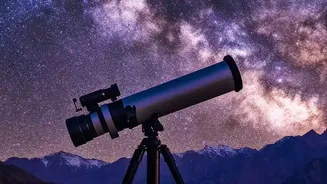
list, Hanle in Ladakh is the undisputed champion of stargazing in India. In December 2022, it was officially designated as India's first Dark Sky Reserve, a recognition of its exceptionally dark and clear skies. Located in the remote Changthang Wildlife Sanctuary at an altitude of 4,500 metres, Hanle experiences minimal light pollution and dry, stable air, making it home to the Indian Astronomical Observatory. On a moonless night, the Milky Way is not just a faint band but a brilliant, textured river of light stretching from horizon to horizon, so bright it can cast a shadow. Local communities are also involved in promoting astro-tourism, with trained guides available to help visitors navigate the cosmos.
Spiti Valley, Himachal Pradesh: A High-Altitude Haven
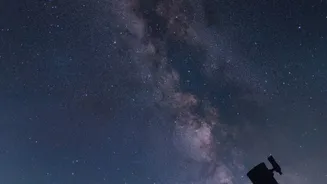
A close contender for the country's clearest skies, Spiti Valley is a high-altitude cold desert that offers a raw and profound stargazing experience. Its remote villages, such as Kaza, Kibber, and Langza, sit at elevations over 4,000 metres, far from the light and atmospheric pollution that plagues lower regions. The valley's location in a rain shadow area ensures that skies remain remarkably clear, especially from May to October. Here, the stars feel intensely sharp and close. Villages like Langza, with its iconic Buddha statue, provide a stunning foreground for astrophotography, creating unforgettable images of the Milky Way arching over the Himalayas. The combination of ancient monasteries, profound silence, and a sky bursting with stars makes a night in Spiti truly transformative.
Rann of Kutch, Gujarat: A Universe on a Salt Marsh
The Great Rann of Kutch offers one of India's most surreal stargazing backdrops. This vast expanse of white salt desert creates an otherworldly landscape with a completely unobstructed, 360-degree view of the sky. Far from major cities, the light pollution is minimal, allowing for brilliant views of constellations and the Milky Way. The best time to visit is during the cooler, dry months from November to February, which often coincides with the Rann Utsav festival. On a moonless night, the dark sky contrasts dramatically with the pale salt flats. On a full moon night, the desert glows with an ethereal light, offering a different but equally magical experience. Many desert camps offer stargazing sessions, often accompanied by telescopes and local cultural programs.
Coorg, Karnataka: Coffee Plantations and Constellations
For those in South India, Coorg in Karnataka provides an accessible escape to darker skies. While not as pristine as the Himalayan deserts, the southern parts of Coorg, particularly around the Brahmagiri foothills near Srimangala and Kutta, offer surprisingly dark skies. These areas, dotted with coffee plantations and dense forests, are far from the light pollution of Madikeri town and have minimal local settlement, achieving a Bortle 2 classification—dark enough to easily see the Milky Way's structure. The clear season generally runs from November to May. Several resorts and local astronomy groups offer guided stargazing experiences, often using powerful telescopes to reveal planets, star clusters, and nebulae, making it a perfect weekend getaway for city dwellers from Bengaluru or Mysuru.
Neil Island, Andamans: A Coastal Cosmos
Stargazing from a tranquil beach offers a unique sense of peace, and Neil Island (Shaheed Dweep) in the Andamans is a prime location for it. Being less commercialised than neighbouring islands, it has very low light pollution, which allows the night sky to truly shine. The wide-open horizons over the sea at beaches like Sitapur and Bharatpur are perfect for watching the cosmos. The best viewing season is from October to April, when the skies are clear of monsoon clouds. On a clear, moonless night, the Milky Way is clearly visible, and the sound of gentle waves creates a serene soundtrack for your celestial observations. It's an ideal spot for those seeking a peaceful connection with the universe, away from the hustle and bustle of mainland life.