




A Hunger for Authenticity and Story
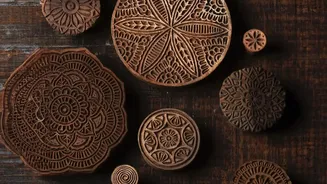
The modern consumer is tired of the homogenous look of mass-produced decor. There's a growing desire for objects with personality and a narrative. A hand-carved wooden cabinet or a hand-block printed textile tells a story of its maker, its region, and its cultural
heritage. This collaboration allows designers to create truly unique spaces that feel personal and curated. Each handmade piece carries subtle variations and the imprint of the artisan's touch, offering a warmth and character that machines simply cannot replicate. These items are not just decorations; they are conversation starters that connect a home to a lineage of skill and tradition.
The Rise of Sustainable and Ethical Design
As awareness around ethical consumption grows, designers and homeowners are seeking more responsible options. The fast-fashion model of home goods is falling out of favour, replaced by a 'slow design' ethos. Artisan collaborations are at the heart of this movement. Handloom weaving, for instance, uses minimal energy, while many crafts rely on natural dyes and biodegradable fibres. By working directly with artisan communities in places like Rajasthan or Gujarat, designers can ensure fair wages and help preserve traditional, eco-friendly production methods. This approach adds a layer of ethical value, allowing consumers to invest in pieces that are not only beautiful but also socially and environmentally conscious.
Reimagining Tradition for a Modern Aesthetic
This trend is not about turning modern homes into museums of traditional craft. Instead, it's a creative dialogue between the past and the present. Designers work with artisans to adapt ancient techniques for contemporary tastes. For example, a centuries-old craft like Ajrakh block printing might be used to create cushions with minimalist geometric patterns. The intricate metalwork of Dhokra art, once used for ritual objects, might be fashioned into a sleek, sculptural lamp. This fusion allows heritage crafts to evolve and find new relevance. Artisans gain exposure to modern design sensibilities, while designers are inspired by the depth of traditional knowledge, resulting in innovative products that feel both timeless and fresh.
A Partnership of Mutual Benefit
These collaborations are a powerful two-way street. For designers, they provide access to unparalleled craftsmanship and exclusive materials, allowing them to differentiate their work in a crowded market. For artisans, these partnerships offer a vital economic lifeline and global visibility. Working with designers provides stable income and access to new markets that might otherwise be out of reach, moving them from anonymous contract work to recognized creators. Critically, it ignites a renewed sense of pride and ensures that endangered skills—from hand-painting techniques to specific weaving styles—are passed down to the next generation, preventing them from disappearing.