






The ‘Event-ization’ of Cinema
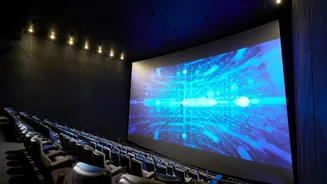
The modern cinema-going experience is becoming less about just watching a film and more about attending an event. Box office trends in 2026 show a clear preference for what the industry calls 'event films' or 'visual spectacles'. These are movies whose
primary draw is their massive scale, stunning visual effects (VFX), and immersive sound design, best experienced on an IMAX or premium large format screen. Films that offer breathtaking landscapes, impossible action sequences, and fantastical worlds are proving to be the most powerful magnets for audiences. This trend isn't just about explosions; it’s about creating an experience so grand and overwhelming that it simply cannot be replicated on a home television, no matter how big the screen or loud the soundbar. The audience's appetite for visual spectacle is now a primary driver of theatrical success, pushing filmmakers to deliver experiences that feel larger than life.
The Streaming Comfort Zone
The rise of high-quality streaming platforms is perhaps the single biggest factor in this shift. Why spend money on tickets and overpriced popcorn for a character-driven drama or a romantic comedy when you can watch a similar film from the comfort of your couch for a fraction of the cost? Streaming services have become the new home for the 'regular movie'. This has created a clear division in the market: if a film can be enjoyed just as much at home, audiences are increasingly likely to wait. Consequently, for a movie to justify a trip to the multiplex, it must offer something more. It must be a social and sensory event that feels like a genuine outing. This has pushed mid-budget dramas and comedies, which once were the backbone of the theatrical release schedule, into a precarious position, with many now premiering directly on streaming platforms.
Economics of the Blockbuster Bet
From a studio's perspective, the new landscape is a high-stakes game. The cost of producing and marketing a major blockbuster can be astronomical, sometimes exceeding $300 million. However, the potential rewards are equally massive, with several films in 2026 crossing the billion-dollar mark globally. This has created a risk-averse strategy where studios prefer to place a few huge bets on franchise-driven, IP-based tentpoles rather than spreading their investment across a slate of smaller, less predictable films. Mid-budget films, those costing between $30 and $100 million, are being squeezed out because they represent the worst of both worlds for a studio: they are too expensive to be a low-risk gamble, but often lack the spectacular scale needed to guarantee a massive global audience.
Visuals as a Universal Language
Another crucial factor, especially for Hollywood's global strategy, is that visual spectacle transcends language and cultural barriers. A thrilling action sequence, a beautifully rendered alien world, or a magical transformation needs no translation. This makes large-scale, VFX-heavy films far easier to market and export to international markets, including the massive and diverse Indian market. While culturally specific comedies and dialogue-heavy dramas can struggle to find a foothold overseas, the visceral thrill of a well-executed spectacle is universal. This financial reality further incentivizes the production of visually-driven blockbusters, as their success is not solely dependent on their domestic North American audience.
A New Golden Age or a Creative Decline?
This shift has led to a debate about the future of cinematic art. On one hand, the focus on spectacle has pushed the boundaries of visual effects technology, creating some of the most immersive and imaginative worlds ever put to screen. On the other hand, critics worry that the decline of the mid-budget film means fewer opportunities for original, character-focused storytelling in cinemas. The industry is adapting into a dual-track ecosystem: the home, which is perfect for narrative-driven stories, and the cinema, which is becoming the exclusive domain of the unmissable event. The surprising revival of cinema attendance, driven largely by younger generations seeking shared social experiences, suggests this model has staying power. For now, the message from audiences is clear: if you want them to leave their homes, you need to give them a show.