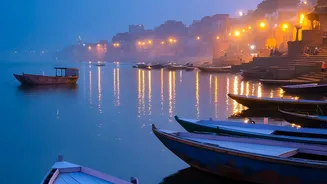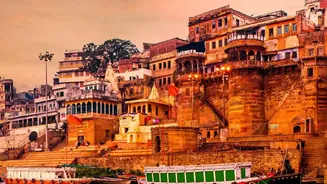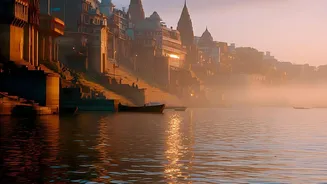




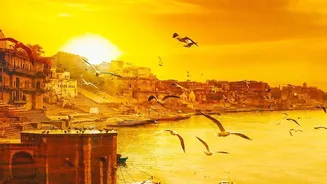
Every year on Kartik Purnima, the ghats of Varanasi witness a mesmerising sight as thousands of devotees brave the cold to take a holy dip in the Ganga. What drives this immense act of faith during the festival of Dev Deepawali?
The Diwali of the Gods
Dev Deepawali, often called
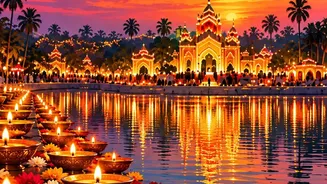
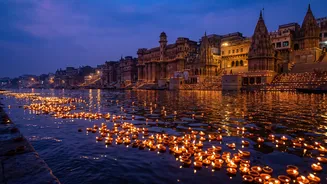
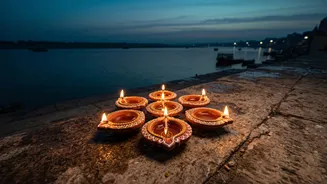
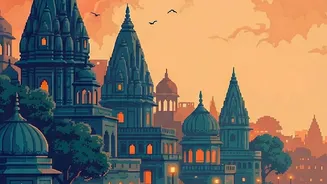
the 'Diwali of the Gods', is a festival celebrated on Kartik Purnima, the full moon night that arrives fifteen days after the mainstream Diwali. While Diwali marks Lord Rama's return, Dev Deepawali holds a different, profound significance. The central belief is that on this auspicious night, the gods and goddesses themselves descend from the heavens to Earth, specifically to the holy city of Varanasi, to bathe in the sacred waters of the Ganga. The entire city, especially its famous riverfront ghats, is illuminated with millions of earthen lamps, or 'diyas', not just for decoration, but to welcome these divine beings. This transforms Varanasi into a celestial landscape, a meeting point between the mortal and the divine.
A Victory for the Cosmos
The mythological roots of Dev Deepawali are tied to a story of cosmic balance. According to ancient texts, the festival commemorates Lord Shiva's monumental victory over a powerful demon trio known as Tripurasura. These demons had created three invincible cities and their tyranny had thrown the universe into chaos. On the day of Kartik Purnima, Lord Shiva, in a display of divine power, destroyed all three cities with a single arrow, restoring peace and righteousness. The jubilant gods celebrated this triumph by illuminating Kashi (Varanasi) with lamps, a tradition that continues to this day. This is why the festival is also known as Tripurotsav or Tripurari Purnima, honouring Shiva as the destroyer of Tripura.
The Power of the Holy Dip
For the thousands of devotees who gather, the 'Kartik Snan'—the holy bath in the Ganga—is the most vital ritual of the day. Taking a dip in the river during the auspicious month of Kartik, especially on the full moon day of Purnima, is believed to be exceptionally purifying. Devotees believe that immersing themselves in the sacred waters on this specific day can wash away sins, cleanse past karma, and pave the way for 'moksha' or salvation. The act is not merely a physical cleansing but a profound spiritual renewal, a chance to start afresh with divine blessings. The belief is so strong that the merit gained from a single dip on Kartik Purnima is considered equivalent to performing thousands of Ganga snans at other times.
Varanasi's Unmatched Spectacle
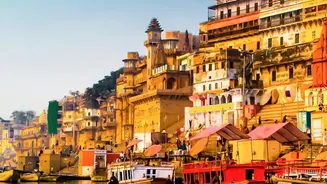
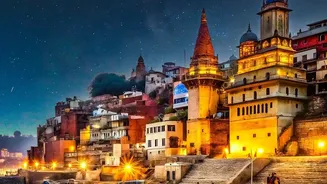
While the ritual is observed in other holy cities, Dev Deepawali in Varanasi is an unparalleled spectacle. As dusk falls, more than a million diyas light up the 80-plus ghats that line the crescent-shaped bend of the Ganga. The evening culminates in the grand Ganga Aarti at Dashashwamedh Ghat and other locations, a synchronised ritual of fire, incense, and Vedic chants performed by priests that mesmerises onlookers. The river reflects the flickering lights, creating a breathtaking 'river of fire'. This stunning visual display, combined with cultural performances and processions, draws not just pilgrims but visitors from around the world who come to witness the sheer scale and devotion of the event.
A Confluence of Faith and Community
Beyond the individual act of devotion, taking the holy dip is a powerful community experience. Families, friends, and strangers stand side-by-side, united by a shared faith. The act of 'Deepdaan'—offering a lit lamp to the river—is another key ritual where devotees collectively float thousands of diyas on the Ganga, each carrying a personal prayer. This shared experience fosters a deep sense of belonging and spiritual solidarity. Dev Deepawali is also a time to honour martyrs, with special ceremonies held to remember India's fallen soldiers, adding another layer of national and emotional significance to the spiritual festivities. It is this blend of ancient mythology, personal faith, communal celebration, and cultural pride that makes the holy dip during Dev Deepawali a deeply meaningful and enduring tradition.