





A Foundation Built on Trust
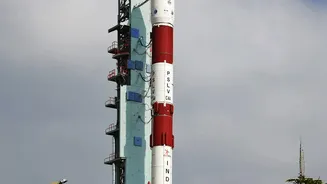
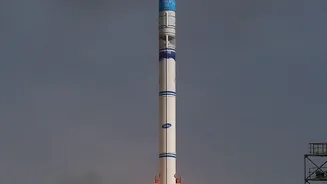
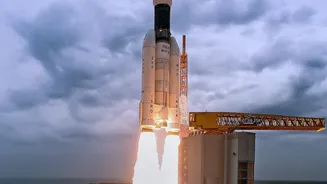
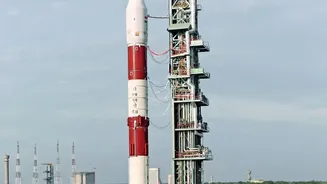
The space collaboration between India and the United States dates back to India's first rocket launch in 1963, which used an American-made rocket. Since then, the partnership between the Indian Space Research Organisation (ISRO) and the National Aeronautics
and Space Administration (NASA) has grown steadily. Recent years have seen this relationship accelerate, marked by high-profile joint projects. A shining example is the NASA-ISRO Synthetic Aperture Radar (NISAR) mission, launched in 2025 to map changes on the Earth's surface. This momentum was further solidified when India signed the Artemis Accords in 2023, a US-led set of principles for peaceful and sustainable lunar exploration. These government-level agreements, including the U.S.-India initiative on Critical and Emerging Technology (iCET), have laid the groundwork for a much deeper, more integrated partnership.
The Shift to Commercial Frontiers
The next significant leap in this relationship is the deliberate move to include the private sector. Recent high-level talks, such as the India-U.S. Civil Space Joint Working Group meeting in August 2026, explicitly focused on advancing commercial space cooperation. This isn't just about private firms winning government contracts; it's about creating an ecosystem where Indian and American companies can collaborate directly. This could involve everything from joint ventures in satellite manufacturing and launch services to data analytics and space tourism. A key goal is to remove barriers to market access and procurement for companies in both countries, fostering a truly bilateral commercial space economy. This marks a maturation of the partnership, moving beyond state-led missions to harnessing the power of private enterprise.
Drivers of the New Space Race
Two major forces are propelling this shift. The first is geopolitical. Both India and the United States view collaboration between democracies in space as a strategic imperative, particularly in the context of an increasingly competitive global environment. By aligning their space sectors, they aim to foster a free, open, and secure domain. The second driver is economic. India's private space industry has experienced explosive growth since being opened up in 2020, with the number of startups nearing 400. The US Department of Commerce projects that India's share of the global space market could grow from 2% to 10% in the coming years, presenting a massive opportunity for American investment and partnership. This rapid emergence of a vibrant Indian space-tech scene provides a fertile ground for US companies seeking innovation and cost-effective solutions.
Unlocking Mutual Opportunities
The potential benefits are immense and flow in both directions. For India's burgeoning space startups, collaboration offers access to American capital, advanced technology, and a massive market. Several Indian companies are already establishing a presence in the United States to tap into these opportunities. For American companies, India offers a hub of innovation with highly cost-efficient launch capabilities and a growing pool of talent. Initiatives like the 'Space Innovation Bridge' under the INDUS-X framework are being designed specifically to connect startups from both nations. This synergy could accelerate progress in areas like satellite technology, space situational awareness, and even future deep-space missions, such as NASA's invitation for ISRO to join its Moon Base program.
Navigating the Path Forward
While the ambition is clear, the path to a fully integrated commercial space partnership has its challenges. A key hurdle will be aligning the regulatory frameworks of both countries to ensure smooth collaboration between private entities. Issues such as intellectual property protection, technology transfer protocols, and ensuring a level playing field for companies of all sizes will need to be carefully addressed. Furthermore, while the Artemis Accords provide a framework for cooperation, they are non-binding, and concrete agreements will be needed to govern commercial activities and data sharing, especially involving private actors. Successfully navigating these complexities will be crucial to transforming the vision of a robust commercial space alliance into a reality.