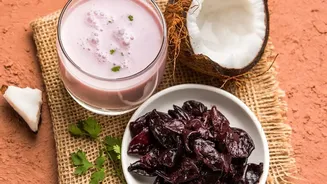








The cuisine of India’s Konkan coast is famous for its vibrant flavours, where rich coconut curries meet fresh seafood. But the secret to its signature tangy taste is a humble, deep-purple fruit: Kokum. This ingredient is a Goan kitchen staple.
What Exactly Is Kokum?
Kokum, known
scientifically as Garcinia indica, is a fruit native to the Western Ghats of India. It belongs to the same family as the mangosteen and ripens into a small, red, plum-like fruit during the summer. While the fresh fruit is enjoyed, it has a very short shelf life, so it is most commonly preserved. The outer rind is salted and sun-dried, which transforms it into the dark purple, almost black, shrivelled peels known as 'amsul' or dried kokum. This is the form most widely used in cooking. The fruit can also be processed into a concentrated juice or syrup, often called 'agal'. Its deep red-purple colour comes from anthocyanins, the same natural pigments found in berries.
A Flavour Unlike Any Other
While other ingredients like tamarind are used for sourness in Indian cooking, kokum offers a unique flavour profile. Its taste is sour and tangy, but in a more mellow and fruity way than the sharp, earthy notes of tamarind. Many describe kokum's flavour as having light, floral undertones that refresh the palate without overpowering the other spices in a dish. Its special ability is to cut through and balance the richness of ingredients like coconut milk, which is why it’s a cornerstone of coastal cuisine. A little goes a long way, and cooks often add just a few dried peels to a curry to impart a gentle, lingering tartness and a beautiful pinkish hue.
The Heart of Goan Cuisine
In Goa, Maharashtra, and Karnataka, kokum is indispensable. It’s the soul of the iconic Goan fish curry, where it balances the creaminess of coconut milk and the spice of red chillies, perfectly complementing the fresh seafood. Beyond curries, kokum is the star of Sol Kadhi, a famous pink-hued beverage. This digestive drink combines kokum-infused water with coconut milk, garlic, and green chillies. It is served either as a cooling appetiser or a palate cleanser after a spicy meal. A simpler version called 'futi kadhi' is made without coconut milk. The fruit is also used to add a sour dimension to lentil dishes (dals) and vegetable preparations.
More Than Just a Souring Agent
For centuries, kokum has also been valued in Ayurveda for its health benefits. It is considered a natural coolant, making Kokum Sherbet a popular summer drink to prevent dehydration. Traditionally, it is used as a digestive aid to relieve acidity, bloating, and indigestion. Modern research highlights its rich nutritional profile, including Vitamin C and powerful antioxidants like garcinol. Studies have also pointed to its anti-inflammatory properties and the presence of hydroxycitric acid (HCA), a compound linked to appetite suppression and weight management.
How to Use Kokum at Home
Incorporating kokum into your own cooking is simple. To use the dried peels, soak a few pieces in warm water for about 10 to 15 minutes. This rehydrates them and creates a tangy, pink-coloured infusion. You can add both the soaked peels and the infused water directly to your curry or dal as it simmers. Remember that its sourness develops as it cooks, so start with a small amount and add more to taste. For a quick digestive drink, you can make a simple kokum water by infusing the peels in hot water with a bit of salt, sugar, and crushed garlic. Now widely available in Indian grocery stores and online, this versatile ingredient is an easy way to bring the authentic taste of the Konkan coast to your kitchen.