




India's Critical Mineral Challenge
Critical minerals are the building blocks of the modern economy, essential for everything from smartphones and semiconductors to solar panels and defence technology. For India, securing a stable supply of minerals like lithium, cobalt, nickel, and rare
earth elements is vital for achieving its 'Atmanirbhar Bharat' (self-reliant India) and 'Net Zero by 2070' goals. The challenge is that India is almost 100% import-dependent for many of these key resources, creating supply chain vulnerabilities. In response, the government has identified a list of 30 critical minerals and is actively promoting domestic exploration and strategic partnerships. But mining new materials is only one part of the solution; the other lies in recycling what we already have.
The Promise of Urban Mining
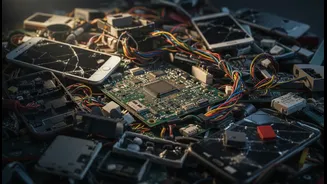
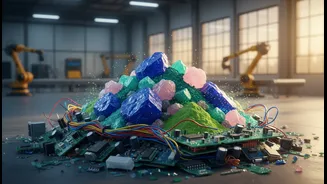
India is one of the world's largest generators of electronic waste (e-waste), a massive and growing stream of discarded devices. This e-waste is a treasure trove of valuable materials. This concept of recovering resources from end-of-life products is often called 'urban mining'. However, India's recycling sector has historically been dominated by informal players, leading to inefficient recovery and significant environmental and health risks. Formalizing this sector and adopting advanced technology is crucial. Effective recycling can reduce the need for new mining, cut down on import bills, and create a circular economy where resources are used, recovered, and reused.
What is Hydrometallurgy?
This is where hydrometallurgy comes in. Unlike traditional pyrometallurgy, which uses extreme heat (smelting) to melt and separate metals, hydrometallurgy uses chemistry. It involves dissolving metals from shredded e-waste (like circuit boards or battery 'black mass') into a liquid solution using specific chemicals, a process called leaching. From this chemical soup, individual metals can be selectively extracted and purified with high precision. The key advantages of hydrometallurgy are that it operates at much lower temperatures, consumes less energy, and can achieve very high recovery rates for valuable and critical materials, often up to 95% or more. It is particularly effective for low-grade or complex materials like spent batteries.
Material Recovery Plants in Action
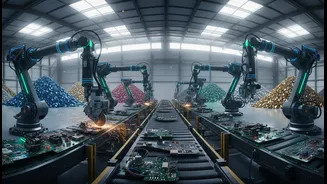
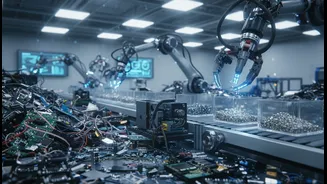
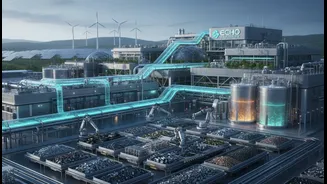
Modern material recovery and recycling plants are sophisticated facilities designed to implement this process at scale. The process starts with collecting and dismantling e-waste. At specialized plants, components like Printed Circuit Boards (PCBs) and batteries are separated. These components are then shredded to liberate the different materials. The resulting mix undergoes the hydrometallurgical process to extract copper, gold, silver, lithium, and cobalt. Several Indian companies are now setting up advanced facilities equipped for hydrometallurgical processing, aiming to bridge the gap between the massive amount of e-waste generated and the country's limited formal recycling capacity. These plants are essential infrastructure for turning waste into a strategic national resource.
The Road Ahead for India
Adopting hydrometallurgy in material recovery is not just a technological choice; it's a strategic move for India's economic and environmental security. The government is pushing this agenda through initiatives like the National Critical Minerals Mission and Extended Producer Responsibility (EPR) policies, which make manufacturers accountable for their products' end-of-life management. Challenges remain, including the high initial cost of setting up advanced plants, the need to integrate the vast informal workforce, and the development of cost-effective chemical processes. However, by investing in research, building capacity, and creating a supportive policy ecosystem, India can position itself as a leader in critical mineral recycling, turning a waste problem into a powerful economic opportunity.