




The Urban Waste Challenge
In bustling Indian cities, managing household waste is a significant challenge. Kitchen scraps, like vegetable peels and leftover food, make up a large portion of what we throw away. When this organic matter ends up in landfills, it decomposes without
oxygen and releases methane, a potent greenhouse gas that contributes to climate change. Studies show that food waste is a major environmental issue in India, with households being a significant source. For apartment residents, the desire to reduce their environmental footprint often clashes with the reality of not having a backyard for a traditional compost pile.
A Green Solution Comes Indoors
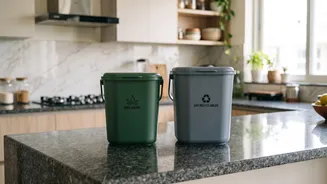
This is where modern innovation steps in. For years, composting was seen as something reserved for people with large gardens. But a new generation of compact, user-friendly tools has made indoor composting a clean, simple, and odour-free process, perfectly suited for apartment life. These systems are designed to fit neatly under a kitchen sink or on a balcony, turning what was once garbage into a valuable resource. This shift allows city dwellers to take direct action against landfill waste from the comfort of their homes.
The High-Tech Helper: Electric Composters
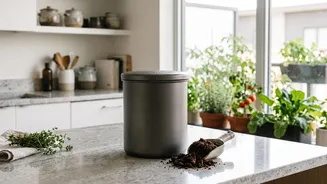
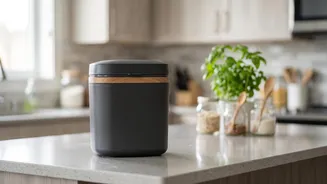
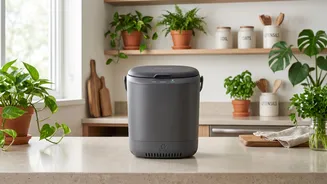
At the forefront of this trend are electric composters. These countertop appliances, often the size of a small air fryer or rice cooker, use a combination of heat, aeration, and grinding to break down food scraps in a matter of hours or days, not months. The process is automated and designed to be odourless, thanks to carbon filters. While some models simply dehydrate and grind food into a powder, more advanced 'microbial' composters use live microorganisms to create a nutrient-rich, soil-like substance that's ready to be mixed into potted plants. The main drawbacks are their cost and electricity consumption, but for convenience and speed, they are hard to beat.
The Power of Fermentation: Bokashi Bins
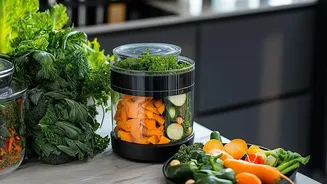
Another popular method is Bokashi, a Japanese technique that ferments kitchen waste instead of decomposing it. It uses an airtight bin and a special bran inoculated with beneficial microbes. A major advantage of Bokashi is its ability to handle all types of food waste, including meat, dairy, and oily foods, which are typically avoided in other composting methods. The process is odour-free and produces a nutrient-rich liquid 'tea' that can be diluted and used as a potent fertiliser for houseplants. After a few weeks of fermentation, the pickled waste needs to be buried in soil (like in a community garden or a large planter) to fully decompose.
Nature's Recyclers: Vermicomposting
For those who don't mind a few quiet roommates, vermicomposting, or worm composting, is a highly effective and natural option. This method uses specific types of worms, like red wigglers, in a bin to break down fruit and vegetable scraps. A well-maintained worm bin is odourless and can be kept indoors, as the worms thrive at room temperature. They transform kitchen waste into 'worm castings', a dark, earthy, and incredibly rich compost that is prized by gardeners. It requires a bit more management in terms of moisture and what you can feed the worms, but it is a low-cost and highly sustainable way to compost in a small space.
More Than Just Less Garbage
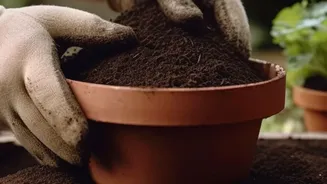
Embracing indoor composting offers benefits beyond just reducing the waste in your bin. It creates a valuable, homemade fertiliser that can revitalise houseplants and balcony gardens, saving money and reducing the need for chemical alternatives. Many users find deep satisfaction in closing the loop on their food cycle, turning scraps into something that helps nature thrive. This tangible connection to sustainability is a powerful motivator, proving that even in a high-rise apartment, it's possible to make a meaningful environmental contribution, one kitchen scrap at a time.