






More Than Just Dust
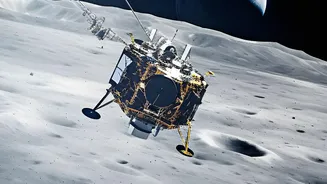
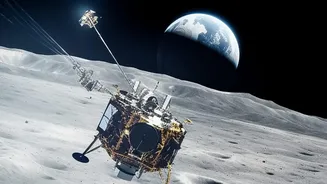
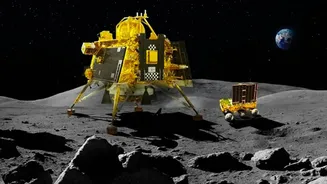
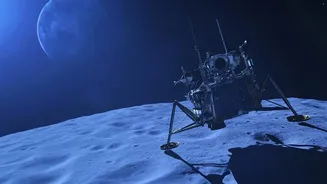
The surface of the Moon, to the naked eye, appears to be a consistent blanket of grey dust and rock, known technically as regolith. For decades, scientists largely assumed this layer was relatively uniform. However, analysis of data from Chandrayaan-3's
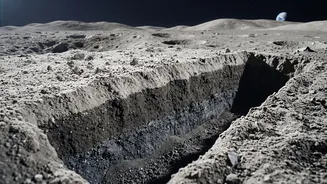
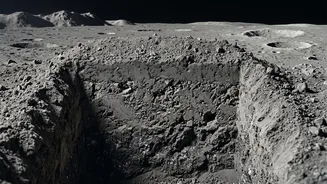
Vikram lander has turned this idea on its head, revealing that the ground at Shiv Shakti Point is more like a layered cake. A new study based on the lander's observations has confirmed the presence of three distinct soil layers within just the top 10 centimetres of the surface, each with surprisingly different properties. This fine-scale layering is something that had not been observed or even expected before, offering a fresh understanding of the lunar surface.
Unpacking the Layers
The discovery was made using the Chandra’s Surface Thermophysical Experiment (ChaSTE), a probe that penetrated 10 cm into the lunar ground. The data it sent back paints a fascinating picture. The uppermost layer, extending to about 3 cm, is highly porous and fluffy, with a porosity of around 80%—almost like a fine, dry powder. Below that, from 3 to 6 cm deep, lies a middle layer that has a higher thermal conductivity. The bottom layer, from 6 to 10 cm, is the densest, with a bulk density more than double that of the topsoil. ISRO scientists have vividly described the difference: walking on the surface might feel like stepping on dry flour, but just a few centimetres deeper, the material becomes more cohesive and firm, like damp clay.
The Tool for the Job
The ChaSTE instrument is an engineering marvel developed by ISRO's Space Physics Laboratory and Physical Research Laboratory. It's a probe equipped with 10 individual temperature sensors and a heater. By slowly pushing its way into the regolith, it could measure the temperature at different depths. One of its most striking initial findings was a massive temperature difference of over 50-60 degrees Celsius between the sun-baked surface and a point just 8-10 cm below. The probe's heater was also activated to warm the soil, allowing scientists to measure its thermal conductivity—how well it transfers heat. This data is crucial because it helps them infer other physical properties like density and cohesion, which led to the identification of the three layers.
Clues to a Violent Past
So, why are there layers? Researchers propose that this structure is a geological record of the Moon's history. The area has been shaped by successive impact events from nearby craters over billions of years. These impacts would have thrown out ejecta—material with different properties—that settled over time, creating the fine-scale layering observed by ChaSTE. Earlier analysis from after Vikram's 'hop' manoeuvre, where it fired its engines and lifted off briefly, had already hinted at a two-layer structure by blowing away the top layer of dust. The new, more detailed analysis from the original, undisturbed landing spot has now revealed the complete three-layer profile.
Why This Finding Matters
This discovery is more than just a geological curiosity; it has profound implications for the future of lunar exploration. Understanding the soil's properties is critical for designing future missions, especially long-term crewed and robotic ones. The variation in density and thermal conductivity affects everything from how to build stable habitats and landing pads to how to design rovers and drilling equipment. The soil's poor ability to conduct heat means surface temperatures are extreme, but the subsurface is remarkably well-insulated. This information is invaluable for missions searching for water ice, as the soil's properties dictate how and where ice could be trapped and preserved beneath the surface. This pioneering in-situ data from India's mission provides a crucial blueprint for humanity's return to the Moon.