







What Exactly Is a Digital Identity?
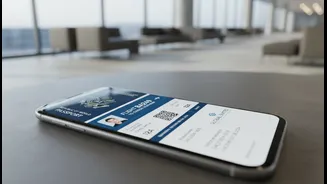
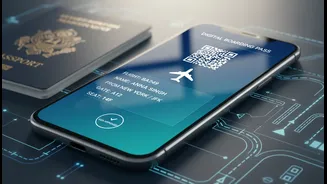
Think of a digital identity as a secure, electronic version of your passport that lives on your smartphone or another personal device. Officially known as a Digital Travel Credential (DTC), it's a digital representation of your identity, containing the same
information found in your physical passport's chip. Developed with standards from the International Civil Aviation Organization (ICAO), a DTC is cryptographically signed by the issuing authority, making it extremely difficult to forge or tamper with. This allows you to prove who you are without constantly presenting a physical document, paving the way for a more seamless travel experience.
The Promise of a Seamless Journey
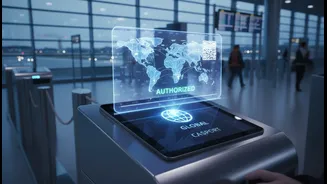
The most significant advantage of a digital identity is the incredible convenience it offers. Instead of queuing at check-in, bag drop, security, and boarding, you could simply walk through checkpoints. Biometric scans would match your face to your pre-verified digital credential, allowing you to pass through frictionless touchpoints. Some airports, like Singapore's Changi, and initiatives like India's Digi Yatra have already implemented aspects of this biometric-led, queue-free experience. By sending your travel credential information to border authorities ahead of time, security checks can be expedited before you even arrive at the airport, significantly reducing wait times.
Beyond the Airport
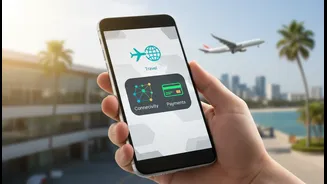
The utility of a digital identity extends far beyond the airport terminal. The same secure credential on your phone could be used for a variety of travel-related tasks. Imagine checking into your hotel with a simple tap on your device, no more handing over your passport to be photocopied. You could rent a car, book excursions, and prove your age for entry into venues, all while sharing only the specific information required for that transaction. This system enhances personalization, allowing hotels to adjust room settings to your preferences upon arrival or airlines to better cater to your needs.
Navigating Security and Privacy
Of course, placing your identity onto a digital platform raises valid concerns about security and privacy. Centralized databases of personal information are attractive targets for hackers. Moreover, unlike a password, you can't change your face or fingerprints if they are compromised. However, the system is being designed with these risks in mind. The decentralized nature of many proposed systems means you, the traveller, hold and control your own data in a personal digital wallet. This 'privacy-by-design' approach allows you to consent to sharing only necessary data for each specific transaction, reducing the risk of widespread data exposure and giving you more control over your personal information.
The Road Ahead
The transition to a fully digital travel system won't happen overnight. Global adoption requires significant upgrades to infrastructure and alignment on international standards. However, the groundwork is already being laid. The European Union is advancing its EUDI Wallet, which will include a Digital Travel Credential, and has rolled out its digital Entry/Exit System (EES) in 2026 to replace manual passport stamping. Pilot programs testing DTCs are underway in various countries, including trials between the Netherlands and Canada. While the physical passport will likely remain a trusted backup for the foreseeable future, the move towards a more convenient and secure digital travel identity is well and truly in motion.