


Gaganyaan: India's Giant Leap into Human Spaceflight
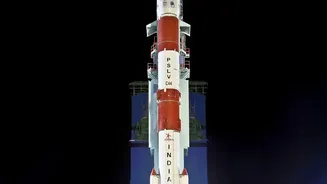
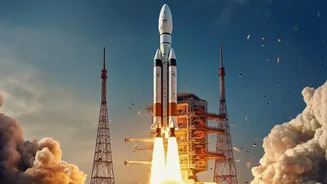
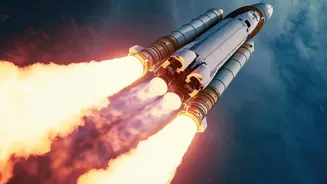
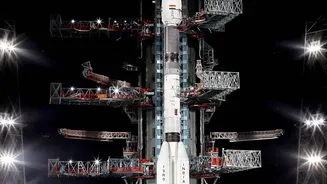
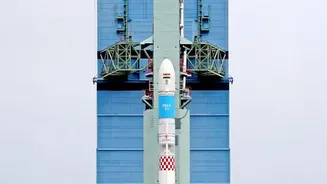
The most anticipated mission is undoubtedly Gaganyaan, India's inaugural human spaceflight programme. After a series of rigorous tests, the first uncrewed flights are slated for 2026. The G1 mission will be a crucial end-to-end test of the crew module,
life support, and re-entry systems. It will be followed by another uncrewed mission, G2, featuring the humanoid robot Vyommitra, who will monitor the spacecraft's performance and simulate astronaut activity. These missions are the final dress rehearsals before the historic flight planned for 2027, which will send three Indian astronauts, or 'Gaganyatris', into a low-Earth orbit for up to a week. Successfully completing this mission will make India only the fourth country in the world to have an independent human spaceflight capability, a monumental achievement.
Mangalyaan-2: A Bold Return to the Red Planet
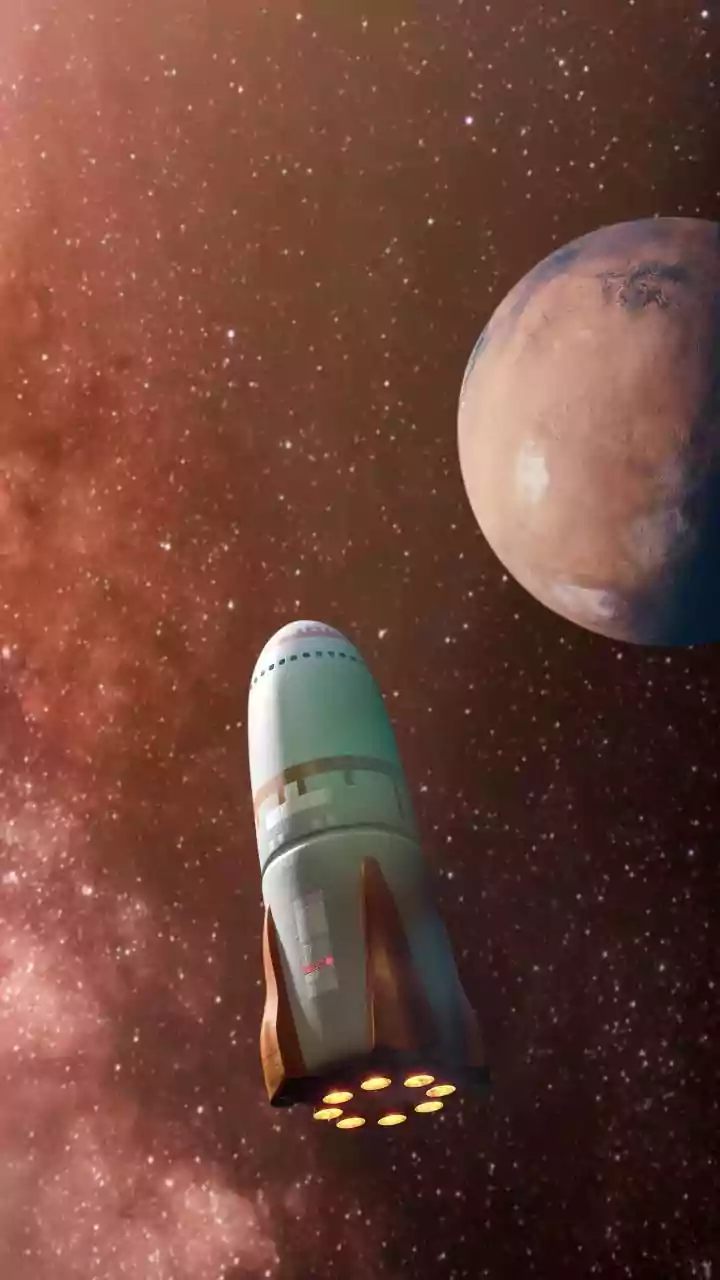
Following the trailblazing success of the Mars Orbiter Mission (MOM), ISRO is planning a far more ambitious sequel: Mangalyaan-2. Unlike its predecessor, which was an orbiter, this mission aims to achieve India's first-ever soft landing on another planet. Targeted for a launch around 2030, Mangalyaan-2 is expected to consist of an orbiter, a lander, and potentially a rover and a small helicopter. The primary goal is to study the Martian surface, atmosphere, and geology in unprecedented detail. Developing the technology for a soft landing and surface operations on Mars is a massive technological leap, one that would solidify India's status among the top planetary exploration agencies.
Shukrayaan-1: Unveiling the Secrets of Venus
India is also setting its sights on Earth's mysterious twin, Venus. The Venus Orbiter Mission, often called Shukrayaan-1, received formal government approval in late 2024. This mission will be dedicated to studying the surface and dense, toxic atmosphere of Venus for several years. Key objectives include mapping the planet's topography, studying its unique airglow and atmospheric chemistry, and investigating its subsurface characteristics. The mission will also serve as a crucial testbed for technologies like aerobraking in a harsh planetary environment. With a launch window planned around 2028, Shukrayaan will provide valuable data on why a planet so similar in size to Earth evolved so differently.
SPADEX: Mastering the Art of Docking in Space
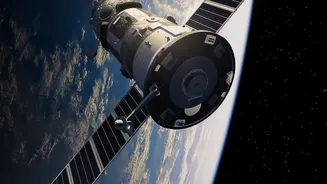
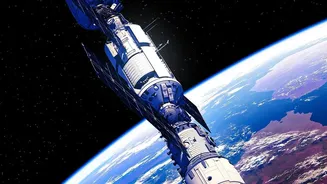
A crucial technology for future long-duration missions is space docking—the ability for two spacecraft to meet and connect in orbit. ISRO's Space Docking Experiment (SPADEX) is designed to master this capability. The mission involves launching two small satellites that will autonomously perform rendezvous, docking, and undocking maneuvers. The experiment will also test the transfer of electric power between the docked spacecraft. This technology is a vital building block for more complex operations, such as assembling the planned Bharatiya Antariksh Station (Indian Space Station) by 2035, conducting satellite servicing, and executing interplanetary sample return missions.
NISAR: A Global Partnership to Monitor Earth
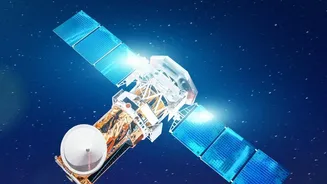
In a landmark collaboration, ISRO has partnered with NASA on the NISAR (NASA-ISRO Synthetic Aperture Radar) satellite. Launched in July 2025, this advanced Earth-observation satellite uses dual-frequency radar to monitor our planet's complex processes with remarkable precision. It is the first radar imaging satellite to use two different radar frequencies (L-band and S-band) to produce exceptionally detailed data on everything from ecosystem disturbances and ice-sheet collapse to natural hazards like earthquakes and landslides. NISAR systematically maps the globe every 12 days, providing reliable data to help manage resources and respond to climate change, making it one of the world's most expensive and important Earth-imaging satellites.