
Meet the Challenger: Sodium-Ion Batteries
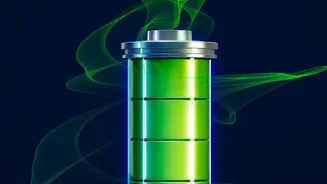
For years, lithium-ion has been the undisputed champion of the battery world, powering everything from our smartphones to electric cars. But a new contender is entering the ring: the sodium-ion battery. The science is quite similar; both batteries create
power by shuttling ions between a positive and negative electrode. The game-changing difference, however, lies in the name itself. Instead of relying on relatively scarce and expensive lithium, these batteries use sodium—a far more common element. Think of it this way: sodium is the sixth most abundant element on Earth, found everywhere from rock salt to seawater. This incredible availability is the foundation of its potential to disrupt the EV market. By swapping a costly key ingredient for one that is significantly cheaper, the entire cost of producing a battery pack can be brought down. This shift is not just a minor technical tweak; it represents a fundamental change in the economics of energy storage.
The Cost Equation: Why Cheaper Materials Matter
The battery is the single most expensive component of an electric vehicle, often accounting for a massive chunk of its final showroom price. The high cost is largely tied to its core materials, particularly lithium and cobalt, whose prices can be volatile and are subject to geopolitical tensions. Sodium offers a refreshing alternative. It is not only thousands of times more abundant than lithium but also dramatically cheaper to source. This could lead to batteries that are 20-40% cheaper to produce once manufacturing reaches scale. While sodium-ion technology is still maturing and currently faces a price premium over highly optimized lithium-ion cells, experts predict it will achieve cost parity by late 2026 or early 2027. This isn't just about saving money; it's about creating price stability. A predictable, lower-cost battery makes it easier for manufacturers to plan long-term and, most importantly, pass those savings on to the consumer, bringing the price of electric two-wheelers and cars closer to their petrol-powered counterparts.
Performance, Safety, and the Indian Advantage
Of course, cost isn't everything. A battery also needs to perform. Here, sodium-ion presents a mixed but promising picture. Its main drawback is lower energy density, meaning a sodium-ion battery is heavier and bulkier than a lithium-ion one of the same capacity. This might make it less ideal for high-performance, long-range luxury EVs, but it's a perfectly acceptable trade-off for urban commuters, two-wheelers, and three-wheelers, which are the backbone of Indian mobility. On the plus side, sodium-ion batteries have a major safety advantage. They are known for their excellent thermal stability, making them less prone to overheating—a crucial benefit in India's hot climate. They also perform better in a wider range of temperatures and can be charged incredibly quickly. Perhaps most significantly for India, this technology aligns perfectly with national goals like 'Atmanirbhar Bharat'. Developing a domestic sodium-ion ecosystem would reduce the country's heavy reliance on imported lithium and Chinese supply chains, strengthening energy security.
From Lab to Road: India's Sodium-Ion Pioneers
This technological shift is not just a distant dream; it's happening right here in India. A number of homegrown companies and research institutions are at the forefront of this revolution. Pune-based Rechargion, a spin-off from the prestigious CSIR-National Chemical Laboratory, is developing sodium-ion cells specifically for two and three-wheelers using locally sourced materials. Another innovator, Indi Energy, is using a remarkable process to turn agricultural waste like crop stubble—a major source of air pollution in North India—into hard carbon for battery anodes. This 'waste-to-wealth' approach solves two problems at once. Even corporate giants are getting involved, with Reliance acquiring UK-based sodium-ion specialist Faradion to fast-track the technology's commercialisation in India. While mass-market EVs powered by these batteries are likely a few years away, their initial deployment in electric scooters, e-rickshaws, and stationary energy storage is expected to begin scaling up between 2026 and 2028.