



An Inhospitable World
Establishing a long-term human presence on the Moon is not as simple as just landing and setting up a habitat. The lunar surface is one of the most hostile environments imaginable. With virtually no atmosphere, there is no protection from the constant
bombardment of cosmic radiation and solar flares, which pose significant health risks to astronauts, from radiation sickness to long-term DNA damage. The surface is also peppered by micrometeorites traveling at bullet-like speeds. Furthermore, temperatures swing wildly, from a scorching 127°C in direct sunlight to a frigid -133°C during the two-week-long lunar night. Any surface-level habitat would require incredibly thick shielding and robust temperature control systems, adding immense weight and complexity to missions. This is why scientists are so interested in finding a pre-built solution.
Nature's Perfect Lunar Shelter
The most promising solution may have been waiting for billions of years, hidden just beneath the Moon's dust. Scientists have long theorized the existence of lunar lava tubes—enormous underground caverns carved out by ancient volcanic activity. On Earth, these tubes form when the outer crust of a lava flow cools and solidifies while molten rock continues to flow underneath. Once the eruption ceases and the channel drains, a hollow cave remains. Scientists believe the same process occurred on the Moon, and due to the lower gravity, these tubes could be colossal, potentially over a kilometer wide. Such a structure would offer ready-made protection. The thick roof of rock and regolith would provide natural shielding from radiation and meteorite impacts, and deep inside a cave, temperatures are thought to remain stable, possibly around a comfortable 17°C. Finding an accessible lava tube could fundamentally change the blueprint for a sustainable moon base.
The Hunt for Lunar Caves Begins
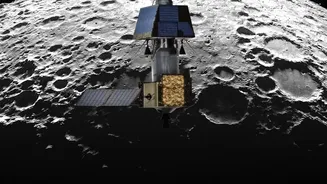
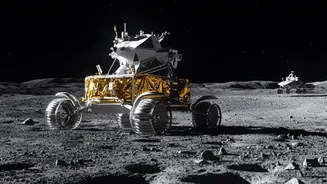
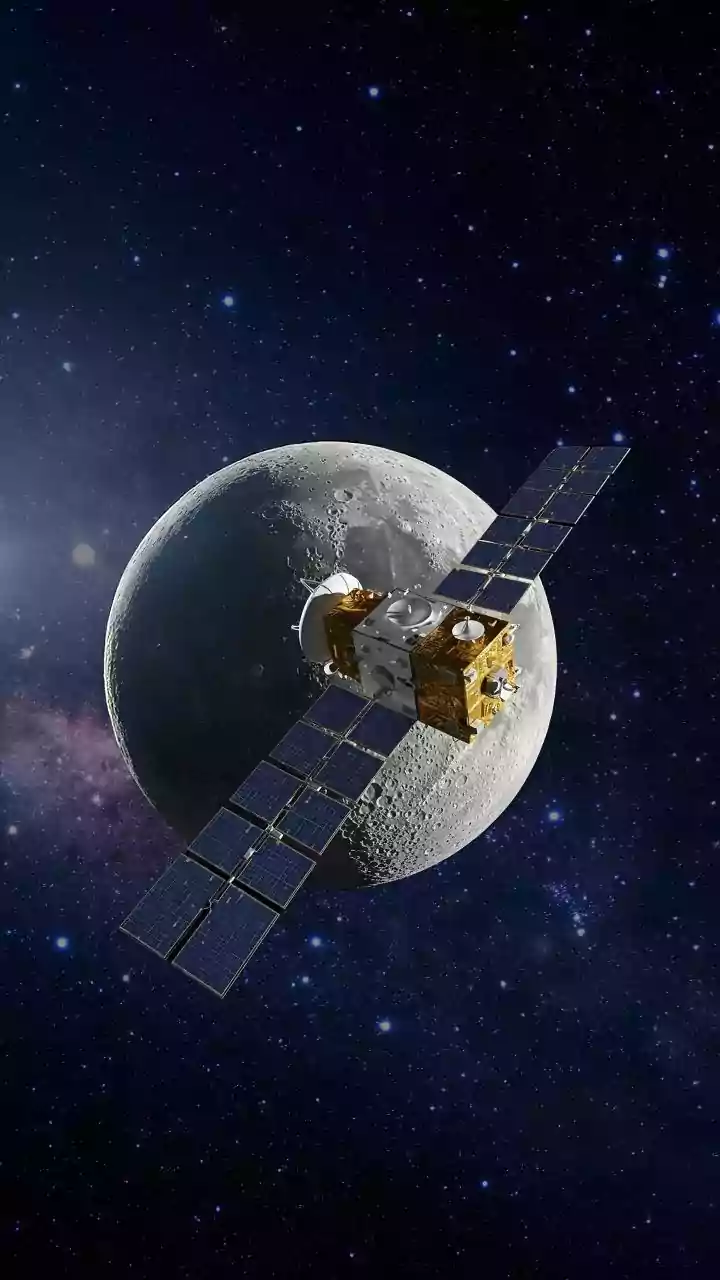
While orbital probes like Japan's Kaguya orbiter and NASA’s Lunar Reconnaissance Orbiter have identified hundreds of pits, or 'skylights', that appear to be collapsed sections of lava tubes, their existence has never been confirmed from the surface. That is about to change. At the end of September 2026, NASA announced the selection of three new scientific investigations to be sent to the Moon via its Commercial Lunar Payload Services (CLPS) program. One of these missions, fittingly named GIMLI (Geophysical Instruments for Marius Lunar pit Investigation), will specifically hunt for a lava tube. Led by the Planetary Science Institute, the GIMLI mission will send a rover to the Marius Hills Pit, a gaping hole roughly 90 meters across, to find out what lies beneath.
A Toolkit for Subsurface Discovery
GIMLI won't be sending a robot spelunking just yet. Instead, it will use a suite of advanced instruments to peer below the ground from the area around the pit. A ground-penetrating radar provided by the Norwegian Space Agency will map out subsurface structures, searching for the tell-tale void of a massive cave. A gravimeter, built by Honeybee Robotics, will measure subtle changes in the gravitational pull, which can indicate missing mass where an empty chamber might be. Finally, seismic sensors will listen to how sound waves travel through the ground to help build a complete 3D model of the area. Together, these instruments will provide the first-ever ground-based evidence of whether the Marius Hills Pit is indeed a gateway to a vast underground network, giving future mission planners a potential new address for humanity on the Moon.