








The Never-Ending Day: Time Loop Tales
The time loop is a deceptively simple concept: a character is forced to repeat a period of time until they can figure out how to break the cycle. It’s a powerful narrative tool that can be used for comedy, existential horror, action, and romance. Hollywood
has long used this trope, with films like 'Groundhog Day' becoming a cultural touchstone for the very idea of being stuck in a repetitive rut. More modern takes have used the loop to explore complex themes in different genres.
Hollywood's Repeating Realities
In 'Edge of Tomorrow', Tom Cruise’s character is trapped in a battle against alien invaders, dying and resetting the day each time. The loop becomes a brutal training ground, turning an inexperienced officer into a super-soldier. The film uses the sci-fi concept to deliver high-octane action and explore themes of sacrifice and perseverance. On a lighter note, 'Palm Springs' uses its time loop to deconstruct the romantic comedy, trapping its protagonists at a wedding where they must confront their own nihilism and find meaning in a world without consequences.
India's Tryst with Timelines
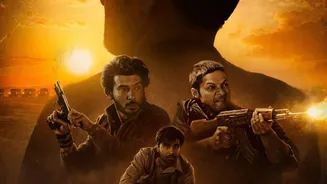
Indian cinema has also masterfully adapted the time loop, often infusing it with local political and social context. The Tamil-language film 'Maanadu' is a prime example. It features a protagonist who gets stuck in a time loop on the day of a political rally where the chief minister is set to be assassinated. The film is a thrilling cat-and-mouse game, as the hero uses his knowledge of the repeating day to try and thwart the plot. It’s a smart, fast-paced thriller that shows how a universal sci-fi concept can be grounded in a distinctly Indian narrative.
The Final Frontier: Galactic Wars
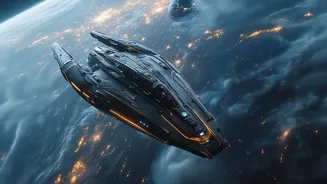
At the other end of the sci-fi spectrum lies the space opera: epic tales of interstellar empires, vast star fleets, and planet-shattering conflicts. This subgenre relies on massive world-building and visual spectacle to create a sense of awe and adventure. Hollywood has dominated this space for decades, creating franchises that have become global phenomena.
Hollywood's Cosmic Epics
When you think of galactic wars, you think of 'Star Wars'. George Lucas’s creation set the standard for space opera, with its blend of mythic storytelling, groundbreaking special effects, and iconic characters. The tradition continues with modern blockbusters like 'Dune', which brings a dense, politically charged universe to life with breathtaking visuals, and the Marvel Cinematic Universe's cosmic entries like 'Guardians of the Galaxy', which mix large-scale conflict with humour and heart. These films demonstrate Hollywood's ability to build sprawling, beloved universes.
India's Leap Into the Stars
While Indian sci-fi has existed for decades, recent years have seen a surge in ambition and scale. The 2024 film 'Kalki 2898 AD' represents a monumental leap. As the most expensive Indian film ever made, it blends Hindu mythology with a dystopian, futuristic setting to create a unique cinematic universe. The story, set in the year 2898, follows a mission to protect an unborn child believed to be the final incarnation of the Hindu deity Vishnu. With its record-breaking box office performance, 'Kalki 2898 AD' has proven that Indian cinema can compete on a global stage, creating epic narratives that are both culturally specific and universally appealing.