



Why August is Saturn’s Month
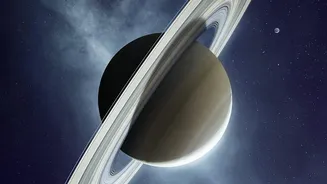
August is a special time for Saturn observers because the planet is heading towards its annual opposition. Opposition is the point in a planet's orbit when it is on the opposite side of Earth from the Sun. While the exact date of opposition for Saturn in 2026
is October 4, the weeks leading up to it, including all of August, are prime viewing time. During this period, Earth is catching up to Saturn in their orbital paths, making the gas giant appear larger and brighter in our sky than at other times of the year. This makes it an ideal period for observation, as the planet rises in the east in the evening and remains visible for much of the night.
How to Find Saturn in the Night Sky
Finding Saturn is easier than you might think. Throughout August, it will rise in the eastern sky a couple of hours after sunset and travel across the sky through the night. It will appear as a steady, bright, yellowish point of light, noticeably different from the twinkling of distant stars. The planet will be situated in the constellation of Pisces. For those unfamiliar with constellations, using a simple stargazing app on your smartphone, like Stellarium or Sky Safari, can be an immense help. Just point your phone to the sky, and the app will identify planets, stars, and constellations for you in real-time. On the nights of August 30 and 31, the Moon will be close to Saturn, making the planet especially easy to locate.
Naked Eye, Binoculars, or Telescope?
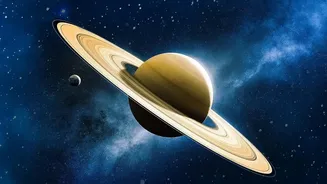
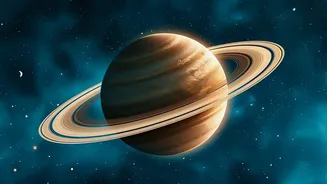
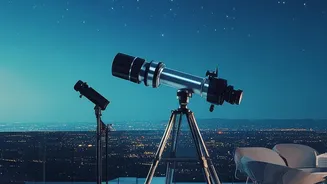
The great thing about viewing Saturn in August is that it’s accessible to everyone. With just your naked eye, Saturn is easily visible as one of the brightest objects in the night sky. It won’t show its famous rings, but its distinct, calm golden glow is unmistakable. If you have a good pair of binoculars, you might be able to discern that Saturn is not perfectly round but slightly oblong — a hint of its magnificent rings. However, to truly witness the planet’s iconic feature, you will need a telescope. Even a small, basic telescope can reveal the rings, a sight that has captivated astronomers for centuries and is a truly unforgettable experience. On nights with steady air, a telescope might even allow you to spot the Cassini Division, a dark gap in the rings.
Navigating the Monsoon Challenge
August is peak monsoon season for much of India, which can be a stargazer's biggest frustration. Cloudy skies can obviously spoil the view. However, it's not a complete dealbreaker. The period right after a rain shower often brings exceptionally clear skies, as the rain washes dust and pollutants from the atmosphere. The key is to be patient and flexible. Keep an eye on local weather forecasts and satellite imagery. Even a brief window of clear sky can be enough to get a great view. For those in high-altitude or rain-shadow regions like Ladakh or parts of the Western Ghats like Coorg and Malshej Ghat, the chances of clear nights are often better.
Tips for the Best Viewing Experience
To make the most of your Saturn-gazing night, a little preparation goes a long way. First, try to get away from city lights. Light pollution drastically reduces what you can see in the night sky. Find a park, a rooftop, or drive to a rural area if possible. Second, give your eyes time to adapt to the darkness. It takes about 20 to 30 minutes for your eyes to become fully sensitive to faint light. Avoid looking at your bright phone screen; if you need to use it, switch to a red-light mode if available. Finally, plan your session around the new moon (August 12) if you can, as the absence of moonlight creates the darkest possible sky, making planets and stars pop.