


The Challenge of Exhaled Air
Every breath an astronaut takes aboard a space station presents a dual problem: consuming a finite supply of oxygen and releasing potentially toxic carbon dioxide (CO2). On Earth, plants and natural cycles take care of this, but in the closed environment
of space, technology must replicate this process. Without a system to manage the air, the CO2 levels would quickly rise to dangerous concentrations. This is why the Environmental Control and Life Support System (ECLSS) is one of the most critical pieces of hardware on any crewed spacecraft. It's a sophisticated suite of machines that work in concert to manage the atmosphere, water, and waste.
Step 1: Capturing Carbon Dioxide
The first step in revitalising the station's air is to scrub the CO2 from the atmosphere. This is primarily handled by the Carbon Dioxide Removal Assembly, or CDRA. Cabin air is blown through beds containing a porous, crystalline material called zeolite. These materials act like a molecular sieve. The system uses two types of zeolite beds: one to first remove water vapour from the air, and a second to specifically trap the larger carbon dioxide molecules while letting the oxygen and nitrogen pass through. The system is regenerative, meaning once a bed is saturated with CO2, it is heated and exposed to the vacuum of space, which releases the captured gas, preparing the bed for another cycle. This ensures the continuous removal of CO2 from the cabin.
Step 2: The Magic of the Sabatier Reaction
Once captured, the CO2 isn't just waste. It becomes a valuable resource. The concentrated carbon dioxide is sent to a device called the Sabatier system. Here, a remarkable chemical reaction takes place. The CO2 is mixed with hydrogen, a byproduct from the station's oxygen generation process, over a heated nickel catalyst. This reaction, named after Nobel Prize-winning chemist Paul Sabatier, transforms the CO2 and hydrogen into two new products: water (H2O) and methane (CH4). The methane is considered a waste product and is vented into space, but the water is the real prize.
Step 3: Creating Oxygen from Water
The newly created water, along with water reclaimed from other sources like astronaut urine and cabin humidity, is sent to the Oxygen Generation System (OGS). This system uses a process called electrolysis to split the water molecules (H2O) back into their fundamental components: breathable oxygen (O2) and hydrogen (H2). The process works by passing an electric current, supplied by the station's vast solar arrays, through the water. The resulting oxygen is circulated back into the cabin atmosphere for the crew to breathe. The hydrogen is channelled back to the Sabatier system to be used again in reacting with more CO2, creating a nearly closed loop.
Closing the Loop for a Future in Deep Space
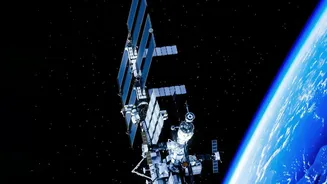
This intricate dance of chemistry and engineering allows the ISS to recover about half of the oxygen from the carbon dioxide astronauts exhale. The entire ECLSS, including the air and water recycling systems, is a marvel of sustainability born from necessity. While systems like the Russian Elektron also generate oxygen through electrolysis, the integrated approach of capturing CO2 and using the Sabatier reaction represents a significant step toward self-sufficiency. As humanity sets its sights on longer missions to the Moon and Mars, where resupply missions are impractical, perfecting these closed-loop life support systems is paramount. Future technologies are being developed to improve efficiency even further, aiming to recycle nearly 100% of all water and oxygen, ensuring that astronauts can breathe smoothly no matter how far they travel from Earth.