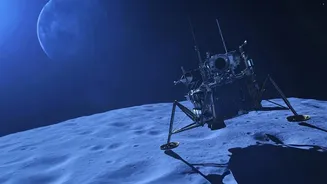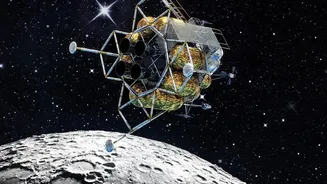


A New Map for a New Era
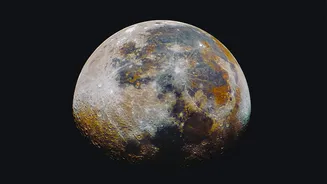
For decades, scientists have known that water exists on the Moon, primarily as ice hidden in permanently shadowed craters near the poles where temperatures are colder than Pluto. Past missions, including India's Chandrayaan-1, confirmed these deposits.
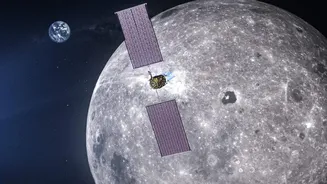
However, the latest breakthroughs aren't just about finding water, but about mapping it with unprecedented detail. Recent advancements, some using novel seismic survey techniques, are giving scientists a much clearer picture of not just where the ice is, but how much is there and how accessible it might be. These new, high-resolution maps are crucial because they distinguish between surface frost and potentially thick, buried ice deposits, which are the real prize for future exploration. This detailed understanding is the first step in creating a practical resource plan, moving from theoretical knowledge to a tangible blueprint for extraction.
From Ice to Rocket Fuel
The reason space agencies and private companies are so excited about lunar water has a simple chemical basis: H2O. Through a process called electrolysis, an electric current can split water molecules into their constituent parts: hydrogen and oxygen. When cryogenically cooled into liquids, these two elements become a potent and efficient rocket propellant—liquid hydrogen as the fuel and liquid oxygen as the oxidizer. The significance of this cannot be overstated. Launching anything from Earth is incredibly expensive, largely due to the sheer mass of fuel required to escape our planet's gravity. Producing propellant on the Moon would dramatically reduce the cost of missions, as spacecraft could launch from Earth with less fuel and 'top up' at a lunar depot for journeys deeper into the solar system.
The Moon as a Cosmic Gas Station
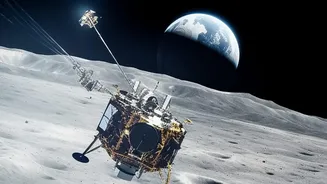
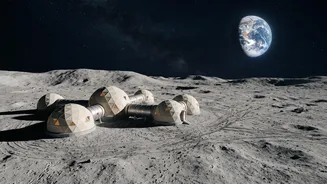
The ability to produce rocket fuel on-site would transform the Moon into a strategic refuelling station. Imagine a spacecraft launching to Mars. Instead of carrying all the fuel for the entire round trip, it could make a pit stop in lunar orbit to refuel. This single capability makes missions more efficient and affordable, potentially cutting the cost of a Mars mission by billions of dollars. This concept, known as in-situ resource utilization (ISRU), is central to the long-term vision of agencies like NASA and private firms. A lunar base would no longer be just a scientific outpost but a critical piece of infrastructure for a burgeoning space economy, supporting everything from Mars colonization efforts to satellite maintenance in high orbit. Water would not only provide fuel but also breathable air and drinking water for astronauts, enabling sustainable, long-term human settlements.
Hurdles on the Horizon
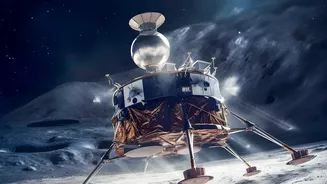
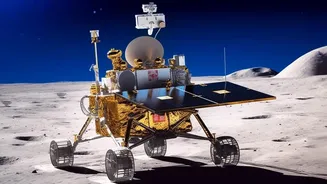
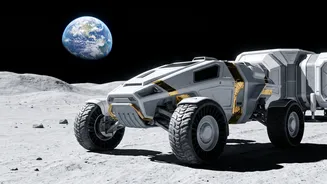
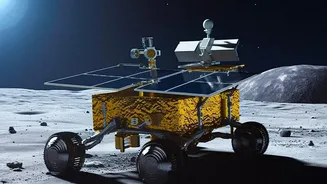
While the promise is immense, the path to a functioning lunar gas station is paved with formidable challenges. The environment is one of the biggest hurdles. Mining operations would have to take place in the extreme cold of the permanently shadowed regions, in a near-perfect vacuum, and contend with abrasive, electrostatically charged lunar dust. Engineers are developing specialized robotic systems that can heat the icy soil (regolith) to sublimate the ice directly into vapor, which can then be captured and condensed. This entire process, from extraction and purification to electrolysis and liquefaction, must be done with extreme efficiency and reliability using power sources like solar arrays or small nuclear reactors. Furthermore, there's the significant challenge of establishing international agreements to manage resource extraction and prevent conflicts over the most valuable ice-rich locations.